
37 Years And Nothing Changed
The Crown Has Always Certified Whoever Holds Abuja. This Has Always Been the Point.

In 1989, the British government received Ibrahim Babangida at a level of state ceremony that includes the full apparatus of royal hospitality. IBB arrived as the head of a military government that had annulled democratic processes, suppressed press freedom, and was overseeing though this would not become fully clear until later, the absorption of a Gulf War oil windfall estimated at approximately $12.4 billion, which would subsequently disappear from Nigeria’s public accounts without adjudication, recovery, or meaningful British concern.
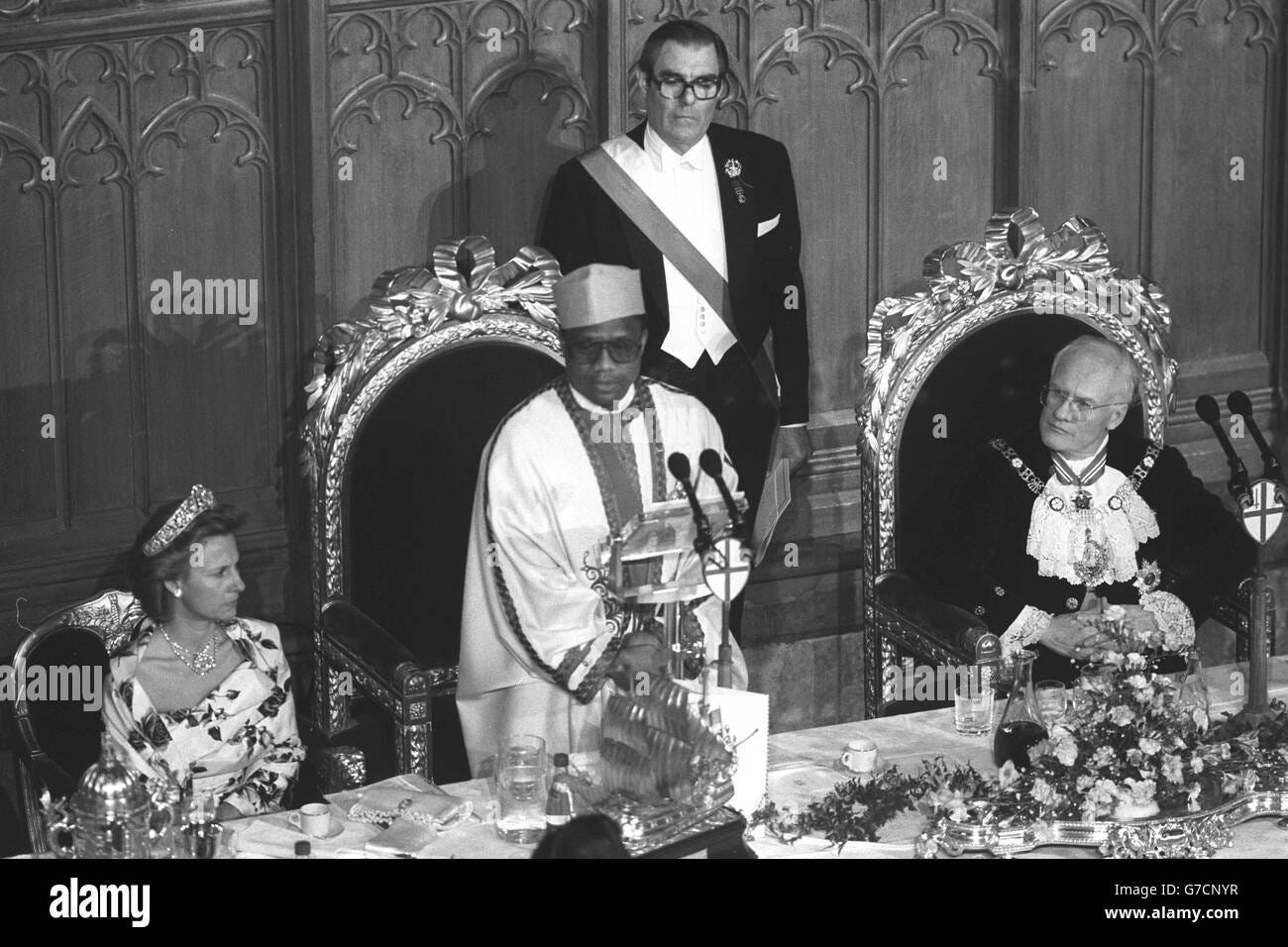
In March 2026, the British government received Bola Tinubu at Windsor Castle, a venue specifically more elevated than the 1989 visit as a president who, at the time of his reception, had been named a finalist in the OCCRP’s list of most significant organised crime and corruption figures globally, whose son owned offshore British Virgin Islands companies documented as connected to the proceeds of a prior $1.8 billion fraud, and who had personally forfeited $460,000 to the United States government in 1993 as proceeds of narcotics trafficking. King Charles hosted a state banquet. The photographs are beautiful.
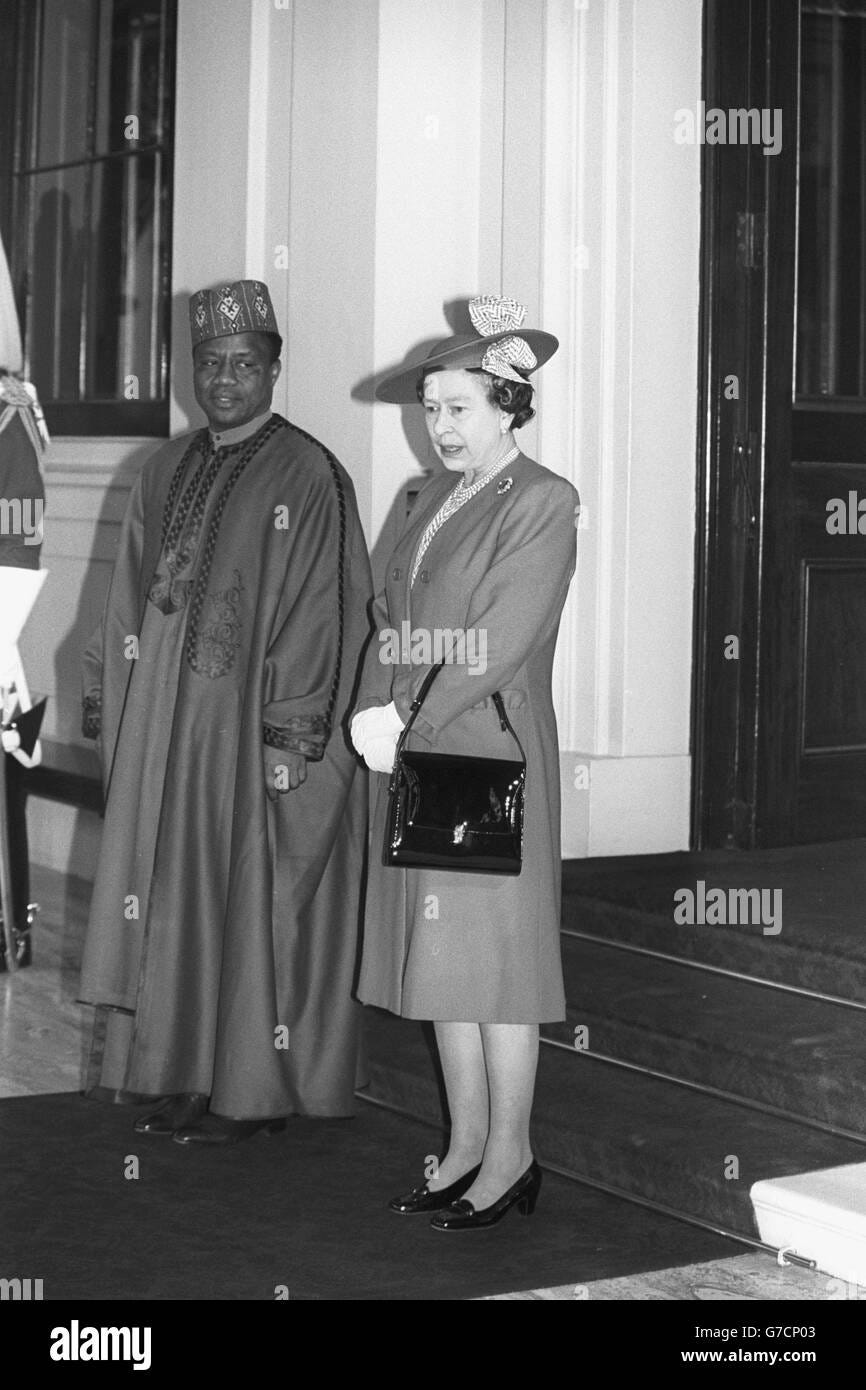
The 37-year gap between these two visits is consistently described as evidence of significant diplomatic distance as if the relationship was interrupted, as if Britain was expressing institutional disapproval of what transpired in Nigeria between 1989 and 2026. This reading is historically illiterate. The relationship was not interrupted. Trade continued. Investment continued. British financial institutions maintained exposure to Nigerian sovereign debt. British oil companies operated in the Niger Delta throughout. The ceremony, the specific elevation of a state visit to Windsor Castle was calibrated to the level of bilateral economic exposure. In 1989, that exposure required elevation. In the intervening decades, routine diplomatic engagement sufficed. By 2026, UK-Nigeria bilateral trade had hit an all-time high of £8.1 billion annually, a 50-year port financing deal was ready for signature, and the calibration required re-elevation. The Crown responded accordingly.
This is the mechanism that needs to be named clearly. The state visit is not a friendship ceremony. It is a political risk certification instrument. Its function is to communicate to Western capital markets, to international institutional investors, to bilateral partners assessing their exposure, that the British state has reviewed the political risk profile of the visiting head of state and found it acceptable for continued economic engagement. This communication operates independently of, and prior to, any governance improvement. You do not have to have improved your institutions to receive the certification. You have to hold the territory that the bilateral economic relationship requires.
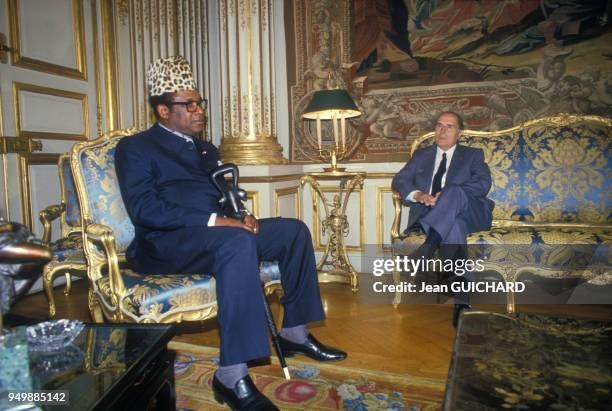
The consistency of this mechanism across different African leaders and different Western states is instructive. France maintained the closest bilateral relationships with Mobutu Sese Seko through the most rapacious years of his kleptocracy, withdrawing the ceremonial relationship only when his military capacity to hold Kinshasa had collapsed beyond rescue in 1997. The United States maintained bilateral elevation of Hosni Mubarak through thirty years of documented authoritarianism, withdrawing the certification not when the repression became undeniable but when Tahrir Square made his political survival impractical. The United Kingdom maintained diplomatic and commercial relationships with Robert Mugabe through the early years of his farm seizures, the violence against political opposition, the systematic destruction of Zimbabwe’s agricultural sector, before eventually withdrawing when the Commonwealth consensus made continued engagement institutionally uncomfortable. In each case, the withdrawal of ceremonial elevation was triggered by the threatened disruption of the bilateral economic relationship, not by the documented human cost of the relationship’s continuation. The withdrawal trigger is never the corruption. It is always the political survival probability.
Britain does not have a sterling currency zone in West Africa. It does not have a formal bilateral security arrangement that makes Nigerian stability a treaty obligation. What it has is £8.1 billion in annual bilateral trade, a 50-year financing overlay on the infrastructure through which that trade flows, a significant British private sector presence in Nigerian banking and consumer goods, and a Nigerian diaspora in the United Kingdom that generates remittance flows, professional services income, and domestic political considerations for the British government. These interests, collectively, create a structural preference for Nigerian political stability over Nigerian political accountability. The preference is rational. It is not good. It is rational.
The Chatham House address on March 18, 2026 illustrates the constraint perfectly. Chatham House understands, with precision, the structural problems embedded in the UK-Nigeria relationship, but Chatham House cannot, not that they are willing to, in a public forum on the day of a state visit, tell a visiting head of state that the bilateral relationship is structurally extractive, that the trade composition disadvantages Nigeria, that the financing deal serves British export infrastructure, and that no British institution will condition future engagement on measurable governance improvement. Instead, Chatham House said: “diplomacy alone won’t fix Nigeria’s long-term structural challenges.” The translation requires no decoding. But it requires encoding first, and the encoding requirement is the constraint.
Here is what I want you to understand about the 1989 to 2026 continuity. The $12.4 billion Gulf War windfall that IBB’s administration absorbed and never accounted for: no British institution, to my knowledge, has made its recovery a condition of any subsequent bilateral engagement. Not in 1993. Not in 1999. Not in 2003. Not in 2023. Not in 2026. The money is simply gone. The bilateral relationship continued across its disappearance. The 2026 state visit was not conditional on any investigation into its whereabouts.
The question is not whether Britain will certify the next Nigerian leader, whoever wins in 2027. The winner has already been selected at Windsor. The question is what price will be attached to the elevation ceremony/selection. In 2026, the price appears to have been a £746 million port financing deal, several Memoranda of Understanding, and photographs at Windsor Castle. The bilateral trade relationship hit an all-time high. Both governments described the visit as historic.
IBB’s money was never found. Tinubu’s OCCRP investigation is ongoing. The Crown’s position on both matters is, in effect, the same: the ceremony continues. The structural relationship is protected. The accountability question is deferred to Nigerian institutions that have demonstrated no capacity to pursue it.
Watch who asks the question in 2027. Watch whether the answer changes.
The mechanism described in this essay is older than Nigerian independence. It will outlast the current administration unless Nigerians build the institutional accountability architecture that makes international certification depend on domestic governance quality. That architecture does not currently exist. Subscribe to Khaki & Leather for the analysis of what building it would require.
Fascinating to see these patterns elucidated, Ope.