
Inhaled Microplastics Found in Lung Tissue — Are Face Masks Contributing to the Problem?

Guest post is by Colleen Huber, NMD. She is a naturopathic medical doctor and has been practicing for 15 years. She is the author of “The Defeat of COVID,” “Manifesto for a Cancer Patient” and “Choose Your Foods Like Your Life Depends on Them.”

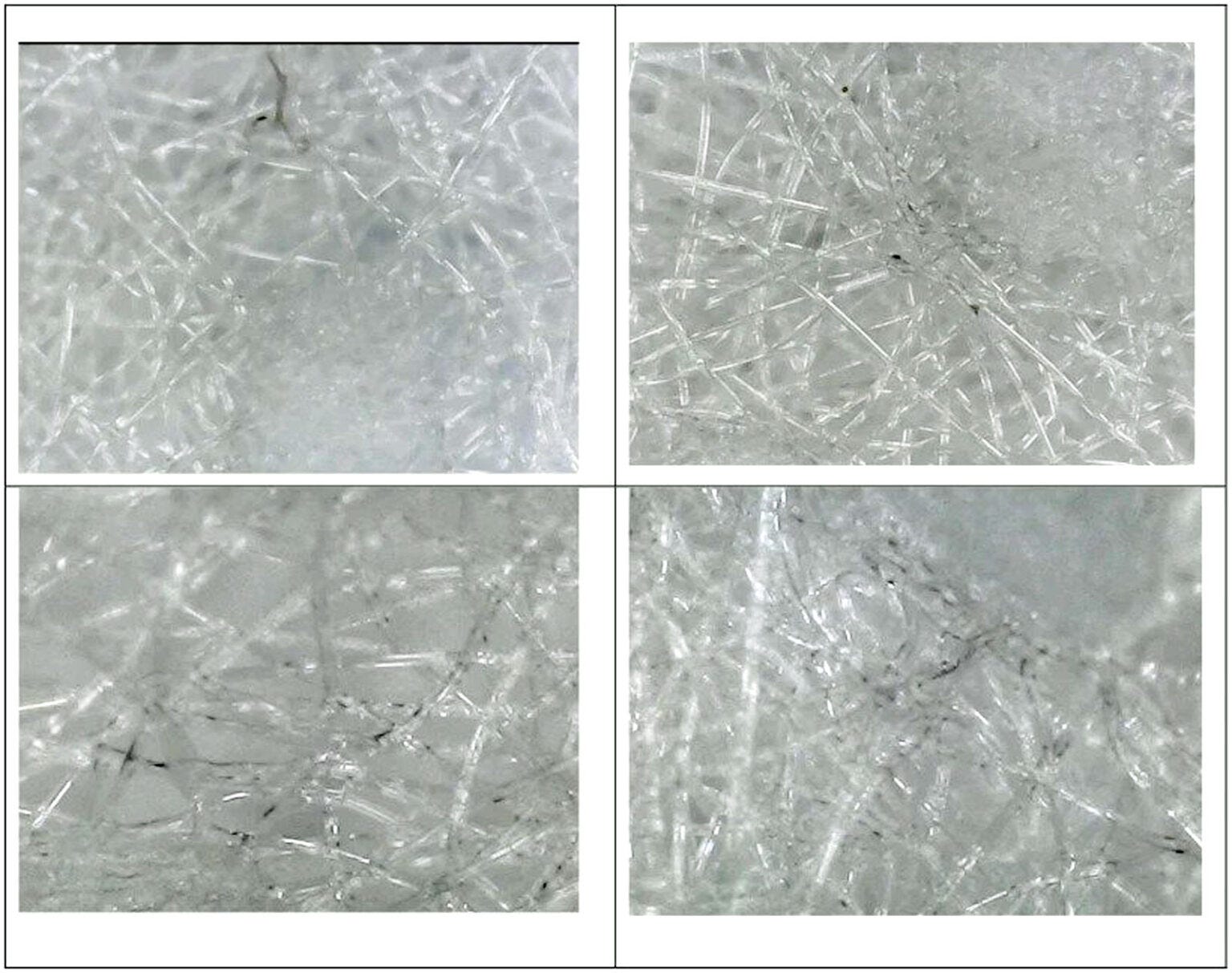
*Image of a lightly used hospital face mask. Are all these fibers intact to your satisfaction?
Researchers in the U.K. sampled human lung tissue identified 39 kinds of microplastics in 11 of 13 tissue samples. The most commonly found was polypropylene, which also is the most common material used to make face masks.
A new UK study from Hull York Medical School sampled human lung tissue using micro-Fourier Transform Infrared spectroscopy. (micro FTIR).
39 kinds of microplastics were identified from 11 of the 13 lung tissue samples of patients who were to undergo surgery. The most commonly found microplastics were polypropylene (PP) 23%, polyethylene terephthalate (PET) 18% and resin 15%. Tissue from male donors contained nearly six times the microplastics of tissue from female donors.
It had been thought that only particles smaller than 3 micrometers (µm) can enter the alveolar region of the lung. However, the particles seen in this study were up to 1410 µm in length = 1.4 mm.
What does this have to do with masks?
Possibly nothing. However, the disposable surgical masks that now decorate the world’s beaches and rivers and wildlands after having decorated billions of human faces happen to also be made of polystyrene and polyethylene compounds. But the most common material in these is polypropylene, because of ease of industrial handling. That was the most common microplastic found by the UK researchers in lung tissue samples.
Epidemiologist Boris Borovoy and I were the first that we were aware of to warn in peer-reviewed research of this health hazard from inhaled microplastics and nano-plastics coming from disposable surgical masks.
We also discussed the friable nature of the particulate attached to surgical masks. Here are a few of the photos we took of surgical masks under light microscope, 40 to 100x magnification and without magnification.
You can subscribe to her Substack:

See you next week!
- Ope