
JOLLOF DIPLOMACY
They Called It Historic. Read the Invoice.

They are telling you this was historic. They are not wrong. It is historically accurate that a Nigerian president has not been received at this level of British ceremony in 37 years. What they are not telling you is the structure of what was celebrated: what flows in which direction, at what margin, and who captures the value.
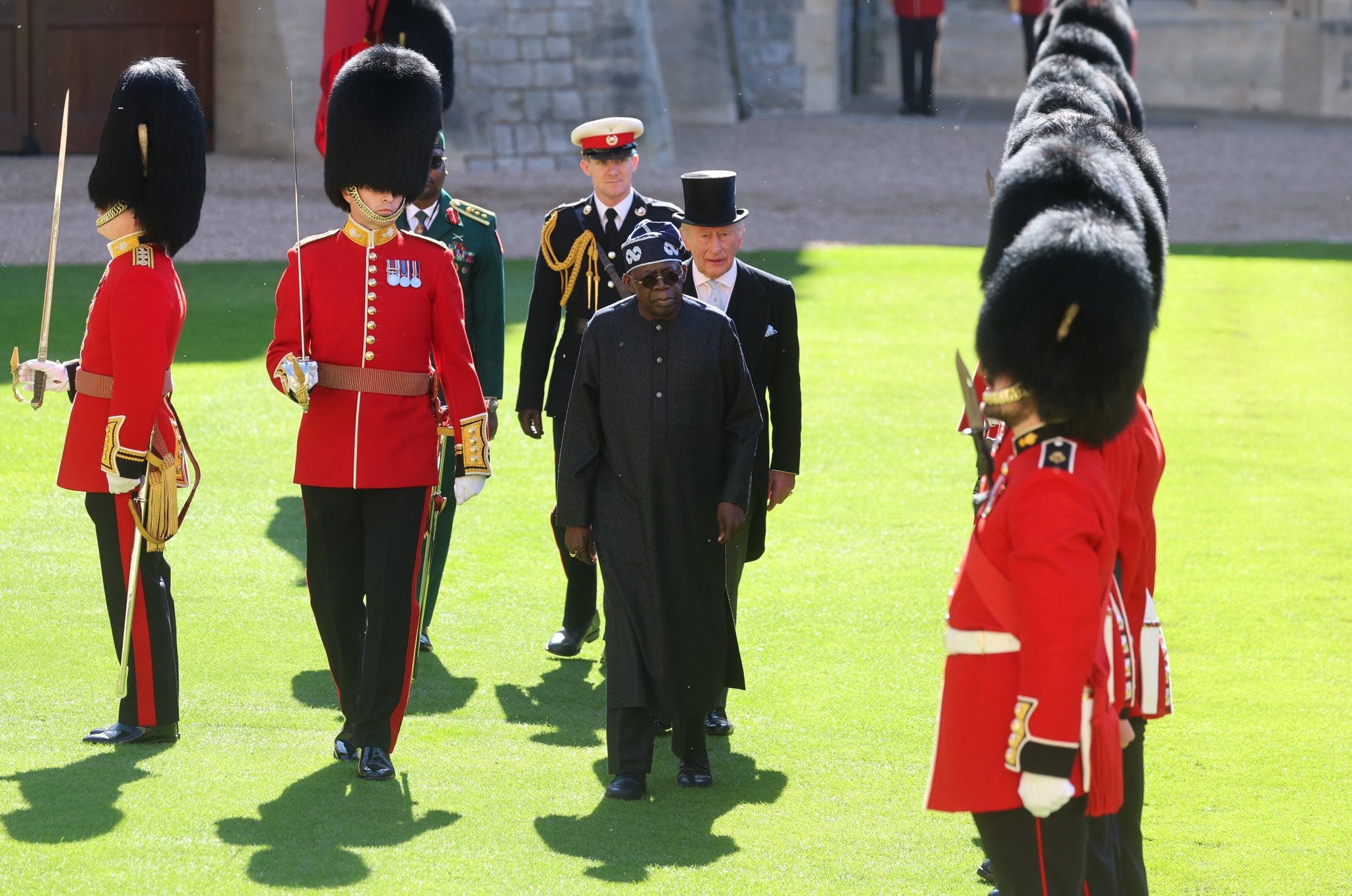
Start with the number that appeared in every headline: £8.1 billion. That is the current annual value of UK-Nigeria bilateral trade, described as an all-time high. King Charles called the relationship a “living bridge.” The headline deal was a £746 million financing agreement between UK Export Finance, the Nigerian Ports Authority, and the Federal Ministry of Finance to fund the modernisation of the Lagos Port Complex at Apapa and the Tincan Island Port Complex.
Now let us read what we have just described.
UK Export Finance (UKEF) is not a charity. It is the British government’s export credit agency, which underwrites financing risk for deals that benefit British exporters. The Lagos and Tincan ports together handle over 70 percent of Nigeria’s imports and exports. Port modernisation makes import infrastructure more efficient. Nigeria’s primary imports from the UK preliminary sourcing indicates machinery, vehicles, pharmaceuticals, and manufactured goods move through these ports. British financial institutions bear the underwriting exposure. The Nigerian government carries the debt. The infrastructure, when modernised, serves the corridor through which British manufactured goods enter West Africa’s largest market. The £746 million is not British generosity. It is British infrastructure investment in British export infrastructure, with Nigerian sovereign debt as the vehicle.
This is not hear say. It is standard export finance, the mechanism by which wealthy economies structure debt so that the risk is held by the borrowing country while the commercial benefit accrues to the lending country’s exporters. The elegance is that it looks, in the photographs, like a gift.
Now, the trade structure. Nigeria’s export profile to the United Kingdom is dominated by crude petroleum, natural gas, cocoa, and agricultural raw materials, commodities extracted from the ground or grown in the soil, shipped in largely unprocessed form. The UK’s export profile to Nigeria runs toward industrial machinery, vehicles, pharmaceuticals, chemicals, and finished manufactured goods, products with high value-added content and significant embedded processing margins.
This is the trade relationship that the £8.1 billion headline number describes. Volume is not structure. A relationship in which one party sells raw materials cheaply and buys finished goods expensively generates high trade volume. It does not generate equivalent development outcomes for both parties. It generates industrial development for the manufacturer and commodity dependence for the extractor. Britain industrialised on exactly this model applied to its colonies. The model continues, without the colonial paperwork.
Chatham House, on the day of the Windsor visit, noted that “diplomacy alone won’t fix Nigeria’s long-term structural challenges.” This is the most diplomatically accurate sentence written about the visit. Translated from Chatham House language: the financing deals come with no obligation to restructure the trade relationship, no conditionality on industrialisation policy, no requirement that Nigeria’s ports be used to export manufactured Nigerian goods rather than commodities and imports. The structural challenges: the ones that make Nigeria a commodity exporter and a manufactured goods importer, are not on the agenda.
Meanwhile, China. Recent announcements by Chinese describe a zero‑tariff regime for a broad range of Nigerian products: including, critically, finished and semi-processed goods, into a market of over 1.4 billion people. The structural contrast is significant. The UK deal says: we will lend you money to improve the infrastructure through which you import our manufactured goods. The China offer, if accurately described, says: we will give your manufactured goods free access to our market. One of these arrangements creates conditions for Nigerian industrialisation. The other finances the infrastructure of Nigerian deindustrialisation.
The mechanism that prevents anyone from noticing this distinction has an analogue: the CFA franc architecture. France embedded its extractive relationship with Francophone Africa in a monetary union: the CFA franc, requiring African central banks to deposit reserves with the French Treasury, constraining monetary sovereignty while guaranteeing convertibility. Britain does not have a sterling zone in West Africa, but trade composition achieves the same outcome through different architecture: Nigeria needs the manufactured goods, the manufactured goods come from countries with higher industrial capacity, and the port infrastructure facilitating those imports is now financed by British institutions on British terms for the next fifty years.
AfCFTA, the African Continental Free Trade Area was the institutional mechanism designed to begin disrupting this. By building intra-African trade in manufactured and processed goods, reducing structural dependence on extra-continental manufactured imports. The agreement entered into force in 2021. Nigeria was one of the last signatories, delayed by domestic industry lobbying. As of 2026, intra-African trade remains at approximately 15 percent of Africa’s total trade volume, against roughly 60 percent for Europe. Nobody asked Tinubu at Chatham House what his administration’s plan for accelerating AfCFTA implementation looks like. The address focused on domestic reforms.
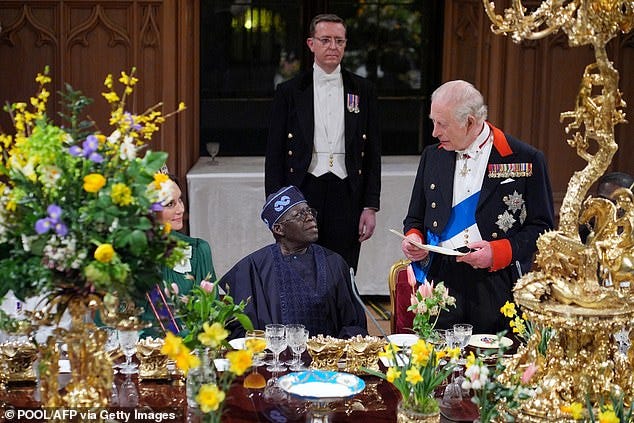
Here is what was celebrated at Windsor: a £746 million loan for port infrastructure, a £8.1 billion bilateral trade relationship whose composition structurally disadvantages the Nigerian side, and Memoranda of Understanding whose implementation will be determined by political will that neither party has demonstrated. King Charles called it a living bridge. A bridge facilitates movement in both directions.
The question, Cui bono? is which direction carries the heavier load, and who built the toll booth.
Illiterate supporters of this man have spent the whole of last week hailing this exploitative visit as the best thing to happen to Nigeria since jollof rice. Which, if you think about it, is the appropriate comparison. Jollof rice is a domestic product (not if you ask a ghanaian or senegalese). They praised a state visit by comparing it to the one thing Nigeria demonstrably produces for itself.

Watch what comes through those modernised ports over the next fifty years. Watch the composition of what goes in versus what comes out. The receipts will be in the trade data, published quarterly, available to anyone willing to look past the banquet photographs.
The commodity data is public. The HMRC trade statistics are online. The OEC has Nigeria’s export profile charted by year. What you have just read is an invitation to look at those numbers and tell me what you see. Subscribe to Khaki & Leather for the essays that do that work for you.
Once again, this bears reading more than once. I'm learning so much.