
Man vs the Machine

Featured article by Seb Abecasis published at nottbbc.news:
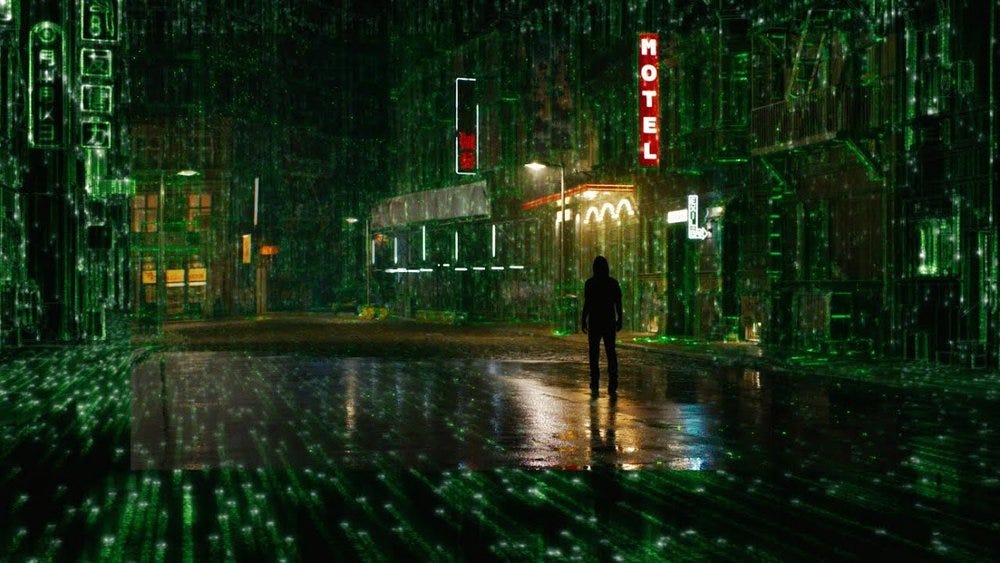
Whether you believe in conspiracy theories or Aldous Huxley’s ‘impersonal forces’, the most common thing dissidents oppose is technocracy.
The Covid pandemic was seen as a taste of - and crucial first step towards - a dystopian techno-authoritarian society.
The thing is, the technocracy that everyone fears is already here. And it has been here for a long time.
It is the world brought about by the Managerial Revolution of the early to mid 20th Century that James Burnham described.
Since the time of the Industrial Revolution, where returns to scale have been increasing, our societies have been getting larger and more complex.
Society came to be dominated by a number of large, technical (if not technological) organizations: the party machines, the civil service, multinational corporations, big pharma and large media companies.
The industrial warfare of the 20th Century secured the permanence of these superstructures as it became existentially infeasible to not be tied to a large state.
It has been a tale of man against the machine ever since, of the dominion of the abstract structure conceived through science and reason over the organic competencies of individuals and communities.
The great dystopian writers of the 20th Century were less prophesizing about the future than characterizing the reality they inhabited.
The horrendous vision of the future that the WEF tried to market to us represents a continuation of this trend rather than a transition to something new.
Things are merely reaching their zenith.
Covid was the managerial regime’s magnus opus. It used mass media and the authority of supranational organizations to terrify a population into believing that any individual who did not submit to a full suite of managerial solutions - from state-enforced lockdowns to "vaccines" created from radically new technology - was either mad or a criminal.
The modern city-dweller is the dream subject for a regime that feeds on the impotency of man. The median Londoner relies on large financial structures to pay for their home, large supply chains to feed them, Google to make health decisions, talking heads to give them opinions, and increasingly technology to help them reproduce.
But much the same could be said of people 100 years ago. Information and bio technologies are merely eating up those last few yards of our sovereignty.
So while it’s great to call out the WEF, this is not an agenda to resist but a reality to confront.
If we’re to prevent this tumor from consuming us, we need to start by re-evaluating the way we have chosen to live our lives.
See you tomorrow!
- Ope