
The Demolition Plans Predate the War
What Replaces Resistance Is Not Liberation

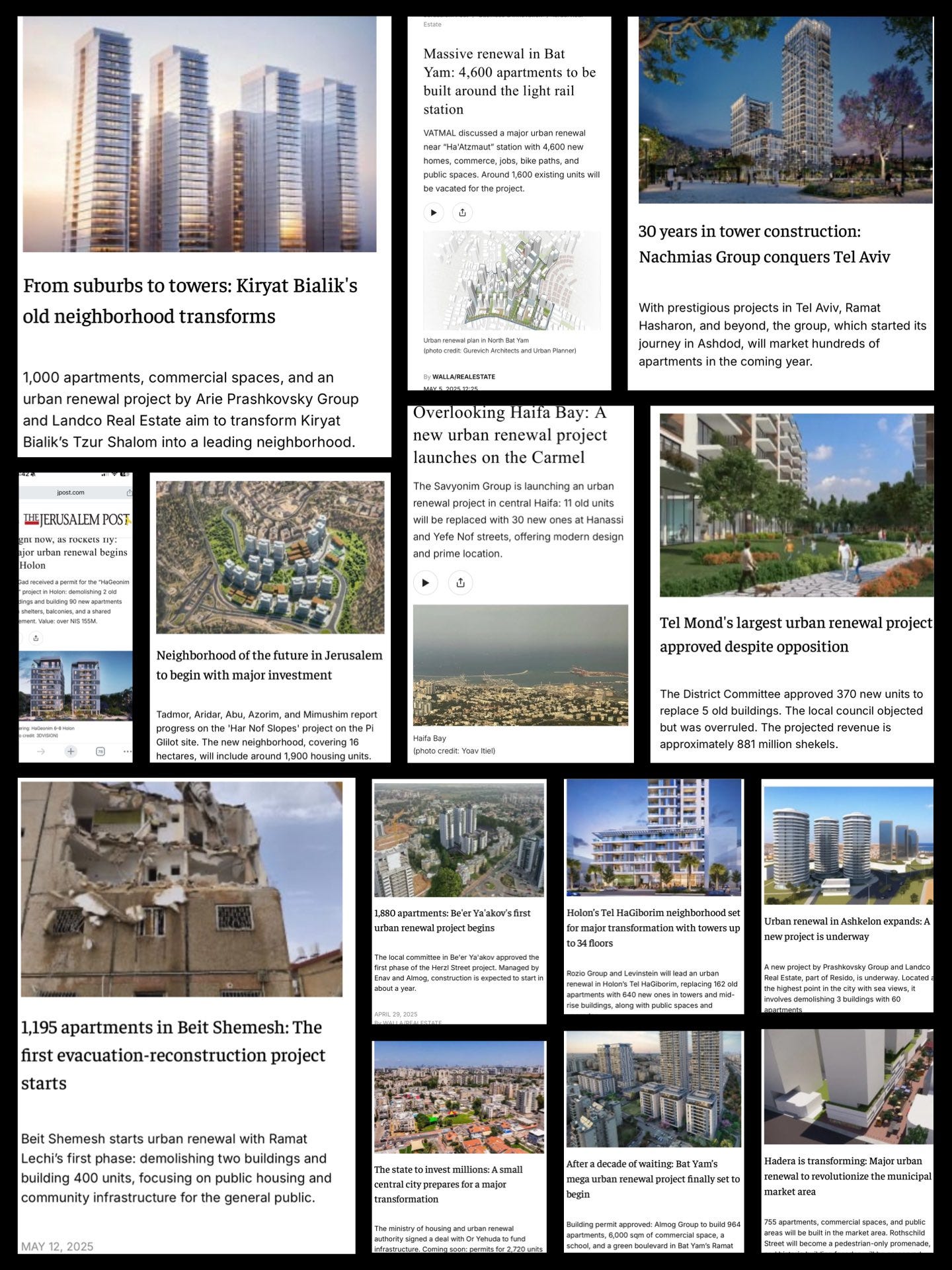
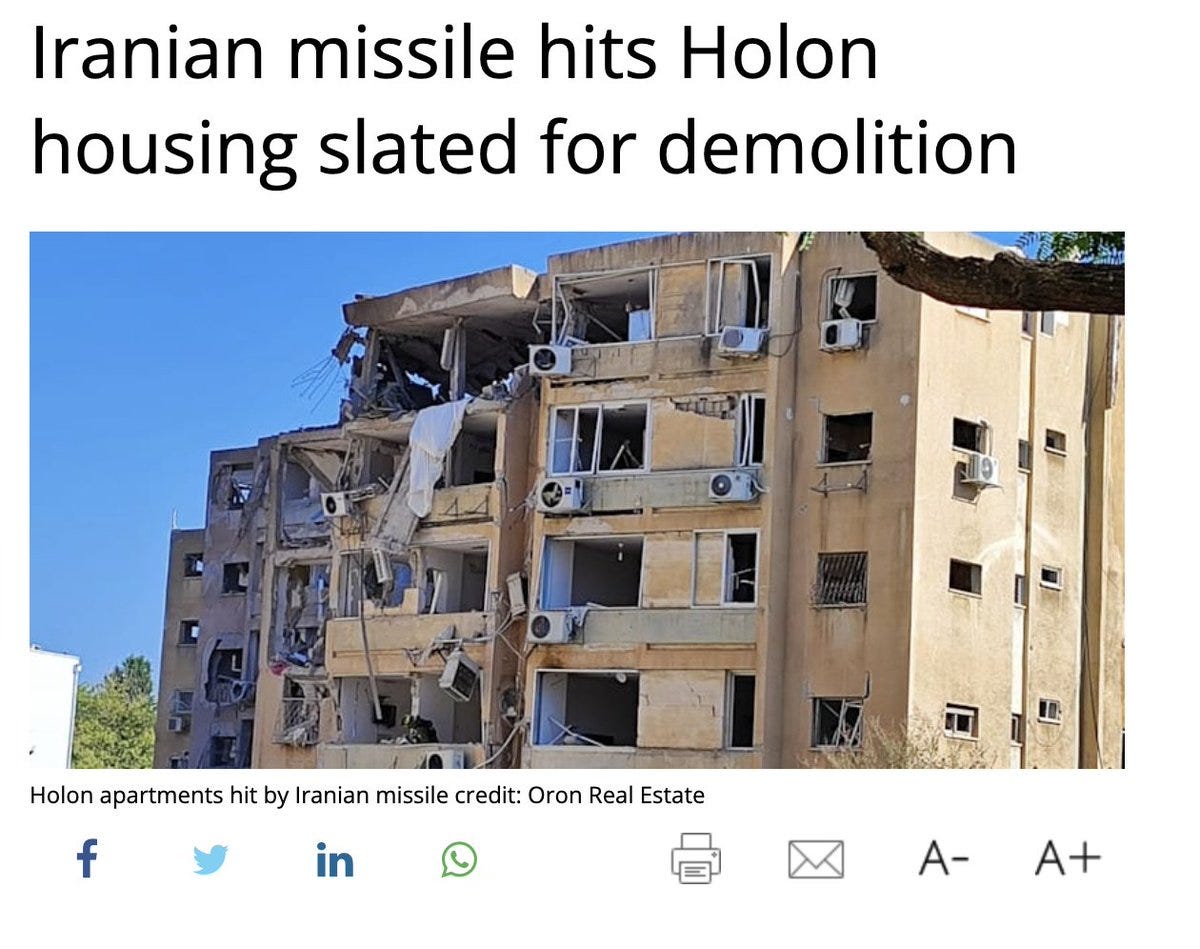
The buildings falling in parts of Tel Aviv are on redevelopment blueprints that predate October 7, 2023.
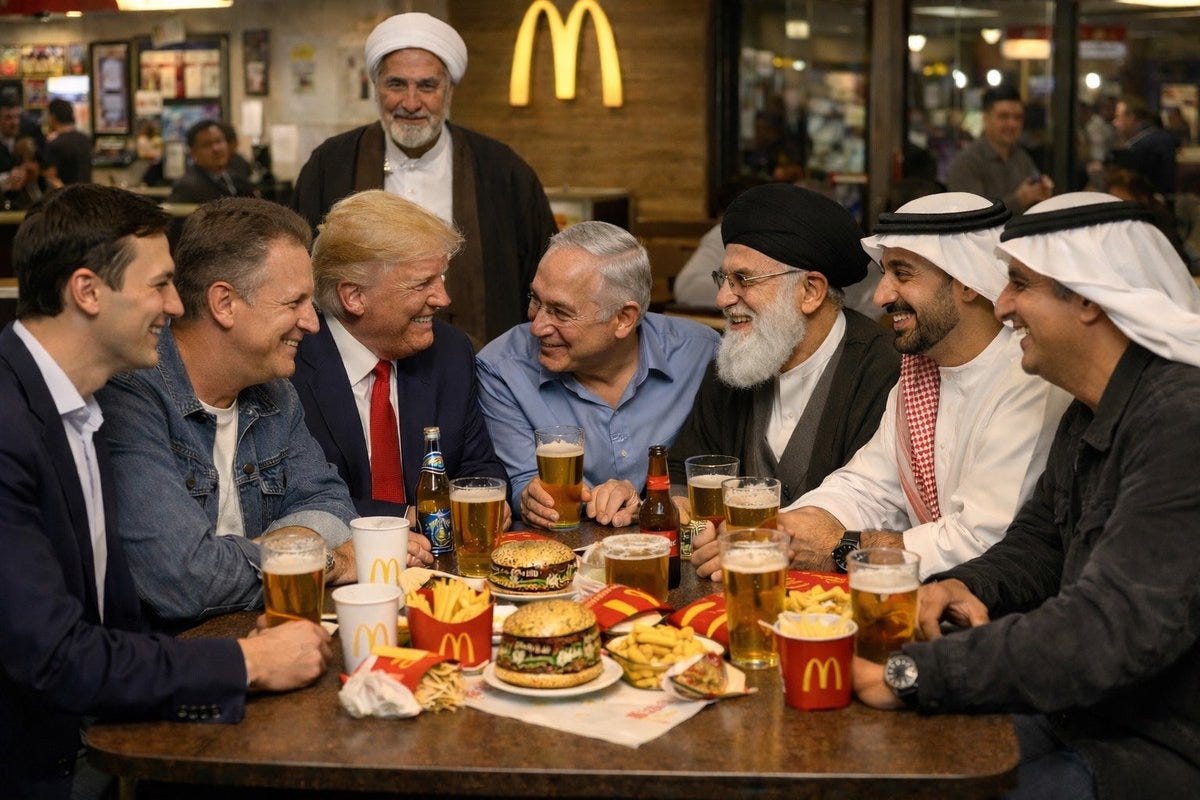
I will be precise about what I am claiming and what I am not. I am not claiming that Israeli civilians deserved to be bombed. I am claiming that certain sites being hit match zones that were pre-marked for smart city infrastructure, private residential towers, surveillance hubs, and fintech corridors, and that this deserves scrutiny rather than the silence it is currently receiving. The claim in its strong form, that the demolition is coordinated with reconstruction blueprints, I cannot document. What I can document is that the reconstruction plans exist, that the capital is already identified, and that the beneficiaries are not the population currently living in the rubble.
These are different claims. Hold them separately. One is documented. One is a pattern that deserves our suspicion.
Now the receipts from Morgan.

September 2023, New Delhi. Under a G20 canopy, leaders from India, the United States, Saudi Arabia, the UAE, France, Germany, Italy, and the European Union signed a memorandum of intent. The India–Middle East–Europe Economic Corridor (IMEC), was announced as what a Protagonist HQ analysis by Zakir Kibria calls a “modern spice route”: railways, shipping lanes, digital cables, designed to outflank China’s Belt and Road Initiative and bind India to the Gulf and to Europe. The corridor was to run through Haifa. Through the Negev desert. Through territory that, within weeks of the announcement, became the epicenter of the most violent regional conflict in decades.
The corridor is currently a ghost.
Meanwhile, India had been developing the International North-South Transport Corridor (INSTC) for years, including an $85 million investment in the Iranian port of Chabahar, the oceanic gateway linking Mumbai to St. Petersburg via Bandar Abbas. When IMEC arrived, American-backed, Abraham Accords-aligned, running through a normalized Middle East, India threw its weight behind the newer corridor and quietly edged away from the older one. In late 2025, under threat of 25% US tariffs on any business with Iran, India withdrew from Chabahar entirely. Directors resigned. The website went dark. The funds were liquidated. Chabahar is now being rebranded by Iran with Chinese assistance. India’s share of Russian seaborne crude fell from 40% to under 15% in early 2026. When India did buy Iranian oil in March 2026, 5 million barrels it was on a 30-day US sanctions waiver, at a $7-a-barrel premium. No discount. No long-term arrangement. On America’s terms.
The arithmetic of non-alignment had been inverted. India paid market rates for Russian oil it used to get at a $40 discount, paid a premium for Iranian oil, and still finds itself inside the Washington sanctions architecture. The country that practically invented non-alignment: the 1955 Bandung Conference, Panchsheel, the Non-Aligned Movement is now a junior partner in the system it was designed to resist. Kibria’s observation is precise: a 2026 perception survey by the Arab Center for Research and Policy Studies found India’s trust rating among Arab and Central Asian nations had dropped 18 points since 2023.
Na so we see am.
Now let’s define the terms, because the confusion here is structural and I want to cut through it.
There is vassalization, the process of subordinating a state through military defeat, economic coercion, or political capture, and there is vaulting, the process of elevating a state into a new structural position, giving it capabilities, infrastructure, and economic architecture that make it the dominant node in a reconfigured regional system. These are opposite operations. Vassalization extracts. Vaulting installs.
What is happening to Israel is not vassalization. What is happening to Israel is vaulting.
Automated border enforcement systems. Red Sea corridor control, the southern maritime gateway that links the Suez Canal to the Indian Ocean, whose strategic value has only increased as the Strait of Hormuz closes. Military-technology export monopolies that position Israeli firms as the primary providers of drone warfare architecture, surveillance infrastructure, and precision systems to the same Gulf states signing normalization agreements. Fintech corridors connecting Tel Aviv to Abu Dhabi to Riyadh in the new Gulf capital ecosystem. Private agricultural technology, export-driven precision agriculture in conditions where water is scarce, as a product category with growing global demand exactly because water scarcity is increasing globally.
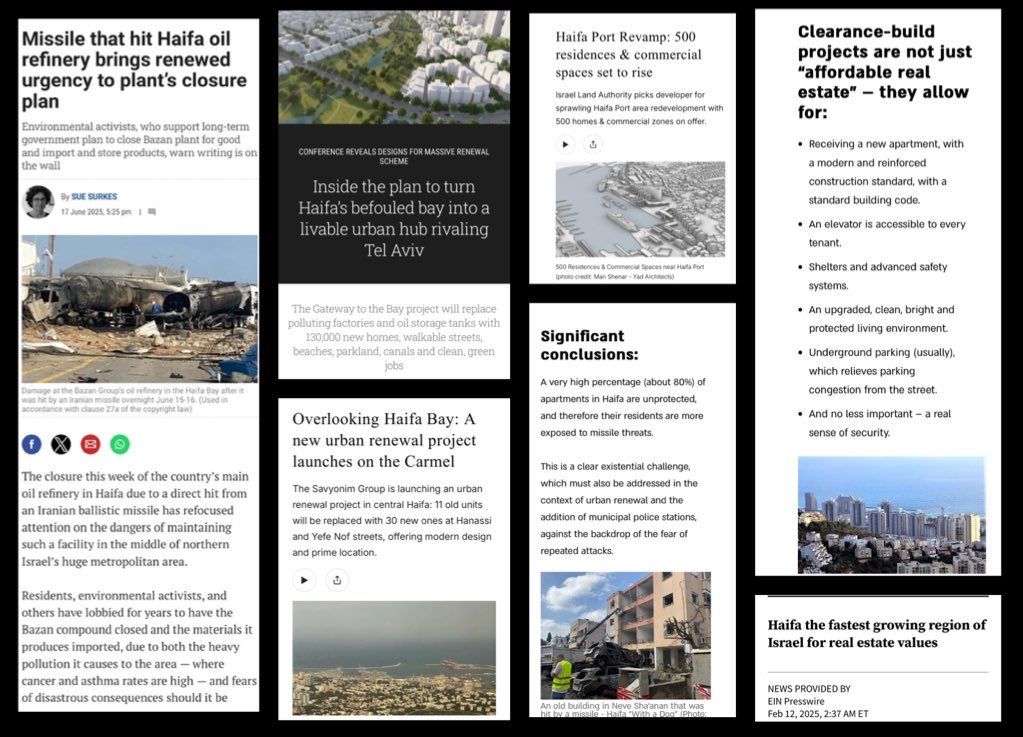
Call it what it is: Zionism 3.0. The first version was a spiritual claim. The second version was a military project. The third version is a capital accumulation project with military enforcement built in as the delivery mechanism. The homeland vision fully materialized not as a refuge, but as a high-security, high-liquidity node in the global financial system. Singapore of Eurasia is the shorthand. It is not inaccurate.
Now: the proxies.
Hamas. Hezbollah. The Houthis. These organizations have been described by their supporters as the Axis of Resistance, the front line of opposition to American and Israeli power in the Middle East. I want to put a different frame on this. Intelligence services do not create assets that they cannot eventually decommission. Every significant armed non-state actor operating in a region heavily penetrated by multiple intelligence services: American, Israeli, Iranian, Saudi, British has relationships with those services that complicate the narrative of pure resistance. I am not saying Hamas is a CIA operation. I am saying that the operational lifespan of a proxy organization ends when it has served its strategic purpose and when its continuation creates more liability than utility.
The Axis of Resistance, as a marketing concept generated the regional narrative of encirclement that justified Israeli military spending, American deployments, and Gulf-state normalization as “security” requirements. That narrative is now running its final act. What replaces it is not liberation. It is managed territory, biometric checkpoints, private security architecture, and unified trade lanes running through a normalized regional order. The resistance disappears. The infrastructure appears. The population gets what they call “humanitarian technology.” Which is to say: surveillance delivered in the language of aid.
Africa knows this story.
The NGO arrives after the conflict. The reconstruction contract goes to the same consulting firm that wrote the pre-conflict development plan, often the same firm that advised the government that ran the conflict. The population that was displaced becomes the labor supply for the new infrastructure. Gaddafi was removed from Libya in 2011. Libya’s oil continues to flow. Libya itself remains in pieces, governed by competing militias, with no functional state, while the oil extraction architecture runs on schedule. The DRC has never had a stable government and has always had functioning cobalt mines. Sierra Leone’s diamonds funded the conflict that the conflict pretended to be against. The resource does not care about the governance outcome. The extraction architecture is the governance outcome.
I am not making a direct equivalence between Libya and Israel. I am pointing to a structural pattern: post-conflict reconstruction, in the zones that matter economically and strategically, follows a blueprint that was drafted before the conflict ended. Sometimes before it began.
Now back to India, because the India story is the clearest current example of what happens when a state tries to hold two positions simultaneously and gets caught.
India’s foreign policy elite: the IFS officers, the conglomerate chairpersons, the think-tank directors, was trained predominantly in American and British universities. India’s IT sector derives over 70% of its revenue from the United States, per Kibria’s analysis. Its largest conglomerates raise capital on US exchanges. When Washington applied pressure, 25% tariffs on Iran business, the calculation was immediate: preserve market access, sacrifice strategic assets. Chabahar went. Russian oil discounts went. The INSTC went quiet.
At a 2026 SCO summit in Astana, a resolution condemning the US-Israeli attack on Iran, a fellow SCO member was tabled. India abstained. At a BRICS foreign ministers’ meeting, the same silence. The India of 1956 sided with Egypt at Suez against its former colonial power. The India of 1971 signed a friendship treaty with the Soviet Union and intervened decisively in Bangladesh. The India of 2026 abstained when a fellow BRICS and SCO member was being bombed, because its IT sector’s quarterly earnings call was more strategically significant than the Bandung principles it helped write.
Strategic autonomy, is a concept that survives until someone threatens to pull your NASDAQ listing.

The billionaire fortress thesis, the one circulating in the more careful corners of geopolitical analysis runs like this. Everything currently being denied elsewhere: clean water, uninterrupted energy, advanced healthcare, debt-free education, pristine architecture, private security is being concentrated in one location. The foreign aid that flowed into Israel for decades was never charity. It was infrastructure investment with a deferred return. The military technology developed in Israeli R&D corridors, tested in Gaza and Lebanon, exported to willing buyers that is the product. The “post-crisis aid architecture” that will arrive after this conflict ends is the same architecture that was designed before it began. Biometric humanitarianism: aid delivery systems that require identity registration, behavioral compliance, and data contribution as the price of access.
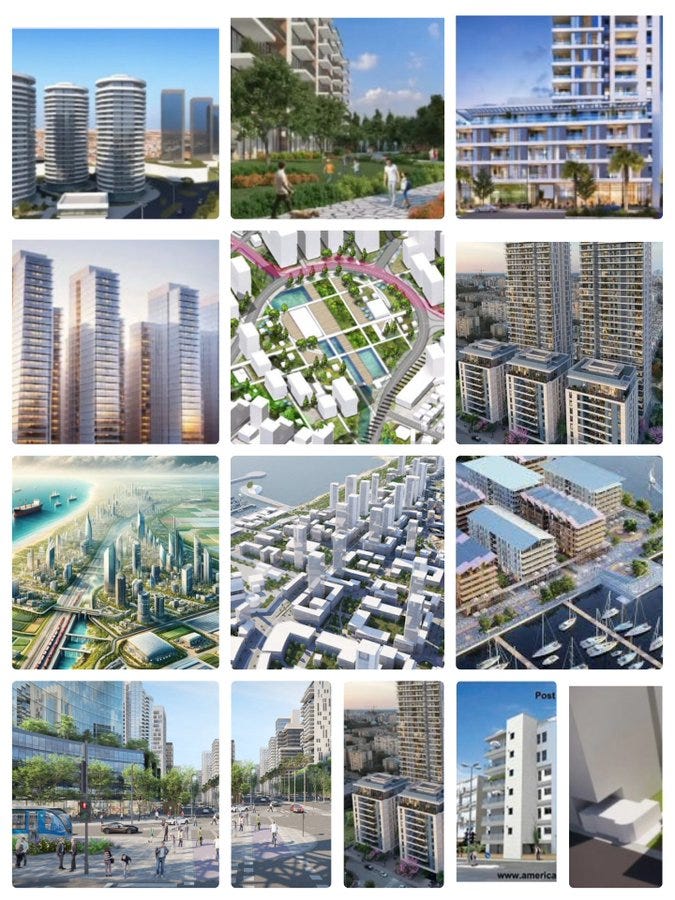
This is the walled oasis being built. Not spiritual. Not demographic. Financial. A fortress for capital, with a population filter system built into the infrastructure, rising from rubble paid for by the collective compliance of countries too dependent on American energy and too enmeshed in American capital markets to say otherwise.
The documented fact is: the reconstruction plans exist. The capital is identified. The technology stack is ready. The trade corridors have been drawn. The IMEC corridor, before it became a ghost, showed exactly where the architecture was supposed to run.
Find the redevelopment plans.
They predate the rubble.
Find the blueprints. Not the narrative, the blueprints. Redevelopment zones, infrastructure contracts, capital flows. The war is the noise. The blueprint is the signal.
Mind blown, again and again. You have such in depth knowledge and new information, Ope. I'm not hearing the insider analysis you're bringing from any other source. It's not hopeful but it's an essential part of the puzzle.