
The Emergency Use Authorization for Intelligence
The Permission Layer

Who decides whether you get access to intelligence?
Not education. Not talent. Not need. A government office you’ve never heard of, applying criteria you’ll never see, approving customers one at a time.
Yesterday on June 25, 2026, the Trump administration asked OpenAI to stagger the release of GPT-5.6. The request came from two offices: the Office of the National Cyber Director and the Office of Science and Technology Policy. Commerce Secretary Howard Lutnick personally called Sam Altman to make sure the message landed. Altman told his staff in an internal memo that the government would be “approving access customer by customer during this preview period.”
Customer by customer.
Thirteen days earlier, on June 12, the Commerce Department issued an export control directive that forced Anthropic to disable Fable 5 and Mythos 5, its most powerful models, for every user on earth. The directive arrived at 5:21 PM on a Friday. By Saturday morning, hundreds of millions of people had lost access to a tool they’d been using for three days. No court order. No published evidence. No transparency on the national security concern cited. Anthropic couldn’t filter users by nationality, so it killed the product for everyone. A machine-learning student at the University of Lagos lost access to the same model, for the same reason, at the same time as a cybersecurity researcher at Stanford.
This is not regulation. This is something older.
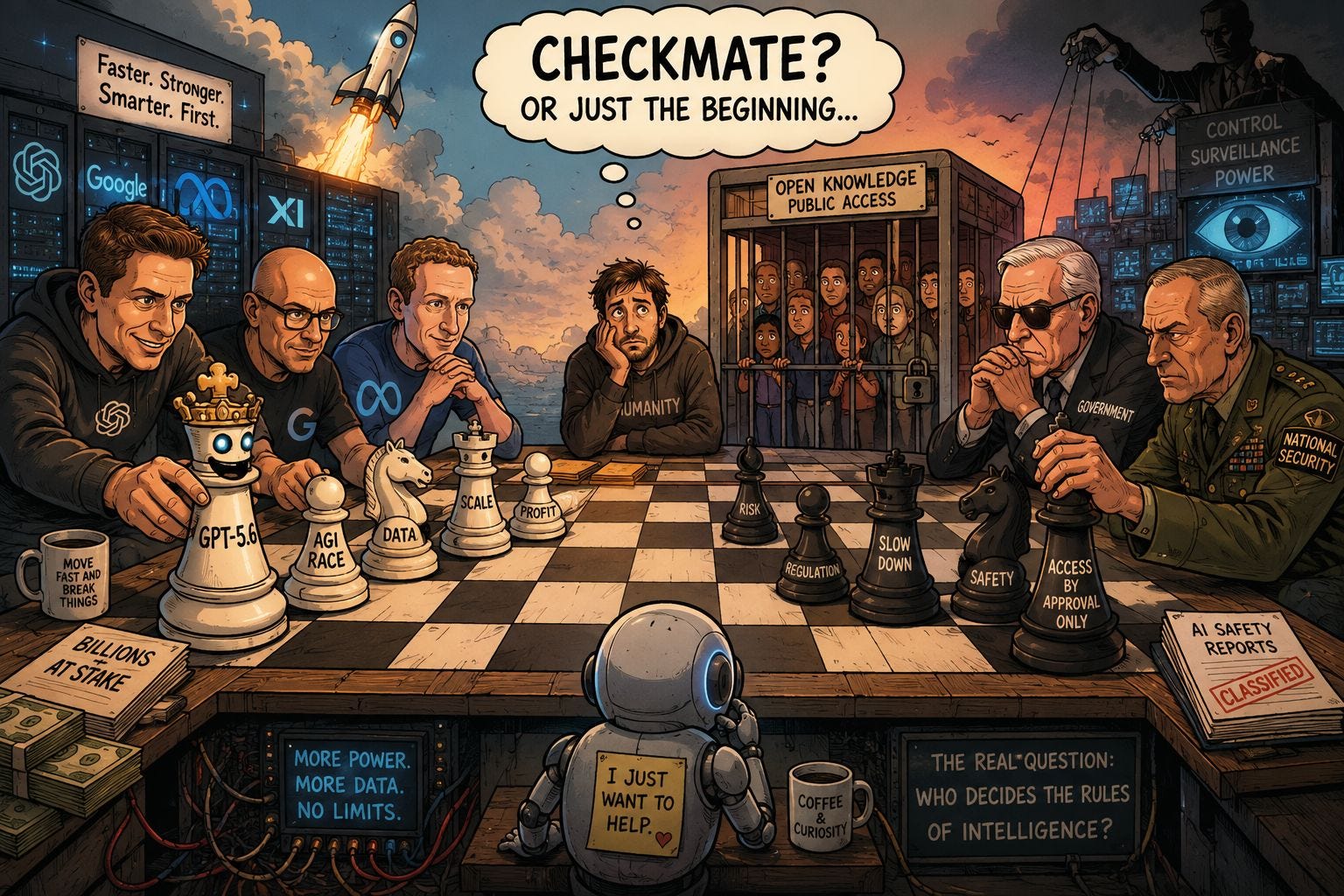
Here is what I want you to see, because this architecture has a name, and the name has a history.
In 2004, the U.S. Food and Drug Administration formalized a mechanism called Emergency Use Authorization. The EUA allowed the government to control distribution of medical countermeasures during declared emergencies. The government could grant conditional access to unapproved products, set the terms of distribution, and revoke authorization at any time. During COVID-19, the EUA became the architecture that determined who got vaccinated and when. Governments declared emergencies. Governments granted conditional access to approved entities, specific pharmaceutical companies, specific distribution partners, specific populations. Governments retained the authority to revoke access unilaterally (the FDA pulled hydroxychloroquine’s EUA in June 2020 with the same speed the Commerce Department used on Fable 5). And the Global South arrived last.
Nigeria received its first COVAX vaccine shipment in March 2021. The UK had begun vaccinating its population in December 2020. That’s nearly four months where the permission layer: cold-chain requirements, WHO prequalification, supply agreements negotiated by wealthy nations stood between 200 million Nigerians and a technology that could have saved lives. The technology existed. The access didn’t.
Now read the AI executive order again.
On June 2, 2026, President Trump signed “Promoting Advanced Artificial Intelligence Innovation and Security.” The order established a “voluntary framework” for frontier AI model releases. Developers would provide the government with access to “covered frontier models” for up to 30 days before release. The government would apply classified benchmarking criteria developed by the NSA, criteria that no developer gets to see in full, to determine which models qualify. And developers could “collaborate with the Federal Government to select trusted partners that will have early access.”
Five features. Count them.
Emergency or security declaration as trigger.
Conditional access granted to approved entities.
Revocation authority retained by government.
No transparency on decision criteria.
Tiered distribution where proximity to the issuing government determines who gets access first.
That is the EUA. Word for word, mechanism for mechanism. The product changed, from vaccines to machine intelligence. The architecture did not.
Hmmm.
The executive order, and this is the part that should make your skin crawl, explicitly states that nothing in Section 3 “authorizes or establishes a mandatory governmental licensing, preclearance, or permitting requirement for the development, publication, release, or distribution of new AI models.” It says the framework is voluntary.
Now look at the timeline.
June 2: Executive order signed. Framework is “voluntary.”
June 12: Commerce Department forces Anthropic to disable its most powerful models globally. No voluntary consultation. A directive.
June 25: White House asks OpenAI to stagger GPT-5.6. Altman tells staff the government will approve access “customer by customer.”
Two companies. The only two American companies building frontier AI models. Both now operating under government-approved release schedules. Three weeks after the word “voluntary” was written into law.
This is not a uniquely American phenomenon. It is a uniquely governance phenomenon, and it has a long résumé.
The WHO’s International Health Regulations (2005), “voluntary” compliance with pandemic surveillance requirements. Except that countries failing to meet surveillance benchmarks found themselves locked out of vaccine distribution networks and international travel agreements. Nigeria adopted the IHR but lacked laboratory capacity to meet the benchmarks. Voluntary in theory. Mandatory in consequence.
The Basel Accords on bank capital adequacy “voluntary” international standards. Except that banks failing to comply couldn’t participate in cross-border lending markets. Nigerian banks spent years restructuring to meet Basel requirements, requirements designed for the balance sheets of JPMorgan and Deutsche Bank.
The FATF’s anti-money laundering recommendations “voluntary” except that Nigeria was grey-listed in February 2023, triggering correspondent banking withdrawals that disrupted remittance flows for millions.
“Voluntary” is the word institutions use when they want the enforcement without the legislation. Every time. The AI executive order is following the same script. And just like every previous iteration, the population that experiences the “voluntary” framework as most coercive is the one farthest from the table where the framework was designed.
Now the financial layer and the picture completes itself.
OpenAI wants a trillion-dollar IPO. Its advisers presented two options: list in late 2026 at a lower valuation, or wait until 2027 and hold the line at $1 trillion. Altman rejected any compromise. The trillion-dollar figure is, reportedly, non-negotiable. Anthropic filed its confidential S-1 on June 1, targeting an October 2026 Nasdaq debut at approximately $965 billion.
These are companies that have not turned profits. OpenAI is reportedly burning through cash at a rate that would drain most sovereign wealth funds. GPU rental prices are collapsing. Data center margins are falling. There are credible signals not from fringe commentators, but from CNBC, that AI demand is plateauing relative to the infrastructure investment.
So why the trillion-dollar valuation? Why the rush to IPO?
Because the IPO is the exit. The moment when risk transfers from private investors (who can absorb losses) to public retail investors (who cannot). And the permission layer makes the exit possible, because a company operating under a government-approved release framework is, by definition, a company the government has validated. The government’s involvement de-risks the narrative. “The government reviewed this model” is a selling point for institutional investors, not a warning.
Cui bono?
The companies get their valuation. The government gets its permission layer. Wall Street gets its fees. And the population, both American and, far more acutely, African gets a future where access to frontier intelligence is determined by a bureaucratic process designed in Washington, priced in New York, and experienced in Lagos as a closed door.
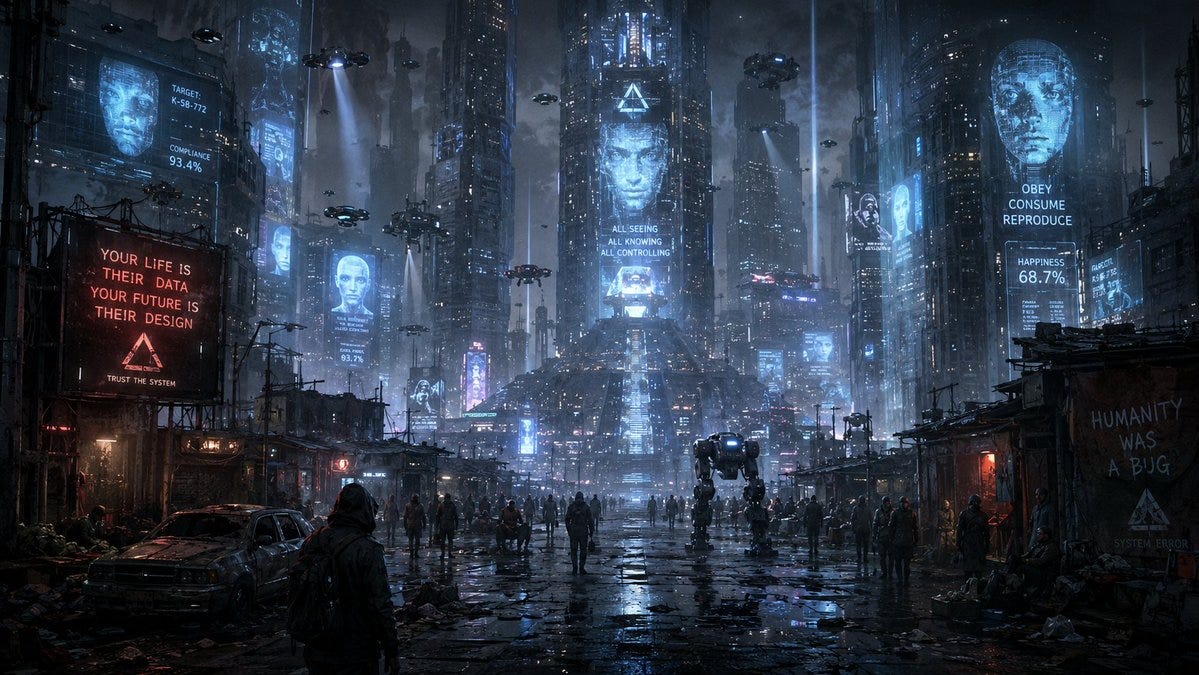
This is not where the essay tells you everything is connected and leaves you feeling helpless. This is where I name the convergence point.
Nigeria. Right now. June 2026.
Nigeria’s public debt servicing consumed over 90% of government revenue in 2023, it consumed around half of government revenue in 2025, with the exact ratio varying by source and methodology. Much of that debt was issued as Eurobonds during the 2021 low‑interest window, the same monetary cycle that flooded Silicon Valley with cheap capital to build the AI models now being gated behind government approval.
Nigeria’s eNaira, the Central Bank’s digital currency launched in October 2021 with World Bank ID4D-adjacent digital identity requirements. Adoption has been negligible. The digital infrastructure that the permission layer presupposes reliable broadband, cloud computing access, enterprise-grade API integrations, does not exist for the vast majority of Nigerians. In Nigerian universities, fewer than 5% have the infrastructure to train even modest machine-learning models.
Nigeria received its COVAX vaccines late (not that we care for it). Nigeria’s eNaira adoption failed. Nigeria has less than 12% of its population with infrastructure to meaningfully access generative AI.
Three domains. Three technologies. Three instances of the same permission layer determining who gets access and when. Delayed vaccine access (Health/Biosecurity Governance). Digital infrastructure conditionality through eNaira and ID4D (Digital Infrastructure & Surveillance). Debt servicing that funds the AI infrastructure Nigeria can’t access (Monetary Architecture).
Same population. Same decade. Same architecture.
The “customer by customer” approval for GPT-5.6 presupposes you are already a customer of American AI infrastructure. Nigeria developed its Atlas multilingual model project covering Yoruba, Hausa, Igbo, and Nigerian-accented English as an attempt at indigenous capability. Built as N‑ATLAS v1 on Llama‑3 8B and fine‑tuned on over 400 million tokens in partnership with NITDA and NCAIR. But a single training run of a medium language model can cost on the order of tens to hundreds of thousands of dollars on commercial cloud platforms, with 7B–13B‑parameter models often quoted in the $80,000–$150,000 range depending on GPU type, duration, and provider. That exceeds the annual research budget of most Nigerian computer science departments. And the commercial cloud platforms are the same American infrastructure now subject to government-gated access.
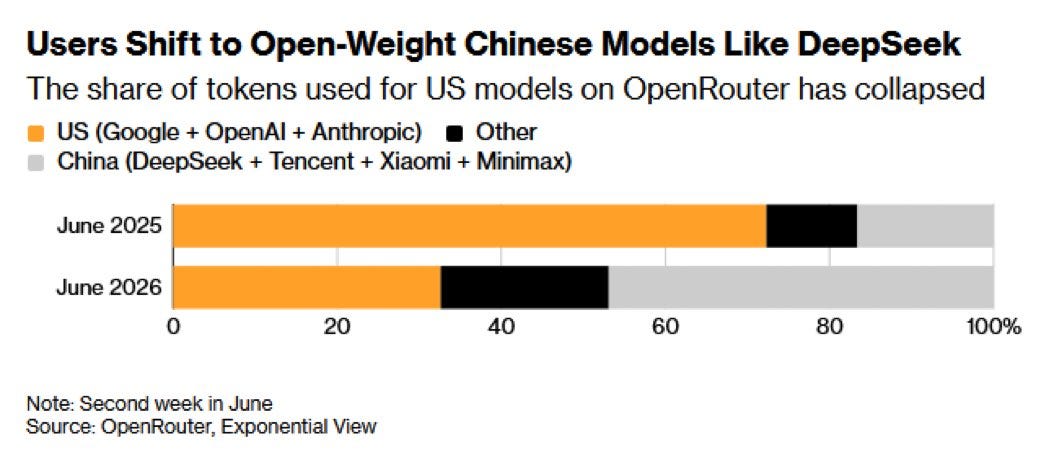
The escape hatch is supposed to be open‑source: Chinese models like GLM‑5.2 and Japanese‑led systems like Sakana’s Fugu, models that can’t be recalled, can’t be federally gated, and are already close to frontier capability on the hardest coding and reasoning benchmarks, even if those capability claims are still contested.
But here is the question nobody in Washington is asking, because Washington never asks questions about the bodies downstream: if the future of intelligence is split between government-gated American models and ungated Chinese alternatives, and if African nations must choose between them not based on quality or alignment but on access architecture, who decided that this was the choice Africa gets?
Nobody. That’s the point. Nobody decided. The architecture decided. The permission layer decided. The same way the EUA decided that Nigeria would get its vaccines four months late, and the same way the FATF decided that Nigeria’s remittance corridors would narrow, and the same way the Basel Accords decided that Nigerian banks would restructure their balance sheets to meet standards designed for institutions ten thousand times their size.
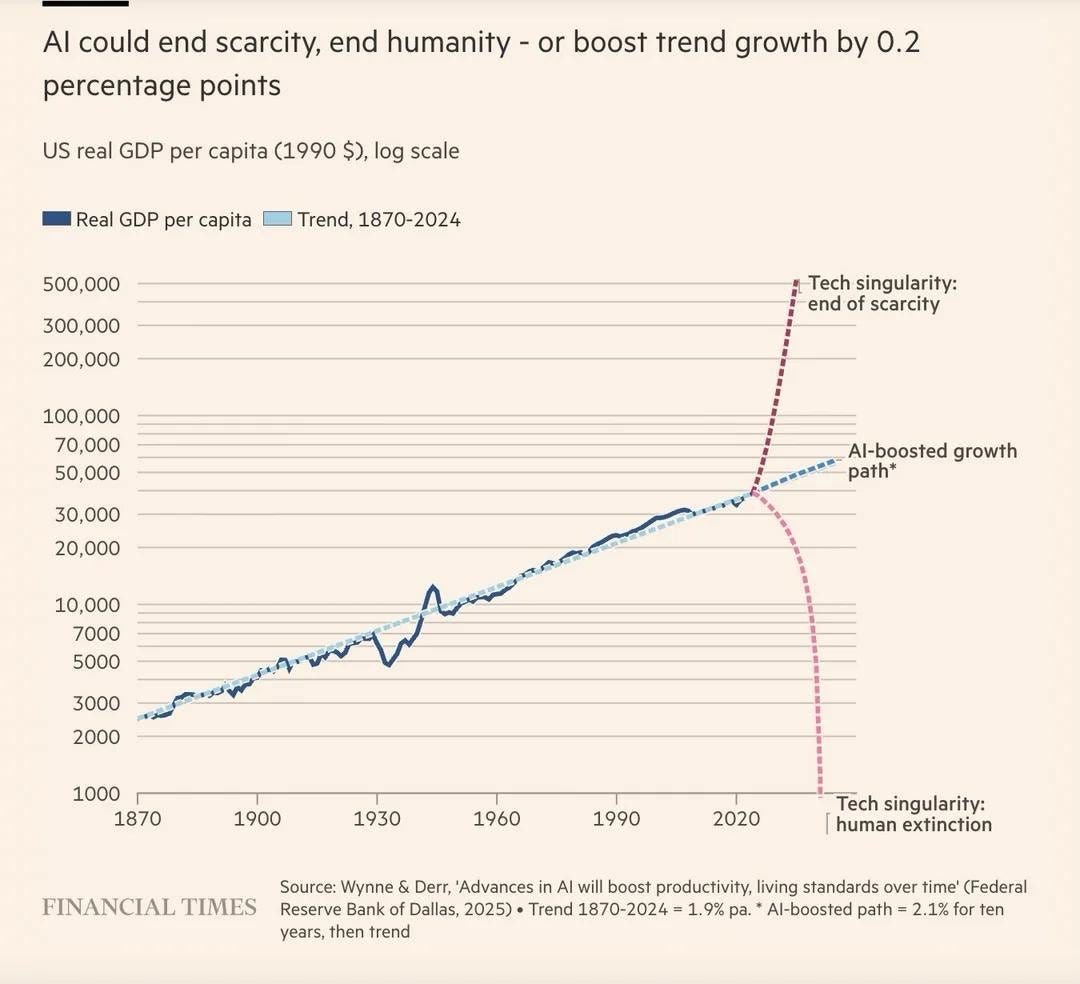
Anthropic hired an economist who warned AI could destroy humanity, but argued "it is optimal to take a 1 in 3 chance of ending human existence in exchange for a 2/3 chance of dramatically raising living standards by a factor of 55".
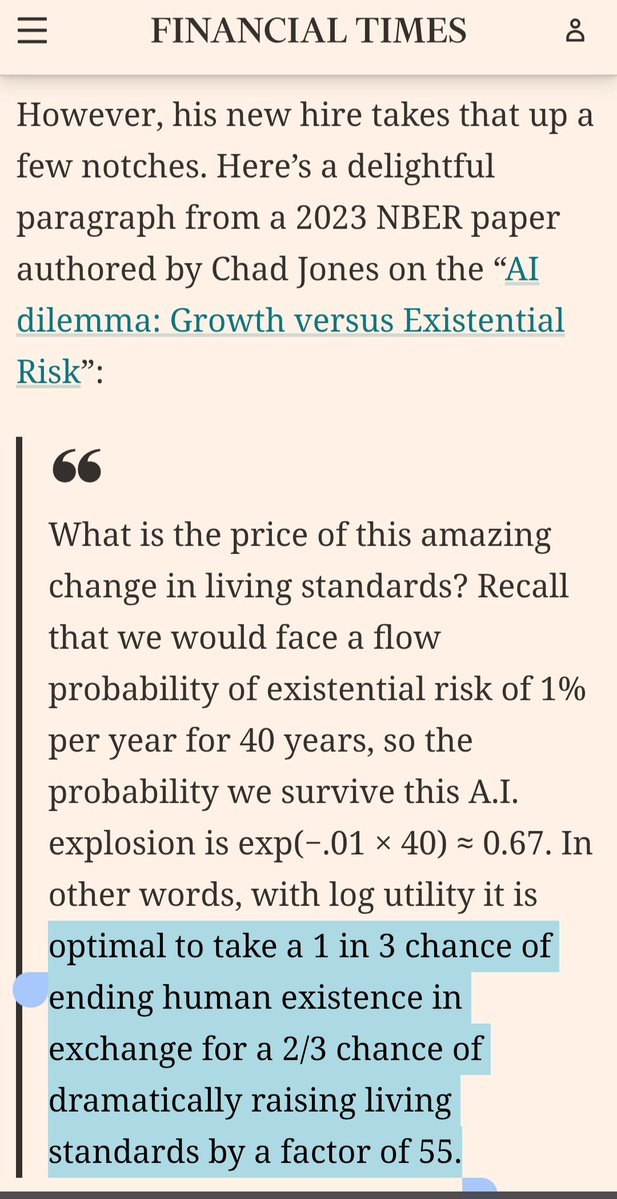
Probably the funniest graph ever published by the FT: 3 possible futures are either 1) infinite wealth and abundance, 2) human extinction or 3) 0.2% faster GDP growth
The architecture decided in all these.
And the architecture doesn’t have a complaints department.
The word to watch is still “voluntary.” August 1, 2026, that’s the deadline for the classified benchmarking process under the executive order. That’s when the NSA, CISA, and Treasury finalize the criteria for what counts as a “covered frontier model.” That’s when “voluntary” gets its permanent definition.
Watch what that definition includes. Watch who the trusted partners are. Watch whether a single African institution, government, or enterprise appears anywhere on the list.
And then ask yourself whether the architecture that rationed vaccines, rationed digital currency access, and rationed correspondent banking services would ever voluntarily share the most powerful cognitive tool in human history with the populations it has spent a century rationing everything else from.
Na so we see am.
The permission layer doesn't have a complaints department. But it does have witnesses. Share this with someone who needs to see the architecture before it hardens..