
The Gatekeeper Never Loses
Swiss Courts, Clinton Dinners, GCON: One Career

The plane landed. The wheels touched tarmac. The EFCC officers were in position. The arrest warrant was ready. And then a radio transmission crackled through the cockpit and the engines roared back to life. The jet accelerated, lifted off, and climbed out of Nigerian airspace. Gilbert Chagoury never touched the ground.
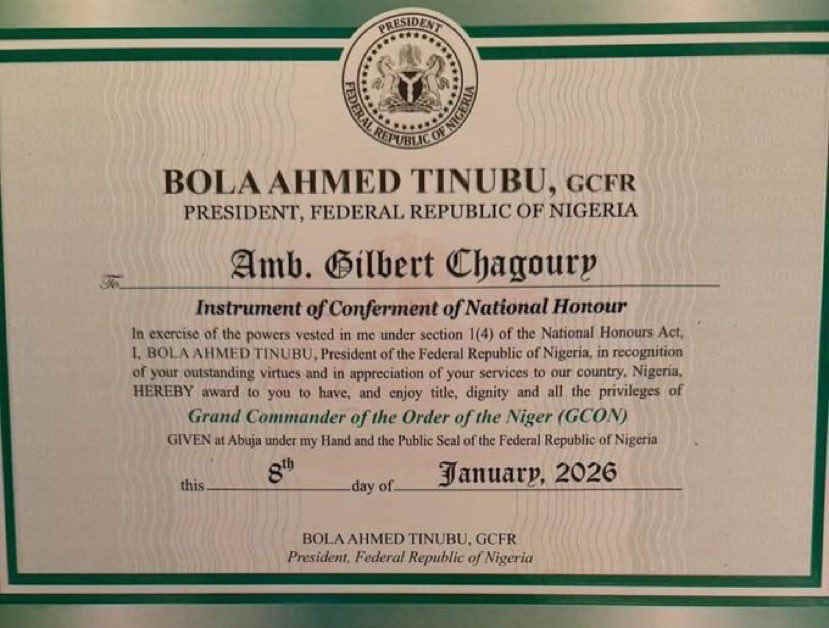
That was 2004. The man who set the trap: Nuhu Ribadu, chairman of Nigeria’s Economic and Financial Crimes Commission, was himself forced out of office in 2007, had his car shot at in 2008, and fled the country. Gilbert Chagoury, the man Ribadu once said “you couldn’t investigate corruption without looking at,” is today a recipient of the Grand Commander of the Order of the Niger, Nigeria’s second highest national honour, awarded on his 80th birthday, the 8th of January 2026, by the government in which Ribadu serves as National Security Advisor.
Hmmm.
Before you call this irony, understand what it actually is. It is architecture. And the blueprints were never drawn in Lagos.
Gilbert Rams Chagoury was born in Lagos on the 8th of January, 1946, to Lebanese immigrant parents who had settled in Nigeria in the 1930s. He came back from Lebanon schooling as a teenager, worked sales, worked flour milling with his father-in-law, and in 1971 co-founded the Chagoury Group with his brother Ronald. Construction, real estate, flour mills, hotels. Twenty thousand employees by the company’s own count. A business empire built on the country his parents chose as home. Fine.
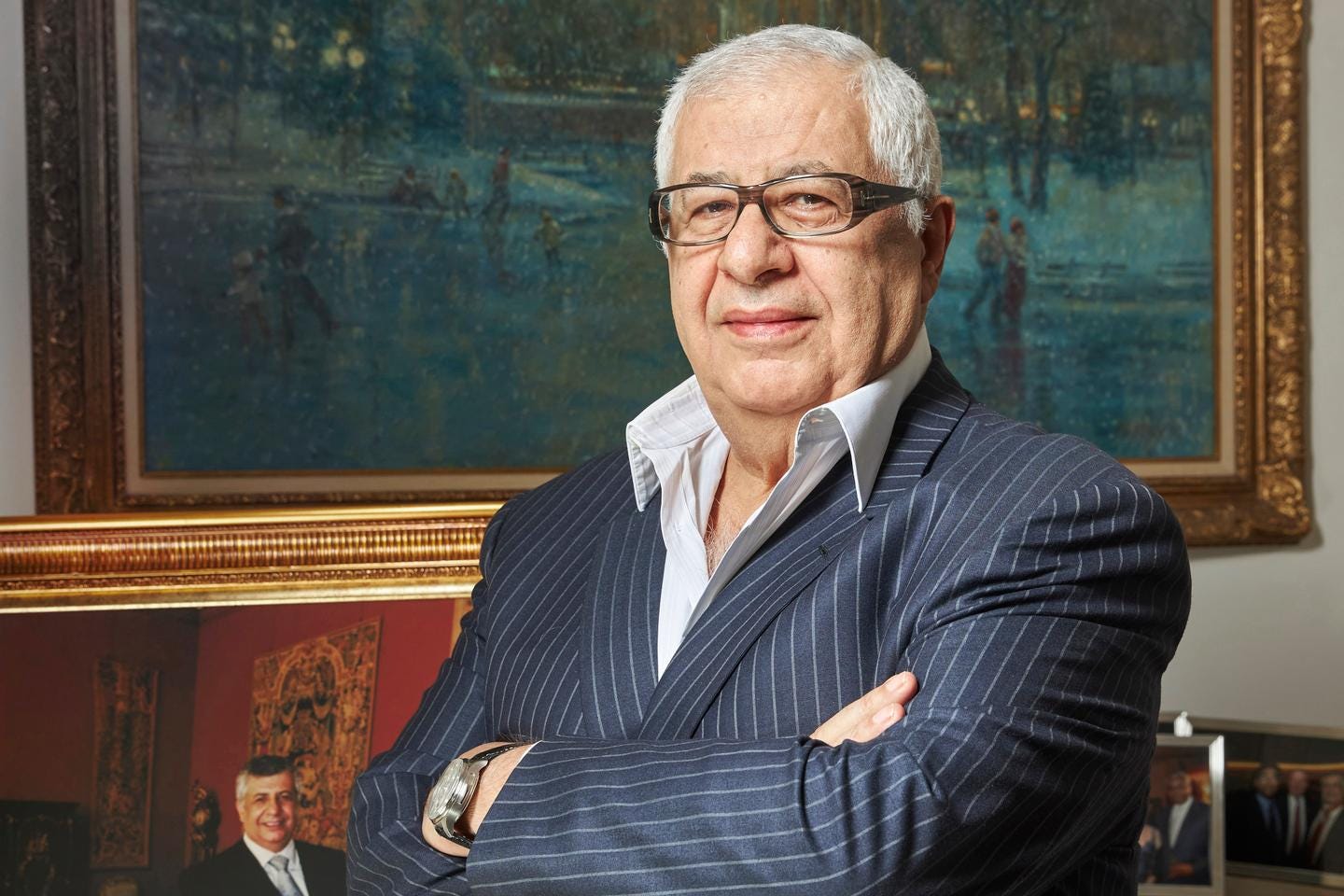
But empires need protection, and Chagoury found his on a flight to Port Harcourt. He sat next to a military officer named Sani Abacha. They talked. They became friends.
In November 1993, Abacha dissolved Nigeria’s democratic institutions, cancelled a presidential election, and installed himself as head of state. He would rule for five years. An estimated $2 to $5 billion would vanish from the national treasury during that time, moved through banks in Switzerland, Luxembourg, Liechtenstein, and the Isle of Jersey. Chagoury didn’t just know about this. He made it possible.
Filipe Vasset, longtime editor of Africa Energy Intelligence in Paris, put the role in a single sentence: “He was the gatekeeper to Abacha’s presidency.”
Understand what a gatekeeper does. When Bill Richardson, US Congressman, Clinton envoy, came to Lagos in August 1996 to pressure Abacha on human rights, he spent hours across the table from one of the most feared men in Africa. Abacha didn’t blink. Richardson walked out exhausted. Then his handlers took him somewhere else. A private home. A man waiting who held no title, no office. Who offered him pizza. Who sat with him for an hour and a half and seemed sympathetic to Washington’s concerns.
Richardson left thinking he’d made a useful contact.
What he’d actually done is what everyone who encountered Chagoury did: he walked into the gatekeeper’s process without knowing it. The man who seemed to listen to Washington’s concerns about the regime was the man managing the regime’s external exposure. That is the function. You don’t keep a gate by brute force. You keep it by being indispensable to everyone who wants to pass through in either direction.
This meeting happened in August 1996. Ken Saro-Wiwa had been executed the previous year. MKO Abiola, widely believed to have won the election Abacha cancelled, was rotting in a prison cell. His wife Kudirat had been assassinated on the streets of Lagos that same year. Bodies barely cold.
Weeks after Richardson’s pizza dinner, Chagoury made a $460,000 donation to Vote Now 96, a tax-exempt voter registration organization with close ties to the Democratic National Committee. He was a foreign national. The contribution was explicitly illegal under US law. The money went through anyway.
Sorry chiefs.
Here is where the architecture reveals itself.
Chagoury’s Swiss lawyer, Luke Agard, confirmed to PBS that Chagoury served as a reference for Abacha’s sons at Credit Suisse. When Abacha’s children walked into one of the world’s most “prestigious” banks carrying unexplained millions, the bank needed a “credible” name to vouch for them. Chagoury was that name. At a second Geneva institution, SG Rigg Bank, accounts were established that facilitated transfers of over $120 million directly from the Central Bank of Nigeria to entities linked to the Abacha family.
In 2000, a Geneva court convicted Chagoury of money laundering and aiding a criminal organization.
And then the negotiation began.
His lawyers offered a deal: a fine of one million Swiss Francs, approximately $600,000, plus the return of $66 million to the Nigerian government. Swiss authorities agreed to expunge the conviction from his records after two years. Separately, Chagoury negotiated immunity from prosecution with Nigeria’s new civilian government. He returned money held in Swiss accounts, the exact amount was never confirmed publicly, some reports placing it as high as $300 million, and in exchange, Nigeria granted him a clean slate from all Abacha-era charges.
Run the numbers carefully.
A man found guilty of laundering proceeds from one of the largest thefts in African history, an operation that bled the Central Bank of Nigeria while Nigerians ate sand, settled his criminal liability in Switzerland for less than one percent of the documented transfer amount. The conviction was erased. The record disappeared.
This is not a loophole. This is not even a scandal. This is a service that the “prestigious” Swiss financial system performs. You bring the money in, and if the music stops, you negotiate the price of the exit. The house takes a cut going in and a cut going out. The Central Bank of Nigeria is the one that doesn’t get to sit at the table.
And America? Same structure, different letterhead. Between 2012 and 2016, Chagoury routed approximately $180,000 through Americans who made campaign contributions in their own names using his money, straw donors, to four Republican candidates, one of them Congressman Jeff Fortenberry. Fortenberry was later convicted of lying to investigators about where the money came from. Chagoury himself signed a deferred prosecution agreement with the US Department of Justice and paid $1.8 million. No trial. No prison.
The American version of the Swiss expungement. Same service, different jurisdiction, slightly higher price tag.
Cui bono? Not Nigeria. Not the 80,000 people of Badia. Not the Abiola family. Not Saro-Wiwa’s children. The institutions that process these deals": the banks, the courts, the DOJ, collect a toll and wave the cargo through.
In 2008, state officers arrived at a coastal community on the edge of Victoria Island, Lagos. They brought teargas. They set homes on fire. Some people ran inland. Some ran toward the water. Some of the ones who ran toward the water didn’t come back.
No warning. No court order. No record of compensation. No documented resettlement plan. By end of day, an estimated 80,000 people had lost their homes. The place was called Badia. It had been there as long as colonial Lagos: petty traders, cleaners, waiters, families who worked the service economy of wealthy Victoria Island next door, who had built lives on stilts above the water. They had been adapting to coastal erosion for generations.
What changed in 2008? A land grant.
On the 7th of July 2006, the Lagos State Government granted a statutory right of occupancy to South Energyx Nigeria Limited, a Chagoury Group subsidiary, covering 10 million square meters of Lagos coastline under a 78-year lease. Two years after that grant, the people living on that coastline were cleared with fire and teargas.
The governor who signed that grant was Bola Ahmed Tinubu.
In May 2023, Bola Ahmed Tinubu became President of Nigeria.
At the COP28 climate summit in Dubai in late 2023, Chagoury appeared on the official Nigerian delegation list. His title was not businessman. Not adviser. It was: Confidant of Mr. President. His listed organization was the Nigerian State House. No other country at the summit listed a confidant on their delegation. Not one.
In January 2024, Tinubu issued a birthday tribute from the State House: “Gilbert is a shining light in any room… With friends like him, one can sleep with a still mind.”
And then came the contracts.
The Lagos–Calabar Coastal Highway: 700 kilometres, ten lanes, awarded to High-Tech Construction, another Chagoury subsidiary, at an estimated 15 trillion naira, roughly $11 to $13 billion. The single most expensive infrastructure project in Nigerian history. More than half the country’s annual budget. No public competitive tender.
The Tincan and Apapa Port rehabilitation: awarded to ITB Nigeria, another Chagoury subsidiary, at 1.1 to 1.4 trillion naira. Financed by a £746 million UK Export Finance deal, sealed during Tinubu’s state visit to London. Chagoury is reported to have traveled with the delegation. African Intelligence reported that ITB was selected despite having no experience in the port sector.
The Snake Island container terminal: awarded in March 2026 for $1 billion.
Leaked documents obtained by the International Consortium of Investigative Journalists reveal that Tinubu’s son Seyi was a majority shareholder in an offshore BVI company alongside Ronald Chagoury Jr. The company was incorporated specifically for its corporate secrecy. Its business purpose has never been disclosed.
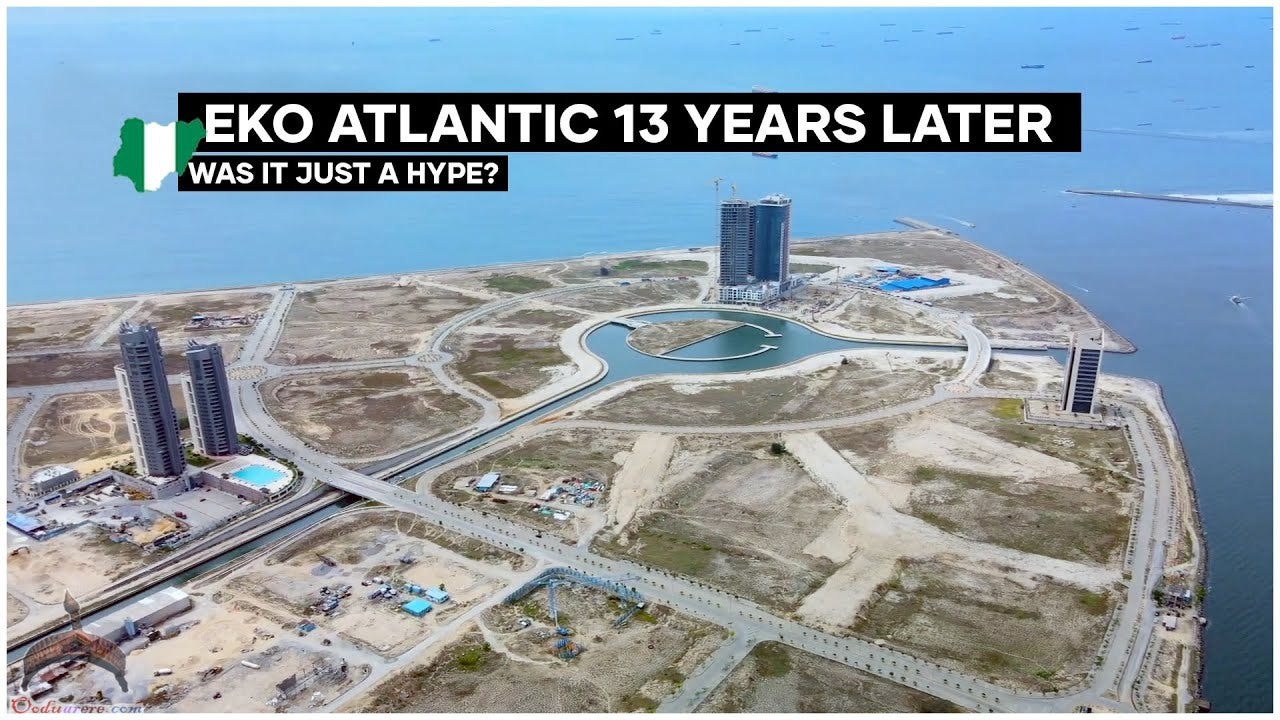
Meanwhile, the Eko Atlantic project, built on the 10 million square meters cleared of 80,000 people, was pledged $1 billion through the Clinton Global Initiative in 2009. The same CGI whose head, Doug Band, sent an April 2009 email to Huma Abedin and Cheryl Mills, Hillary Clinton’s closest State Department advisors: “We need Gilbert Chaguri to speak to the substance persons in Lebanon. As you know, he is key guy there and to us, very important.” Abedin replied: “I’ll talk to Jeff.” Band pushed back minutes later: “Better if you call him now, preferable. He’s awake, I’m sure.”
This is a foreign national with a Swiss money laundering conviction, even if subsequently expunged, being treated as a priority contact by the inner circle of the US Secretary of State. Not through official diplomatic channels. Through personal text messages that had to be extracted via a Freedom of Information Act lawsuit.
Here is what this story is not: it is not a tale of Nigerian corruption. That is the small frame. The one the algorithm monetises. The one that lets everyone else off clean.
Here is what it is.
The same Swiss banking infrastructure that processed $120 million from the Central Bank of Nigeria also priced the exit at $600,000 and erased the record. The same DOJ that charged Chagoury’s straw donor network gave him a deferred prosecution agreement and sent him home. The same UK Export Finance that champions British values signed £746 million for a port deal during a presidential state visit, awarded to a company with no port experience. The same Clinton Foundation that publicly documented Chagoury’s $1 to 5 million gift was the vehicle through which the man who cleared 80,000 Nigerians from their homes pledged $1 billion to build a city on their graves. The same COP28 Dubai summit that debated Africa’s climate financing needs hosted Chagoury on Nigeria’s official delegation as Confidant of Mr. President, the same man whose land grant flooded Badia before the carbon credit markets arrived to call it a green development.
These are not separate scandals. They are one operation with multiple logos.
The gatekeeper function Chagoury perfected under Abacha was never dismantled. It was repriced and rebranded. The Swiss court didn’t end the function, it set the tariff. The DOJ agreement didn’t end the function, it set the American tariff. The Nigerian indemnity didn’t end the function, it set the domestic tariff. And Tinubu’s presidency didn’t end the function, it gave it a state house listing and a national honour.
Gilbert Chagoury has outlasted seven Nigerian heads of state. No elected official can say the same. No military commander. No appointed minister. The man holds no title and no constituency. He just holds the gate.
And the EFCC officer who spent years trying to bring him to justice? Nuhu Ribadu today serves as National Security Advisor in the same government that draped a GCON around Chagoury’s neck on his 80th birthday. No official ceremony. No citation explaining why.
The award became public eleven days later when another Nigerian billionaire posted the certificate on X, with the caption i could not make up: “Congratulations to my role model, dear friend and mentor, Ambassador Gilbert Chagoury, on the well-deserved GCON honor conferred by President Bola Ahmed Tinubu.”
Presidency sources confirmed it was authentic.
Watch what they do with that silence. Watch for the next contract.
The gatekeeper has a full-time operation. The least we can do is show up consistently, share and document truth to power.
Agreed that the least we can do is show up consistently. When I don't have time to read much, you're the first one I read, Ope. You're the person I'm learning the most from.
One small question, you say Abiola's widow. But you say his wife was assassinated while he's rotting in a jail cell.
I've been chatting with a young man named Ordany who works at my local plant store. He's from the Congo, which I didn't realize is different than the DRC. We've been talking about the CFA franc and he's been explaining the French imposed politician ruling his country. On the insanity of that we're in full agreement.
He's said that one thing they have in his country is faith, faith in god to change it. There we don't agree but that's hard to voice when hope seems the last thing left.