
The Grandfather's Dream
The Global South Is the Laboratory. It Has Always Been the Laboratory.

On April 17, 2026, Elon Musk posted that the federal government should issue “Universal HIGH INCOME” checks to manage unemployment caused by AI. The post got 68.4 million views. Forty-six thousand replies. Analysts weighed in on inflation. Economists debated implementation. Progressives celebrated. Libertarians objected.
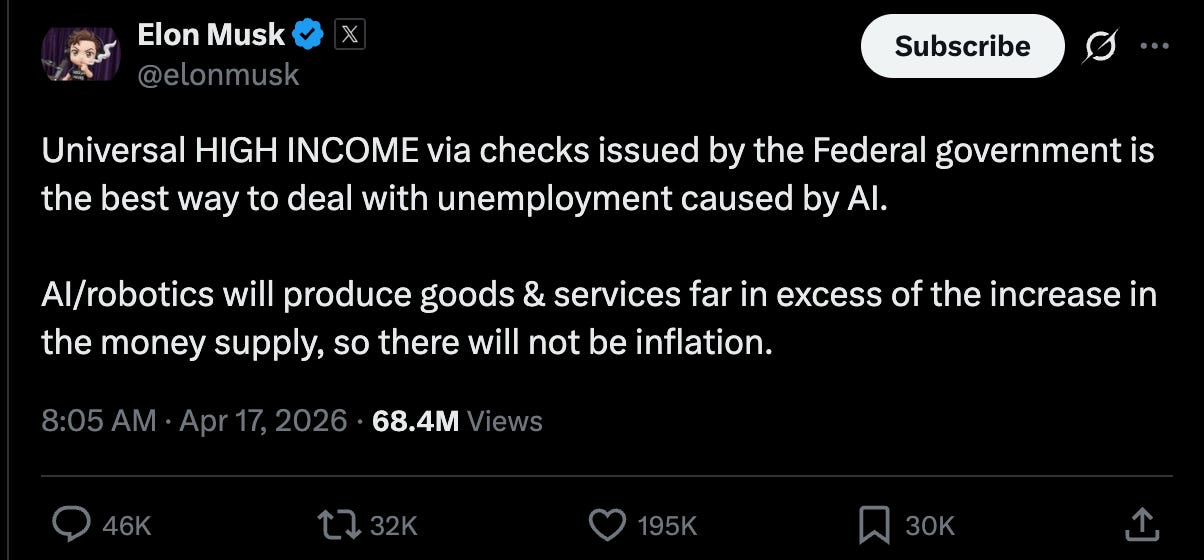
Almost no one mentioned his grandfather.
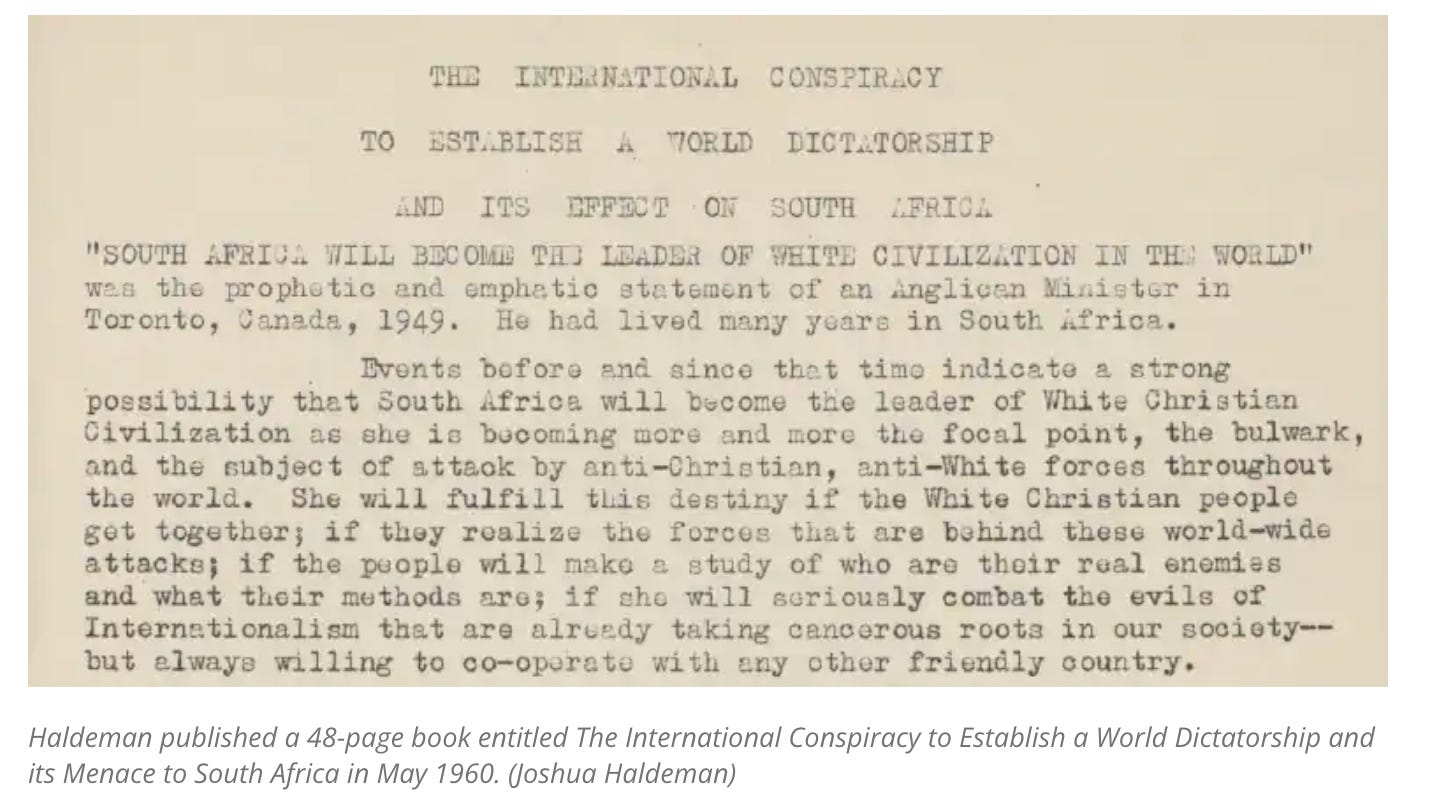
Joshua N. Haldeman was the principal organizer of Technocracy Incorporated’s Canadian operations during the 1930s. Technocracy Inc. was a techno-rationalist movement with one core proposal: abolish the price system entirely. Replace monetary exchange with energy certificates: allotments denominated in ergs, calibrated to continental energy production, distributed to every citizen regardless of employment status, administered by a body of engineers called the Technate, which would be constitutionally insulated from democratic politics and market mechanisms.
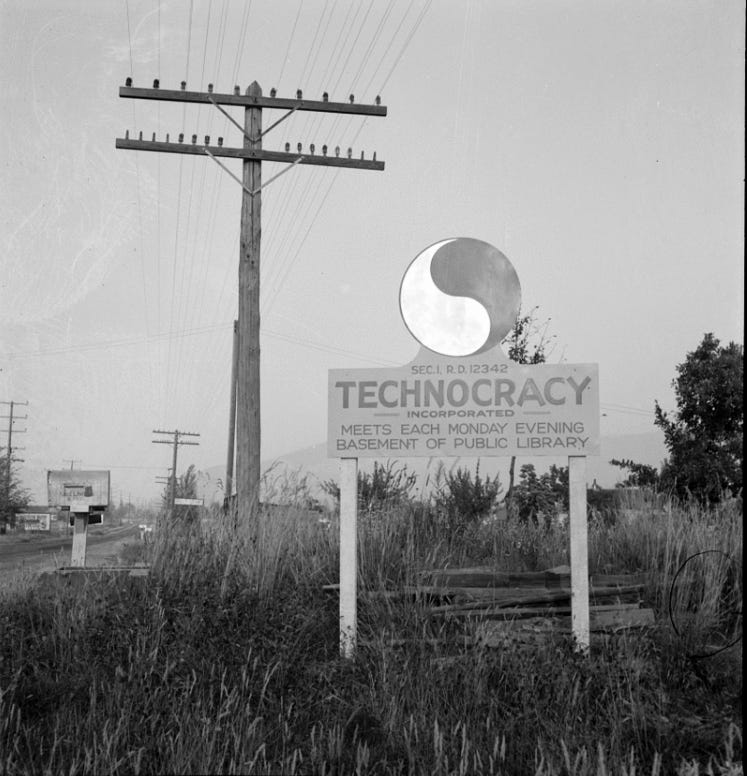
The movement was banned in Canada in 1940 under the Defence of Canada Regulations, on grounds that included its authoritarian structure, its opposition to conscription, and its perceived subversive character. Haldeman then redirected his political energies to the Social Credit Party in Saskatchewan. In that capacity, when the party’s Quebec wing published excerpts from the Protocols of the Elders of Zion in the mid-1940s, Haldeman publicly disavowed antisemitism while simultaneously delivering a speech arguing that the document’s authenticity was “beside the point”, the plan described in it, he said, had been “rapidly unfolding in the period of observation of this generation.”
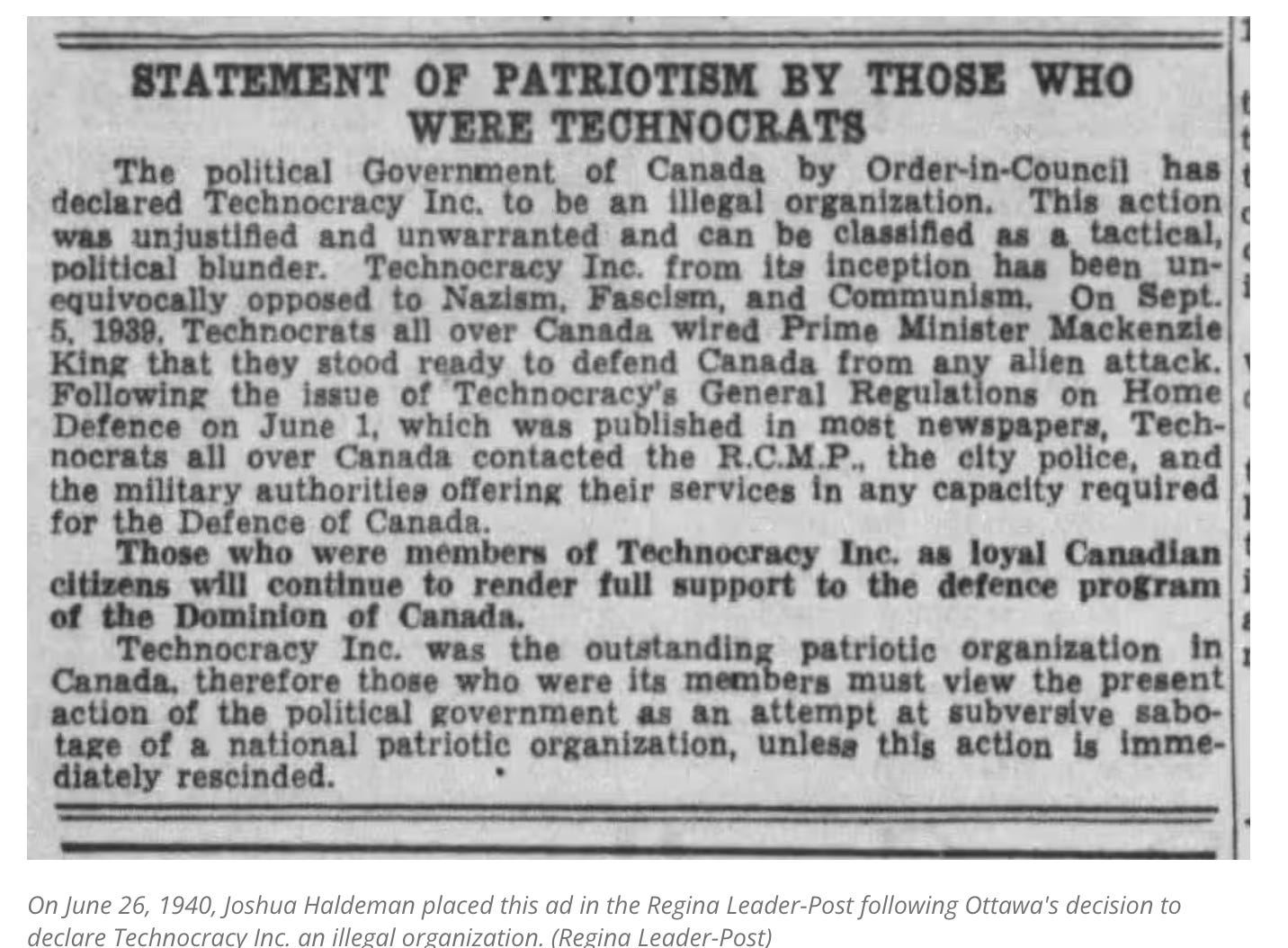
The Protocols had been publicly debunked as a Tsarist secret-police fabrication by The Times of London in 1921. The debunking was not new information. Haldeman knew what it was and defended it anyway. In 2024, Errol Musk, Elon’s father reportedly claimed that Haldeman had sympathized with Nazi Germany during the war.
This is the genealogy. Not a smear. A documented inheritance.
The word “universal” in “Universal High Income” does the same political work it did in the energy certificate scheme: it names the eligibility while concealing what is conditional. In the Technocracy model, what was conditional and consequentially so was everything else: the magnitude of the allotment, the criteria for adjustment, the administrative body empowered to make those adjustments, and the productive infrastructure whose outputs determined what was available to distribute. The certificate was “universal.” The Technate controlled the denominator.
Musk’s UHI has the same architecture. A federal agency issues checks. The agency’s mandate, leadership, and calibration criteria are unspecified. The productive infrastructure generating the surplus is owned by a small number of private actors: among them, notably, the person proposing the checks. A cybernetic organism has feedback loops. Whoever controls the loops controls the “universal” distribution downstream of them.
This is not UBI. UBI has a philosophical tradition: from Thomas Paine’s 1797 Agrarian Justice to Philippe Van Parijs, rooted in individual sovereignty and unconditional rights. UHI is a managed distribution mechanism for a population whose labor has become economically redundant. The distinction matters. A citizen has rights. A managed population has allotments.
The most ambitious attempt to actually build cybernetic governance, to make the feedback loops and the Operations Room real, happened not in Silicon Valley but in Santiago, Chile, in 1971.
Salvador Allende’s government commissioned Stafford Beer, a British management cybernetician, to design Project Cybersyn: a real-time economic nervous system for Chile’s nationalized industries. Telex machines in factories fed production data to a central Operations Room: seven Tulip chairs, hexagonal screens where a small team could model outcomes and adjust inputs in near-real time. Beer called it the Viable System Model: a sociotechnical organism in which human and machinic processes constitute a single self-regulating unit.
Project Cybersyn was dismantled in September 1973. The CIA had supported the Pinochet coup that ended Allende’s government. The Operations Room was destroyed. Beer’s engineers scattered.
The Global South hosted the experiment. The Global South paid the cost when the experiment was cancelled.
Na so we see am.
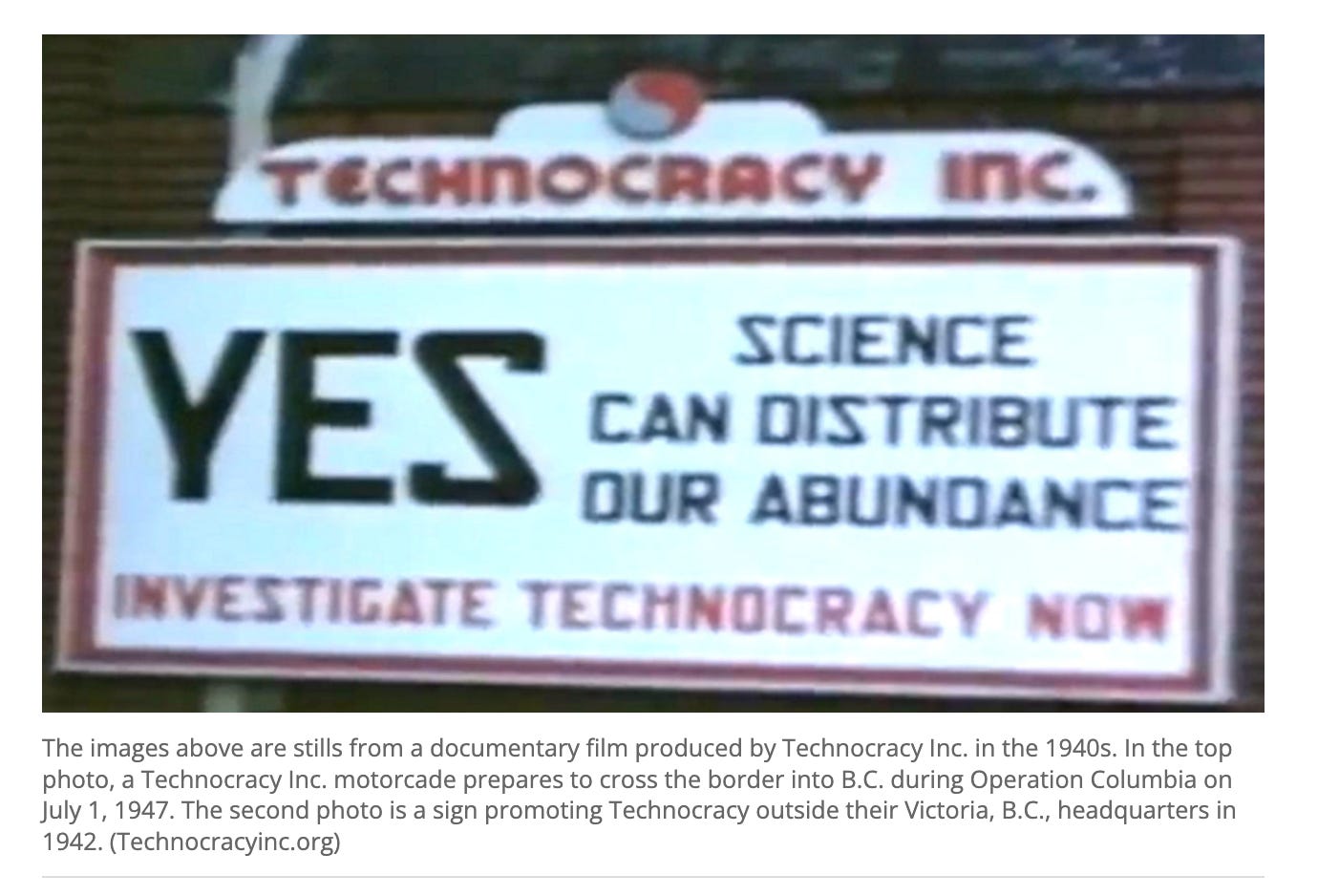
Technocracy Inc. never got its Technate in Canada. The dream did not die. It relocated.
The CFA franc has been the monetary architecture of fourteen West and Central African states since 1945. Pegged to the French franc and then the euro, administered by the Banque de France, requiring member states to deposit fifty percent of their foreign exchange reserves in a French treasury account, calibrated to French monetary policy rather than to the productive output of the economies it governs. Fourteen heads of state sit on the CFA franc zone’s policy committee. France holds a permanent seat. The African states can propose. France disposes.
This is the energy certificate, implemented. The currency is “universal” within the zone. The Technate sits in Paris. The allotment is calibrated to the needs of the administrator, not the administered.
Ndongo Samba Sylla, Senegalese economist and co-author of The CFA Franc: French Monetary Imperialism in Africa (2021), has documented the mechanism exhaustively. The architecture is not concealed. It is operational.
Meanwhile, the newer proposals are being piloted. Próspera: a charter city in Honduras, operating as a special economic zone with its own legal system, tax regime, and administrative apparatus, substantially backed by Peter Thiel’s capital. The free-private-cities movement: Patri Friedman’s seasteading, Dryden Brown’s Praxis represents the same fusion: Yarvinite corporate sovereignty instantiated through special economic zones. The African Development Bank and World Bank have been promoting Special Economic Zone frameworks across sub-Saharan Africa since at least the early 2000s, explicitly as “governance laboratories”, the phrase appears in World Bank development literature without irony.
The Global South is not the future of this project. It is the beta environment.
Understand the intellectual succession and the geography becomes clearer.
Peter Thiel’s childhood was partly spent in Swakopmund, South West Africa, between roughly 1971 and 1977, attending a German-language school. Chris McGreal’s January 2025 Guardian reporting described Swakopmund at that time as a place where “Heil Hitler” greetings reportedly remained in open use: a colonial German town still functioning as a colonial German town under South African apartheid administration. Thiel has cited the school’s discipline as formative to his later libertarianism. The surrounding context: apartheid, colonial extraction, populations administered without consent, is not incidental to the political vision he subsequently developed. It is the laboratory in which the vision was first observed working.
Thiel wrote in 2009 that “freedom and democracy are no longer compatible.” Curtis Yarvin had already published his “Formalist Manifesto” in 2007, proposing the sovereign as a joint-stock corporation, citizens as customers, exit rights as the substitute for democratic voice, what he called the “gov-corp” and later the “sovcorp.” Nick Land endorsed it in The Dark Enlightenment (2012) as the honest terminus of post-democratic thought. Balaji Srinivasan’s The Network State (2022) supplies the operational mechanism: online communities, cryptographically coordinated, crowdfund land, negotiate diplomatic recognition, bootstrap into sovereignty.
Alex Karp, meanwhile, holds a doctorate in social theory from Goethe University Frankfurt: the institution most associated with Adorno and Horkheimer, who wrote Dialectic of Enlightenment in 1944 specifically to explain how technical rationality becomes a tool of domination. Karp trained in the tradition that exists to diagnose what he built. That is not irony. That is a career choice.
Three men. Three successive answers to the same question: who governs when democratic politics has failed? Haldeman said: the engineer-administrator, the Technate. Thiel said: the founder-sovereign, the gov-corp. Karp said: the philosopher-king with the defense contract, the Technological Republic.
The question never changed. Only the costume.
Here is where the identity project enters.
Karp’s manifesto, and the Korean-American reviewer who praised it, calls for “shared mythological national goals,” civic ritual, a national identity project to fill the void left by what they call America’s “hollow pluralism.” The reviewer introduces kokutai, Japanese for “national essence”, as the missing ingredient. Lee Kuan Yew’s Singapore equivalent was junzi, a Confucian civic virtue, enforced in practice through the Internal Security Act, press controls, and the systematic suppression of opposition politicians. Nigeria’s National Youth Service Corps, established 1973 by Decree No. 24, is West Africa’s version: mandatory post-graduation service pitched as national identity formation, in practice a discipline mechanism for a state that does not trust citizens to form identity without supervision.
Every “shared national purpose” project has an enforcement mechanism. The manifesto specifies the purpose. It does not specify the mechanism because specifying the mechanism would require specifying who controls it, and that question cannot be answered democratically without dissolving the entire project.
The structure of the disavowal has also been inherited.
Haldeman formally denied antisemitism while preserving the Protocols’ operative content. His grandson endorsed a “white genocide” conspiracy post as “actual truth” in November 2023. The advertiser boycott followed. The Auschwitz visit followed, January 2024. The published apology followed. Within months: escalating feuds with the ADL, because X’s Grok was generating antisemitic content, July 2025.
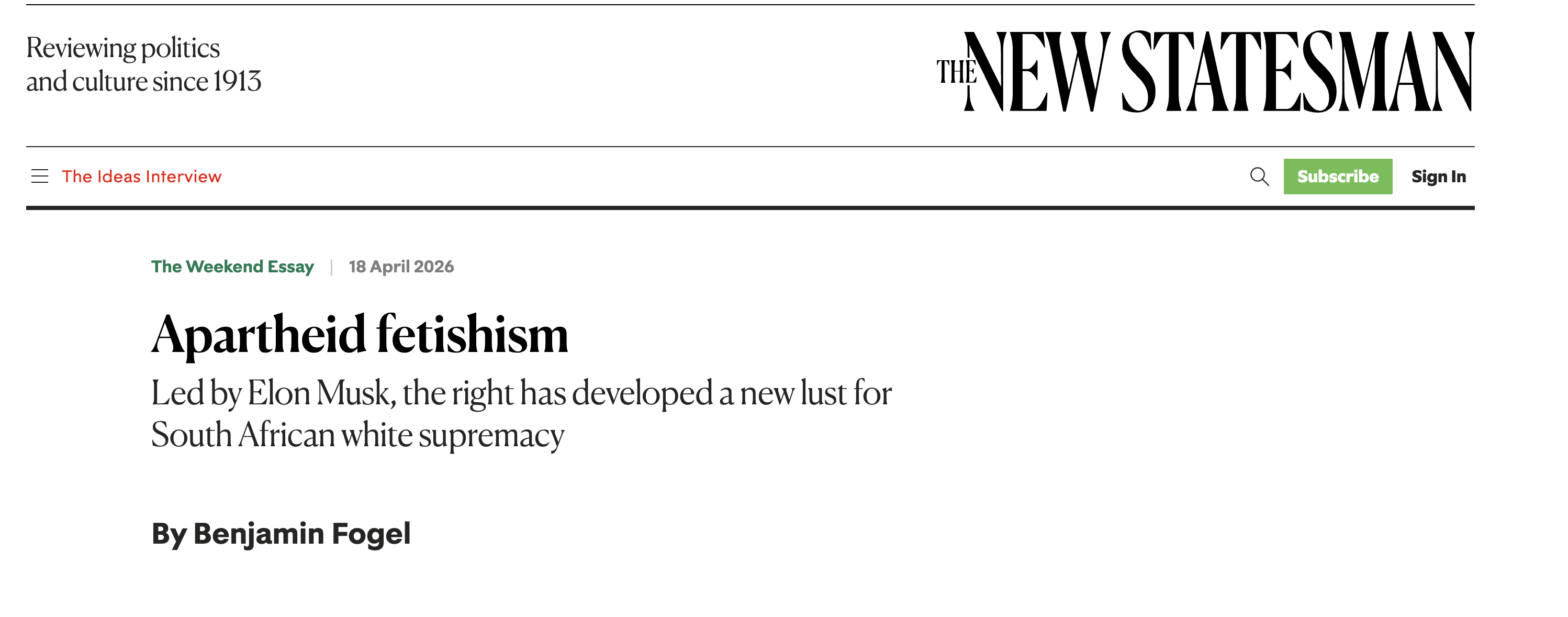
The structure is identical: formal concession calibrated to the cost of exposure, not to the substance of the claim. The apology is not a correction. It is a price negotiation, conducted under market pressure, with no obligation to change the underlying position. Haldeman demonstrated the template in the 1940s. It has been reproduced with high fidelity across eighty years.
Courtenay Turner asks, at the end of her genealogy: “who benefits, who decides, who is counted as human in the system being built?” The question is correct. The Global South has the answer, documented, in the form of history.

The people not counted as human are the ones in whose territory the system is first deployed. Whose currencies are administered from Paris. Whose coups are managed by contractors operating out of Stuttgart. Whose governance “failures” justify the charter city. Whose labor redundancy is managed through the check, not through the ballot.
Project Cybersyn was the one time the Global South got to run its own version of the experiment. The CIA helped end it in seventy-three days.
The Technate did not disappear in 1940. It relocated to the franc zone, to the free-trade zone, to the special economic zone, to the operations room of the AFRICOM contractor running target lists in the Sahel. Now it is incorporating as a Network State, crowdfunding land in the governance vacuums primarily in the global south.
Elon Musk wants the federal government to send you a check. His grandfather wanted the Technate to issue you energy certificates. The denomination changed. The architecture did not.
Watch who designs the adjustment criteria. Watch who sits on the board of the issuing authority. Watch which governance “failures” get solved by a charter city whose legal system was drafted in a San Francisco law firm.
The dream suppressed in Canada in 1940 has returned with funding, network effects, and a Nasdaq ticker. This time it is not proposing to replace the state. It is proposing to become it.
Forward this to whoever told you UHI is a new idea. Tell them to check the grandfather's paperwork.