
The Poseidon Principles: When Banks Become the Climate Police
The Mobility Apartheid in the Absolute Zero Plan

Heathrow Survives. The Rest of You Take the Train.
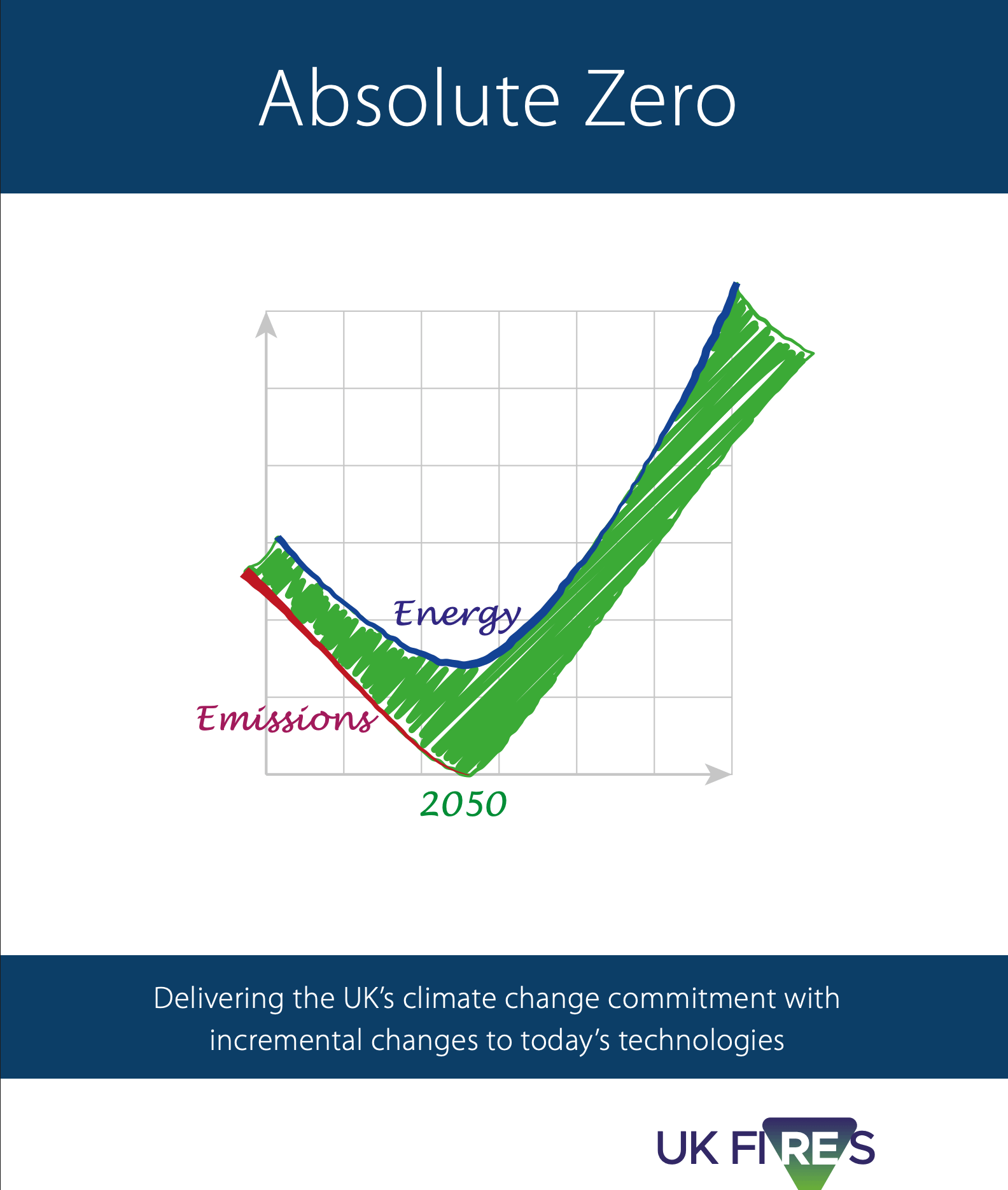
The Absolute Zero report, authored by Professor Julian Allwood and colleagues at Cambridge, Oxford, Bath, Nottingham, Strathclyde, and Imperial College, funded by the UK government, published November 29, 2019 is explicit in its timeline. Between 2030 and 2049: “All airports except Heathrow, Glasgow and Belfast close with transfers by rail.” After 2050: “All remaining airports close.”
On February 3, 2021, John Kerry US Special Presidential Envoy for Climate, flew a private chartered jet to Iceland to receive an environmental award. Asked about it, he reportedly said it was “the only choice for someone like me.”
Two sentences. Two tiers. Some airports survive. Some people fly. The rest of us take the train assuming the train exists, which in most of Africa it does not.
Let me separate two concepts that net zero discourse routinely collapses: mobility and shared sacrifice. Mobility is the ability to move across geography: for commerce, for family, for political participation, for economic survival. Shared sacrifice implies the restriction falls equally, that the burden is proportional, that no one is exempted because of who they are or which city their airport serves.
These are different things. Net zero, as architectured, is not shared sacrifice. It is stratified restriction, enforced from above through capital markets, with exceptions carved for the powerful and compliance demanded from everyone else.
The airport closure schedule is transparent in the report. Three UK airports survive: Heathrow the largest hub in Europe, connecting the British financial and political establishment to the world; Glasgow where Scottish devolution politics make closure a constitutional problem; Belfast where the Northern Ireland peace settlement makes it a diplomatic one. Private aviation apparently continues for climate envoys who need it.
What closes: the regional airports that serve communities visiting home. The airports through which budget carriers gave working-class Europeans their first experience of air travel, a mobility that Africans never had in the first place, and now will not acquire.
Africa has no comprehensive rail network. This is not a political claim; it is a logistics fact. The continent’s 54 countries are connected primarily by aviation. Lagos to Nairobi. Abidjan to Addis Ababa. Accra to Johannesburg. The existing rail infrastructure is sparse, colonial-legacy, oriented toward connecting resource extraction points to coastal ports, not toward connecting people to each other. The AfCFTA, the African Continental Free Trade Area, the most ambitious regional economic integration project in the world, depends on intra-African mobility. Its supply chains move by air and by sea.
Both are being phased out.
The Absolute Zero report does not mention Africa once. Its scope is explicitly the UK, but the report itself notes that 60 countries have replicated the UK’s zero-emissions commitment, and the frameworks being exported globally through climate finance conditions, through multilateral lending criteria, through insurance market pricing, replicate this logic. The airports that close in a UK-scaled global adoption are not Heathrow. They are Murtala Muhammed. Jomo Kenyatta. Kotoka.
Now the shipping. Timeline, p.5: “All shipping declines to zero” by 2050.
The report is honest about what this means. Page 1: “Shipping is more challenging: although there are a few military ships run by nuclear reactors, we currently don’t have any large electric merchant ships, but we depend strongly on shipping for imported food and goods.” The UK imports 50% of its food by sea. Now apply to West Africa. Nigeria imports about 3 million metric tons of rice in 2025 season. Landlocked Sahelian countries: Mali, Niger, Burkina Faso access the global economy through coastal ports via road and rail corridors that terminate at shipping terminals. When the ships stop, those corridors serve nothing.
The enforcement mechanism for all of this does not require legislation. It requires 11 banks.
The Poseidon Principles signed in 2019, 11 leading banks jointly representing approximately $100 billion in loans to the global maritime industry use credit conditionality to enforce shipping decarbonization. The banks do not need to pass a law. They adjust lending terms. Shipping companies operating on credit either comply or lose access to capital. Christine Lagarde, President of the European Central Bank, reportedly stated that the ECB should incorporate climate considerations into lending policy, which includes not extending credit to companies with high emissions exposure.
Recognize this architecture. This is conditionality. The same mechanism by which the IMF attached structural adjustment conditions to African sovereign loans in the 1980s and 1990s, cut the public sector, liberalize the currency, privatize the parastatals is now being applied to emissions. The performance theater is different. The leverage is identical. Capital access as compliance tool. Policy outcomes enforced not through law but through credit terms.
The African states that needed to borrow in the 1980s complied with structural adjustment, dismantled their industrial capacity, and spent a generation recovering. The African shipping companies that need credit today will comply with the Poseidon Principles, adjust their fleets or their routes, and the cost will flow downstream into freight prices, into commodity costs, into port throughput. The last mile of that downstream is an African consumer paying more for imported goods.
The central number in the Absolute Zero report is 60%. Road use at 60% of 2020 levels. Heating at 60% of today’s use. Total energy at 60% of current demand. The word the report uses for this is “restraint.” What the IMF called structural adjustment. What the World Bank called austerity. What Cambridge calls Absolute Zero.
Africa’s per capita energy consumption is already a fraction of the UK’s, Nigeria’s per capita electricity consumption is approximately 147 kWh/year, vs the UK with around 4,800 kWh/year. Applying a 60% target to an already-minimal baseline produces a permanent development ceiling disguised as environmental responsibility. The UK reaching 60% of its energy abundance is sacrifice. Africa reaching 60% of its energy poverty is condemnation.
The report is honest, at least, about the distributional effects. Page 40: “buildings will become ever increasing premium.” Transport will become “much more expensive.” “Rural or more isolated communities are likely to be disproportionately affected.” “The largest distributional impact is intergenerational.” Direct quotes. The authors know what they are designing.
What they do not know, or were not funded to know is what this looks like from Lagos, from Bamako, from Dar es Salaam. The institutions convening these frameworks: the ECB, the IMF, the World Economic Forum, these 11 Poseidon banks are the same institutions whose predecessors designed the extraction economy that caused their so called emission problem. The colonial concession companies extracted resources without public consent. The structural adjustment programs imposed austerity without electoral mandate. The Poseidon Principles enforce decarbonization without the Global South voice. Different costume. Same operation.
Cui bono? The banks do not lose their shipping exposure. They transfer the compliance cost to the ships. The ships transfer it to the routes. The routes price it into the freight. The freight lands in a Lagos supermarket.
The Poseidon Principles were signed in 2019. The enforcement architecture for using capital markets as climate compliance mechanism is already operational. The question is not whether it will constrain African mobility and development. The constraint is already being priced in insurance markets, in trade finance terms, in the risk matrices of infrastructure lenders.
Watch who gets to fly when flying is finished. Watch which ports survive when shipping phases out. Watch which countries get exception protocols and which get compliance demands with no transition support.
Heathrow survives. The rest of you take the train. The train does not go where you need to go. That was always the plan.
The architecture is already in place. If you think the 2030s will produce surprises, you haven't read the documents. Subscribe and let's read them before they arrive.