
The Raider in Cashmere

Who sells plastic bags for €2,000?
Bernard Arnault does. He’s worth $190 billion. His most famous brand’s best-selling product line isn’t leather. It’s “coated canvas”, a polyurethane-treated fabric with leather trim, monogrammed, boxed, and sold at a markup that would make a pharma executive blush. Louis Vuitton will tell you it’s heritage. It’s craftsmanship. It’s art.
It’s a leveraged buyout that smells like Chanel No. 5.
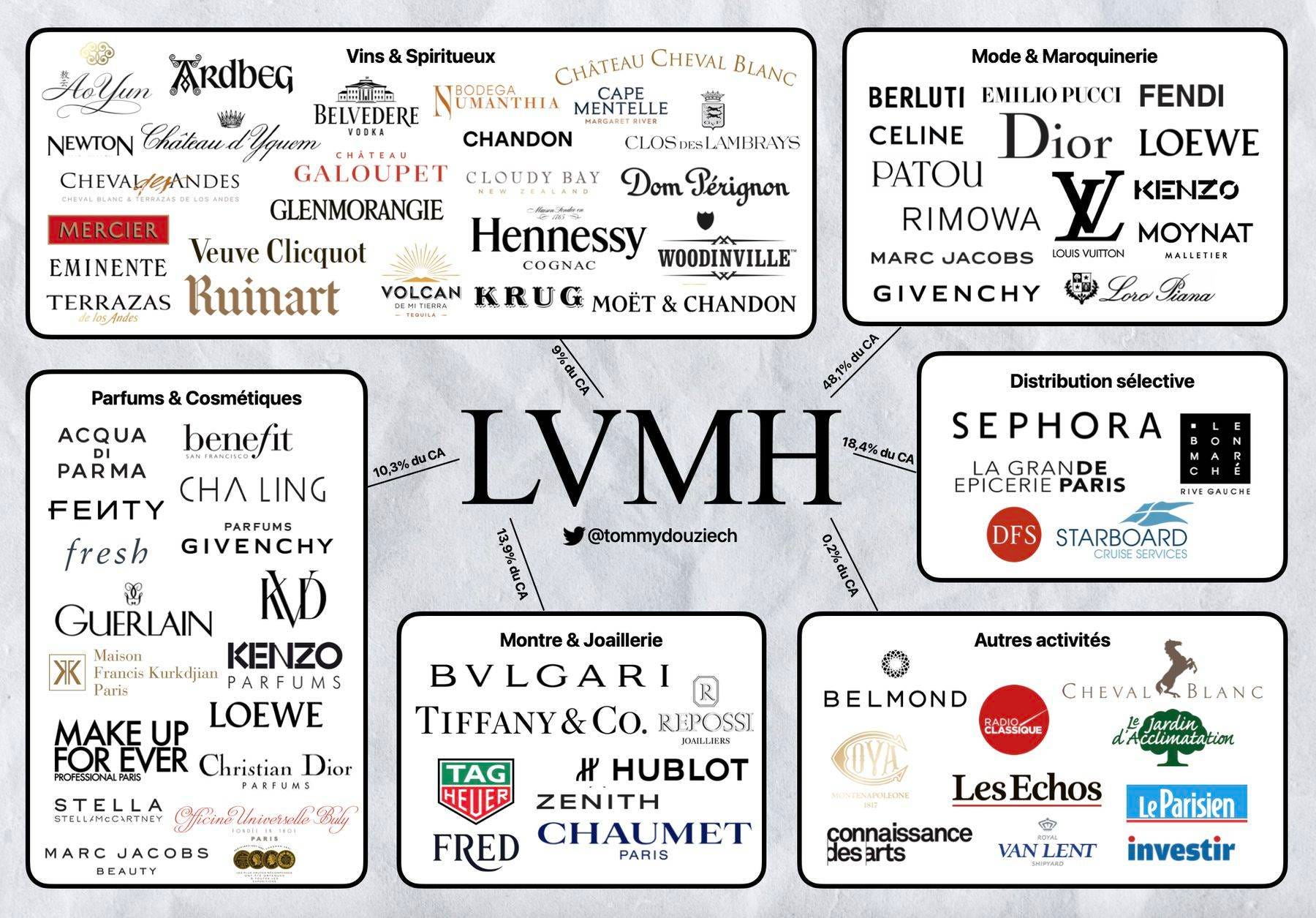
Let me define a term before we go further. LVMH is not a luxury company. LVMH is a private equity operation that acquired luxury brands and runs them on a PE return model. The playbook Bernard Arnault used to build this empire maps onto the corporate raider handbook with surgical precision.
Step one: target distressed assets.
Step two: isolate the core brand from the dying parent company.
Step three: find weak shareholders: small, divided, sentimental.
Step four: leverage heavily, control a lot with a little.
Step five: exploit regulatory gaps.
Step six: recycle non-core assets to fund the next acquisition.
Step seven: exploit founder psychology, the blind spot of people who can’t imagine losing what they built.
This is not fashion. This is KKR in cashmere.
Arnault’s entry point was Boussac Saint-Frères, a bankrupt French textile conglomerate. Inside the wreckage sat Christian Dior. 1984. He didn’t rescue Boussac. He gutted it, extracted Dior, and used it as the launch pad. Three years later, Louis Vuitton merged with Moët Hennessy to form LVMH. The two sides couldn’t stand each other. Henry Racamier on the Vuitton side, Alain Chevalier on Moët Hennessy. While they fought over who would control the merged entity, Arnault entered as Racamier’s ally and bought shares. Kept buying. By 1989 he was chairman and CEO. Racamier was out. Chevalier was already gone. The entire merger, two of France’s most storied luxury houses became the vehicle for one man’s acquisition strategy.
Divide and conquer. Textbook.
What followed was the markup machine. Loro Piana, six generations of Italian textile craftsmanship acquired in 2013 for €2 billion. Tiffany & Co. the blue box, the Fifth Avenue flagship, acquired in 2021 for $15.8 billion, the largest luxury deal in history. Rimowa. Fendi. Sephora. The formula is consistent: acquire the brand, maintain the mythology, raise the prices, compress the costs, extract the returns. LVMH operates over 75 brands. The model depends on one thing, that the mythology holds faster than the customers notice the materials.
The mythology is slipping.
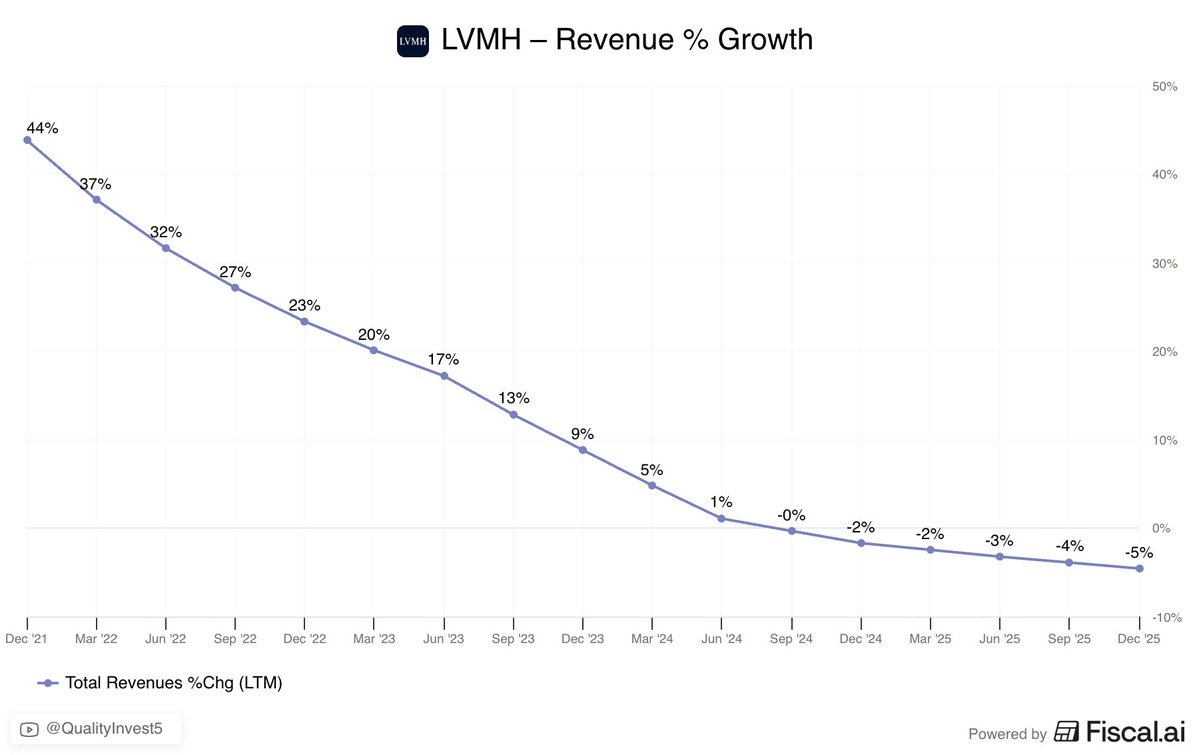
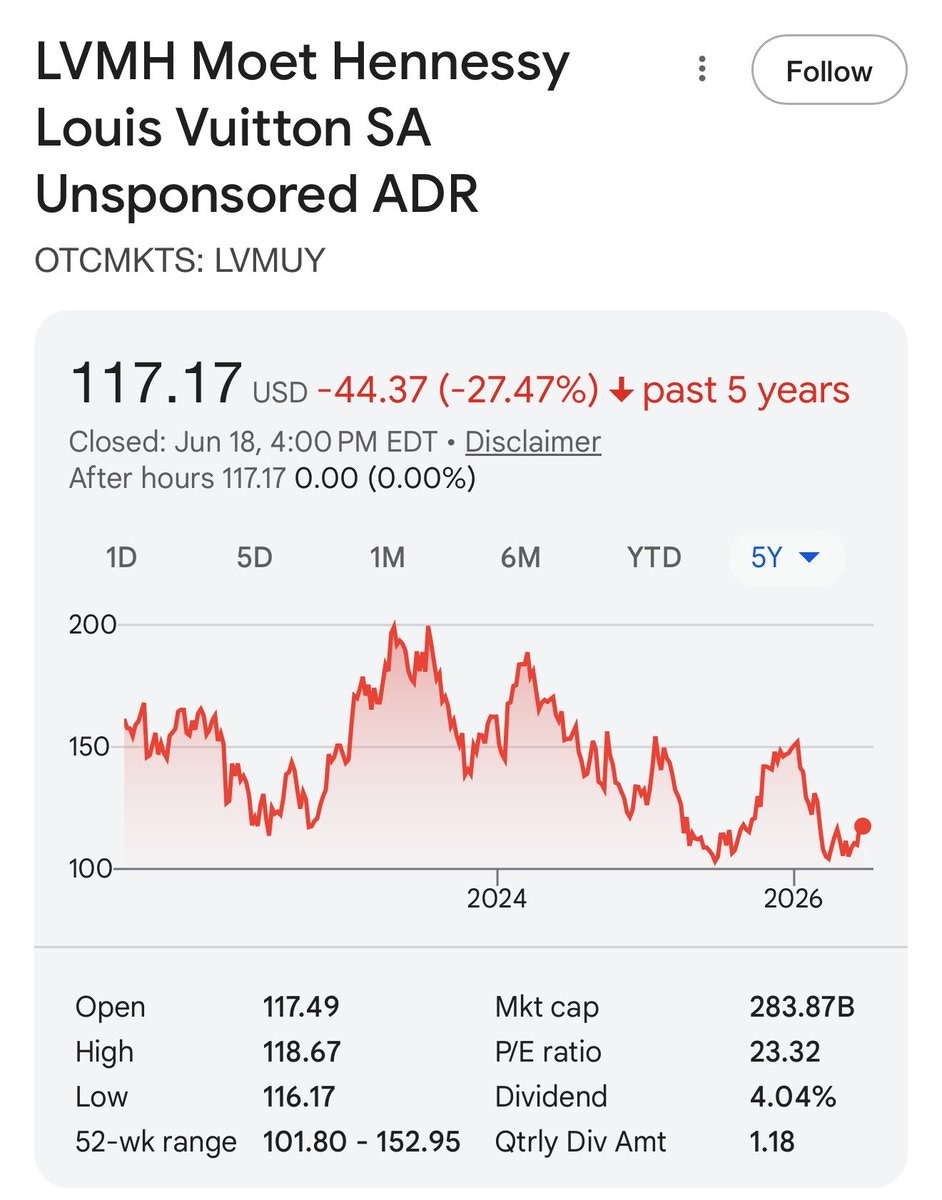
LVMH posted revenue of €86.2 billion in 2023. Then €84.7 billion in 2024. Then €80.8 billion in 2025. Three consecutive years of decline. Fashion & Leather Goods, the engine fell 2% organically in Q1 2026, 9% on a reported basis. Arnault’s personal net worth has bled from a peak of $240 billion in April 2023 to roughly $190 billion. Bain & Company, the luxury sector’s favored consultancy, calls this a “value equation” crisis: customers are asking whether they’re getting enough for what they pay. When the answer to that question requires you to explain that your €2,000 bag is coated plastic with a logo... hmmm.
The markup machine depends on the story. But the story depends on something most customers never see.
At COP16 in Cali, October 2024, LVMH announced a partnership with WWF to preserve the Congo Basin rainforest. Starting 2025, the company would support restoration efforts across a region spanning six African countries, home to 10% of the world’s plant, bird, and mammal species. Antoine Arnault, Bernard’s son, the company’s Image and Environment Director said the quiet part with a straight face: “our creativity depends on the natural resources we borrow from the planet.”
Borrow.
The Congo Basin stores carbon equivalent to 3 years of global CO2 emissions. The World Bank values the total ecosystem services of those forests at $23.2 trillion. In June 2025, the DRC received $19.47 million from the World Bank’s Forest Carbon Partnership Facility for reducing 3.89 million tons of carbon emissions in Mai-Ndombe province. Run the arithmetic: that’s approximately $5 per ton of carbon stored in forests valued at over twenty trillion dollars.

One Loro Piana Breia cashmere hoodie, the one that went viral on Chamath Palihapitiya’s torso retails for approximately €2,400. At $5 per ton, that hoodie costs more than 480 tons of sequestered Congolese carbon. The forest does the atmospheric work. The fashion house takes the sustainability credit. CDP A-List certification. COP16 announcements. UNESCO partnerships. LIFE 360 roadmap branding. The environmental virtue is another product line.
Cui bono?
Now connect the monetary architecture. Fourteen countries and some 227 million people sit inside a monetary cage: the CFA franc, pegged to the euro at 655.957:1, a ratio structurally locked in since the late 1940s. Until 2021, members of the West African CFA zone were required to park half their foreign‑exchange reserves with the French Treasury, effectively outsourcing monetary sovereignty (Central African CFA zone members still do). The Tax Justice Network captures the core distortion: the structural overvaluation of the CFA franc “tends to favour imports, including luxury goods, to the detriment of exports,” locking these economies into an import‑heavy, extraction‑led model rather than competitive, diversified production.
Read that sentence again. The currency architecture makes it cheaper to import European luxury goods into CFA zone countries and harder for CFA zone countries to export competitively. Cotton from Burkina Faso, leather from Chad, timber from Cameroon, cocoa from Côte d’Ivoire, raw materials flow out under a currency those countries don’t control, become inputs to European production, and return as branded goods at markups those economies can’t replicate. LVMH is in Chad right now, supporting cotton farmers through the Circular Bioeconomy Alliance as Lake Chad which shrank 90% between 1963 and 2001, faces extinction. The humanitarian concern is real. The supply chain interest is also real. And the monetary architecture that keeps the extraction profitable is seventy-eight years old.
This is the same extraction geography the colonial concession firms ran. Updated compliance language. Same address.
The colonial firm extracted the resource. The modern luxury conglomerate extracts the resource AND the environmental rehabilitation narrative AND the carbon credit AND the brand mythology. Four revenue streams where there used to be one. And the CFA franc peg, the monetary infrastructure that prices African labor in a currency pegged to Paris, is the financial rails that make all four possible.
LVMH isn’t a fashion company with a sustainability program. It’s a financial engineering operation with a sustainability program attached to a fashion brand that is attached to a colonial-era monetary architecture. Sorry chiefs, but the cashmere doesn’t hide the scaffolding.
In February 2026, six Congo Basin countries launched World Bank-backed strategic roadmaps for carbon markets and climate finance. The forests will be monetized. The carbon will be priced. The credits will be traded. The question is the same question it’s always been in Africa: who sets the price?
At $5 per ton for carbon stored in forests worth $23.2 trillion, the answer is not the DRC.
Watch who controls the pricing architecture. Watch whose name goes on the conservation credit. Watch which direction the branded goods flow.
The raider is in the forest now.
No one sets the price on what gets published here except you. If this analysis is worth more than $5 per ton to you, subscribe and share.