
The Special Economic Zone Always Had a Founding Document
The Parallel Jurisdiction Is the Product

Tatu City in Kenya has a British boarding school opening in September 2028.
Wellington College International Kenya, the school’s own description: “world-famous, pioneering British co-educational school”, will educate 1,500 students aged 3 to 18. Stephen Jennings, CEO of Rendeavour, the company that built Tatu City, says the school will attract “students and parents from Kenya, across Africa, and around the world.” He describes Kenya as being on “many families’ bucket list of life goals and experiences.”
The school is real. The city is real. Six hundred residents are already there. One hundred light industrial clients. A wildlife sanctuary. Over 100 kilometers of exercise trails. This is poured concrete and signed contracts.
The question is who it is for, and who gets to decide when the answer changes.
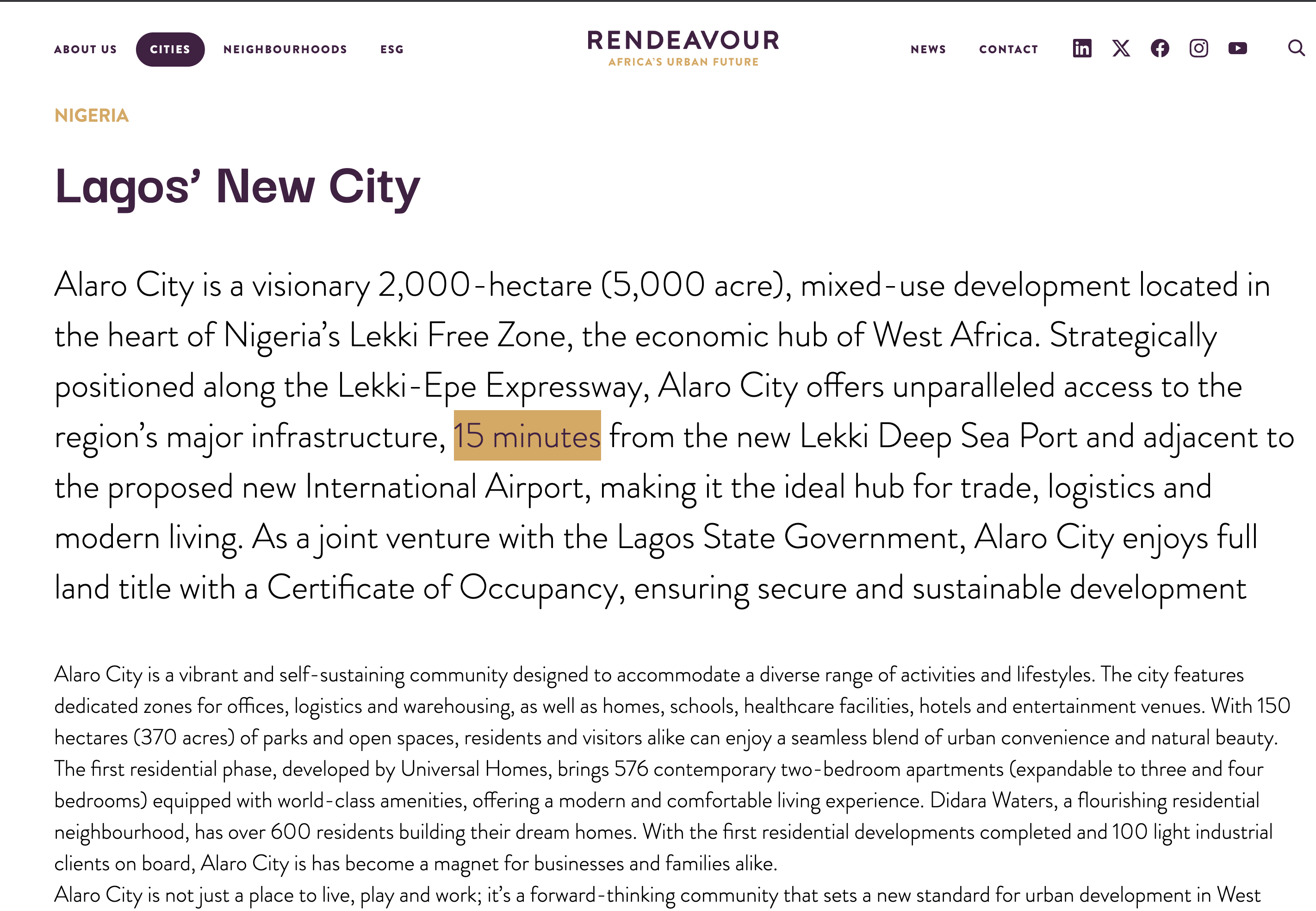
Rendeavour is Africa’s largest private urban land developer. More than 12,000 hectares to 30,000 acres across seven cities: Alaro City in Lagos, Appolonia City in Ghana, Jigna in Abuja, King City in Ghana, Kiswishi in the DRC, Roma Park in Zambia, Tatu City in Kenya. Over $300 million committed to Jigna alone. Alaro City 2,000 hectares in the Lekki Free Zone, 576 contemporary apartments completed, joint venture with the Lagos State Government, Certificate of Occupancy secured, is already housing families and businesses.
Inside Alaro City sits Itana: Nigeria’s first digital free zone. Itana allows global companies to incorporate and operate in Nigeria: open bank accounts, access talent, repatriate capital for a $1,500 annual license fee, compared to $10,000–$20,000 in traditional free zones. Corporate income tax exemptions. VAT exemptions. Dividend tax exemptions. Special immigration processing. The ability to operate in US dollars, which is otherwise restricted under Nigerian foreign exchange law. All of this is available, legally, through a framework that Itana’s co-founder Luqman Edu spent years building through the Nigerian legislature and the Nigerian Export Processing Zones Authority.
The infrastructure problem Itana is solving is real. Power is unreliable. Banking access for foreign companies is limited. Bureaucratic friction has pushed Nigerian tech founders to incorporate in Delaware rather than Lagos for years, because Delaware offers the legal clarity, banking access, and investor familiarity that Lagos cannot. When Luqman Edu says “Success for Itana looks like success for Africa,” I do not doubt that he means it. The question is whether the structure being built around that intention delivers the version of success he has in mind, or a different one.
The Charter Cities Institute based in Washington, D.C., co-signatory of a formal MOU with Itana’s parent body at Africa’s New Cities Summit, whose research director conducted the Itana podcast interview, publishes a reading list. Pull it.
It begins with Paul Romer, the Nobel Prize-winning economist who originated the charter cities concept: a serious academic argument that poor countries could accelerate institutional reform by creating new jurisdictions with better rules, potentially administered initially by a credible external party. Whatever you think of the original argument, Romer’s motivation might as well be genuine development economics.
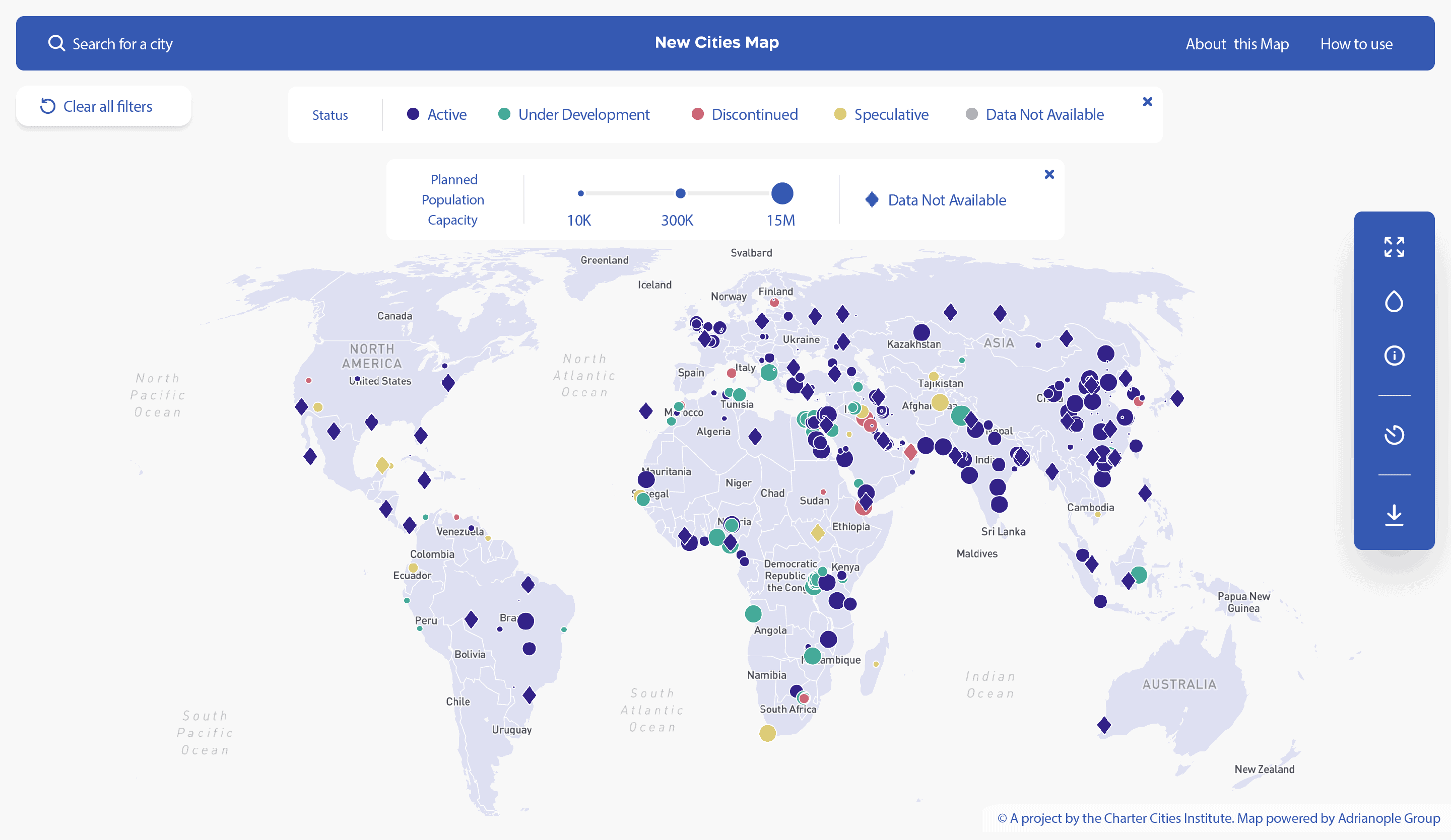
The reading list continues. Balaji Srinivasan’s The Network State, “a conceptual framework for building new countries that start online.” Patri Friedman’s Cato Unbound essay on seasteading. Titus Gebel’s Free Private Cities, a Rothbardian argument for cities in which residents are customers and exit is the substitute for democratic voice. Próspera in Honduras: listed as an example project. The same Próspera that Luqman Edu identified in his own interview as a key reference point for Itana’s design, “we have picked a lot of stuff from Próspera in Honduras.”
The reading list is not an accusation. It is a map of the intellectual tradition Itana is operating within. That tradition, at its more ambitious end: Srinivasan, Friedman, Thiel-backed Próspera, is not a development tool. It is a proposal for replacing democratic governance with competitive jurisdictional governance: a world of parallel legal spaces in which citizens, reconceived as customers, choose the best package of rules rather than participating in the making of shared rules. The SEZ as the permanent condition of governance, not as a temporary development instrument.
Proximity to an idea has consequences. Those consequences should be named.
Próspera is the case study.
A Honduran ZEDE, Zone for Employment and Economic Development substantially backed by Peter Thiel’s capital. Its own legal system. Its own dispute resolution mechanism. Its own tax architecture. Built on the same intellectual scaffolding as the Network State, the same tradition that Itana’s architects have drawn from.
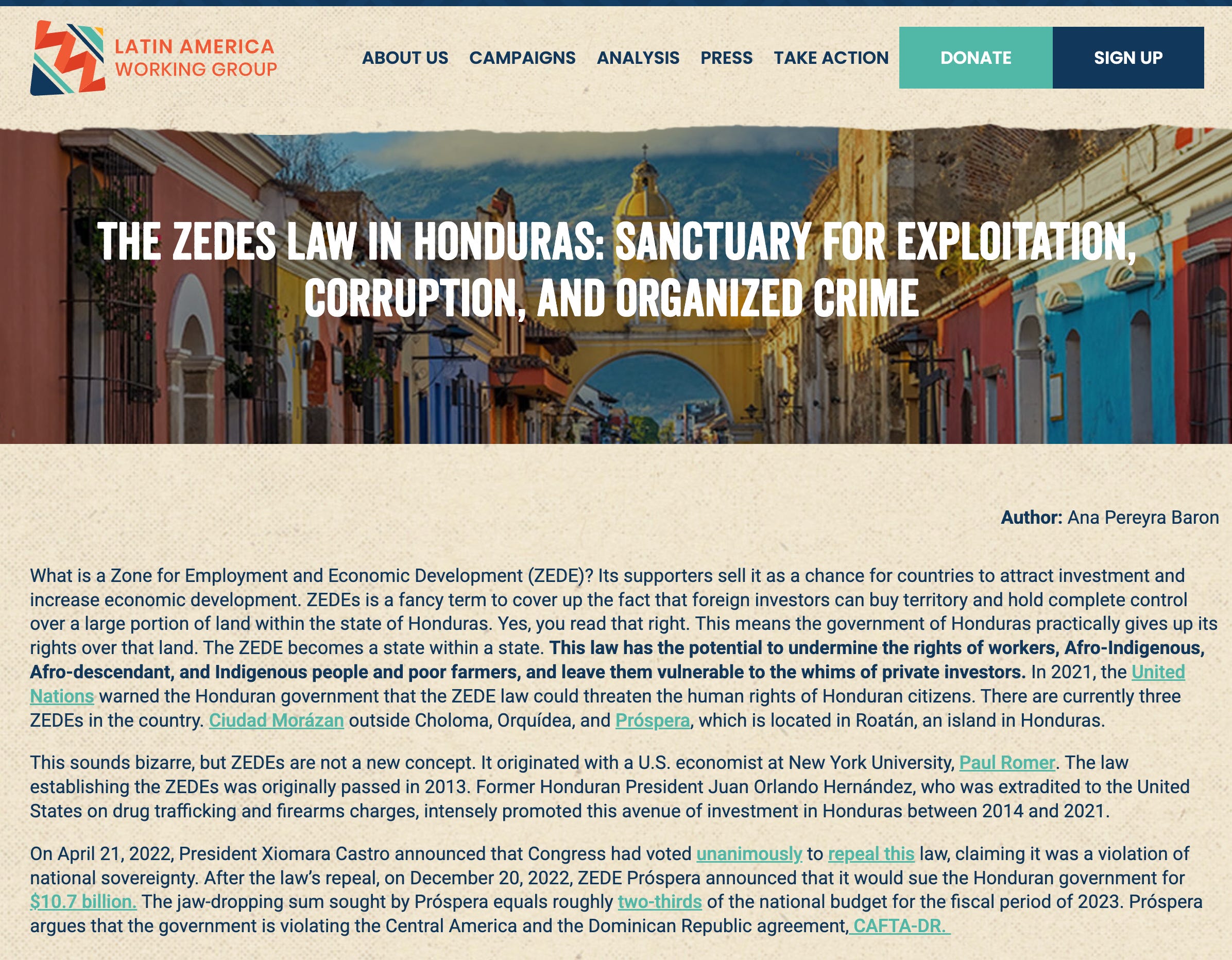
When Xiomara Castro won Honduras’s presidential election in 2021, she won on a platform that included repealing the ZEDE law. Democratic mandate. Popular vote. Constitutional process. The repeal has been legally contested by ZEDE operators through investment treaty arbitration: the argument being that Honduras’s bilateral investment treaty obligations supersede the democratic decision to undo the legal framework that Próspera depends on.
In plain language: a private company is arguing, in a private arbitration tribunal, that a democratic election cannot change the rules the company was built around.
Luqman Edu drew the right operational lesson from Próspera: build stronger government buy-in. Make the government a partner. Ensure the incentives are aligned so the framework survives administration changes. He has done this. He has done it better than Próspera did. The Nigerian Federal Government is a genuine partner. The framework was built through Nigerian legislation. This matters.
It is not the complete lesson.
The complete lesson is structural. The Investor-State Dispute Settlement mechanism present in most bilateral investment treaties, including treaties Nigeria is party to, allows private companies to sue sovereign governments in private arbitration when policy changes affect their investment. If a future Nigerian administration decides that the digital free zone’s tax exemptions are incompatible with domestic revenue requirements, or that the dollar-denominated banking arrangements are inconsistent with naira stabilization policy, the legal architecture of the zone may constrain what that administration can do. Not because Luqman Edu designed it that way. Because that is how investment treaty law works. The first hundred companies are not just clients. They are potential claimants.
The Global South has the operating history of this architecture.
The Special Economic Zone arrived in sub-Saharan Africa as a development instrument in the 1970s, with World Bank and USAID support. The World Bank’s own 2017 review found mixed outcomes: growth where host states maintained strategic coherence, enclave economies where the zone operated as a carve-out from the surrounding economy rather than a bridge into it. Kenya’s Export Processing Zones employed people. They also housed labor conditions that domestic Kenyan law, had it applied inside the zone, would not have permitted. The exemption from domestic standards was not a side effect of the EPZ model. It was the product being sold to the investor.
Shenzhen worked. It worked because China decided what Shenzhen was for and held the answer. China used the SEZ to test reforms it intended to generalize to the broader economy. The zone was a pilot. The pilot became a city. The city became a manufacturing capital. The Chinese state was the sovereign throughout. It ran the experiment. It retained the results.
The CFA franc zone also works, in the sense that it has run continuously for eighty years. Fourteen West and Central African states. Monetary policy calibrated to the eurozone. Foreign exchange reserves deposited in the French Treasury. France holds a permanent seat on the governing body. The zone “works” as a parallel monetary jurisdiction for the entity that administers it. The question of whether it works for the populations living inside it is the question Ndongo Samba Sylla has been answering with data for years. The CFA franc is the oldest Special Economic Zone in Africa, operating at the monetary level, and its outcomes are not Shenzhen’s outcomes. The difference is who holds sovereignty over what the zone is for.
Alaro City’s marketing materials describe the project as a “clean slate.” The phrase recurs across Rendeavour’s communications: “designed from a clean slate, creating efficient, 15-minute cities.” The clean slate is presented as the solution to a planning problem: Lagos’s congestion, overwhelmed infrastructure, negative agglomeration economies. The framing is accurate. Lagos has these problems. They are severe and decades in the making.
The clean slate is also a political argument, and it is worth naming what the argument is.
It says: the existing city, with its residents, its informal economies, its unresolved land tenure, its messy democratic politics, its institutions that “will be decades before they begin to become more efficient”, is the problem. The solution is to build adjacent to it, with different rules, for different people, and call the difference “world-class.”

Praxis Nation’s materials use the language of Rome: the Faustian spirit, civilization, conquest. Rendeavour uses the language of urban planning: sustainability, 15-minute cities, world-class infrastructure. The register is different. The structural claim is the same: the existing social order is too encrusted to reform. Build outside it.
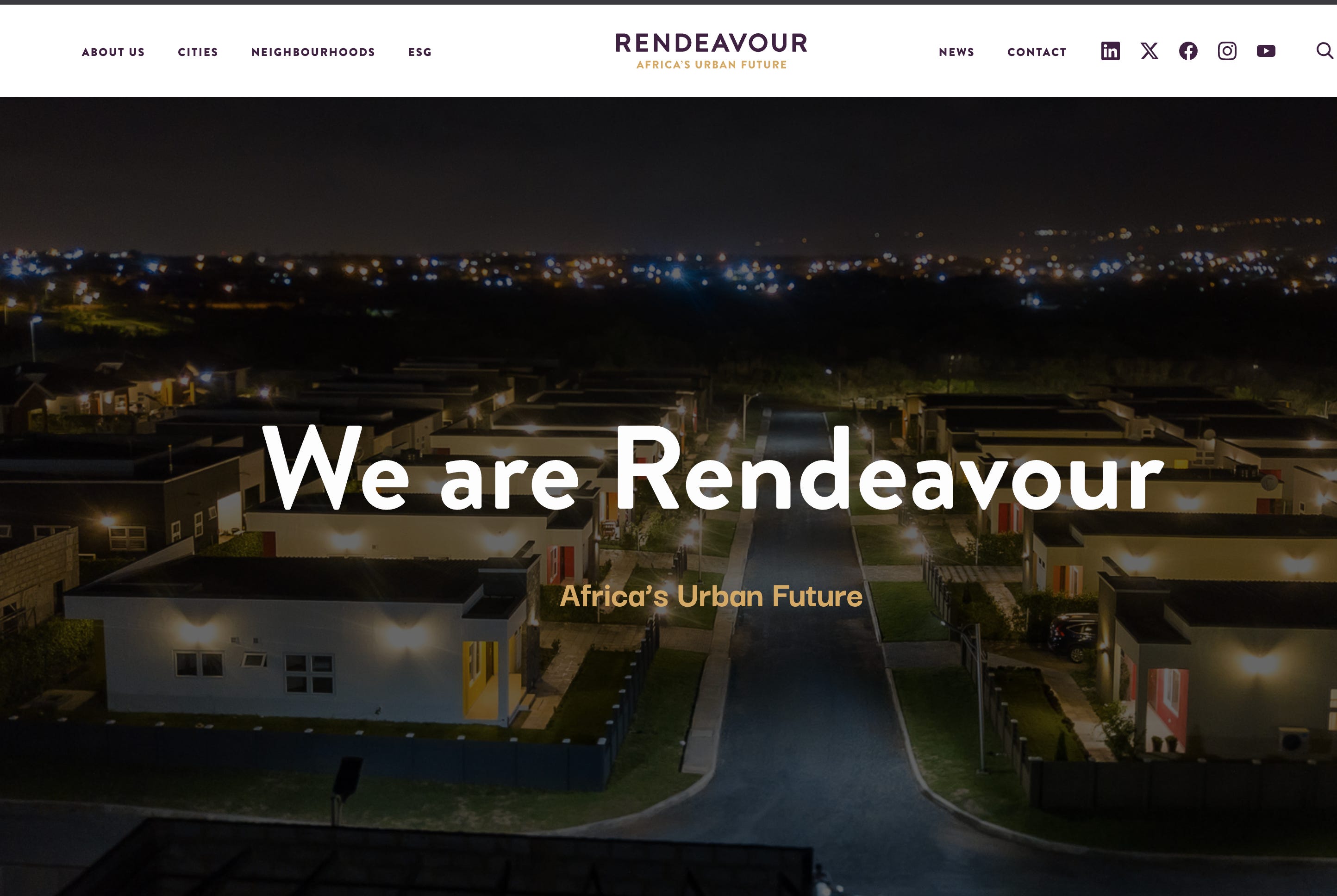
The Wellington College International Kenya opening in Tatu City in 2028 is the clean slate’s answer to the question of who the 15-minute city is for. A British boarding school. Students from “across Africa and around the world.” Families for whom Kenya is a “bucket list” destination. This is real. The families in Mathare who cannot access a functional public secondary school are also real. The gap between the inside of the zone and the outside of the zone is real. When the legal architecture of the zone is designed to maintain that gap: through tax exemptions that reduce the fiscal base available for public services outside the zone, through immigration privileges that attract globally mobile workers who would otherwise participate in the reform of public institutions: the gap is a product, not a side effect.
All of this is an argument against charter cities in practice. It is an argument for Itana to answer a question that the project’s own intellectual tradition tends to defer.
The question is not whether the infrastructure is real. It is. The question is whether the legal architecture being built around the infrastructure gives Nigeria, not just this administration, but Nigeria, the sovereignty to decide what the zone is for, and to change that decision democratically without triggering investment treaty claims that override the change.
Luqman Edu went through the legislature. He got the law passed. He built the government partnership. He is Nigerian. He is building in Nigeria. These are not small things. They are also not, by themselves, answers to structural questions.
Próspera’s architects also built a government partnership. The government changed.
The charter city tradition’s answer to this problem: competitive jurisdictional governance, exit instead of voice, residents as customers is elegant in the abstract and extractive in practice when the customers are globally mobile capital and the surrounding population has nowhere to exit to.
The Africa that needs the most from governance reform is not the Africa that can afford the $1,500 Itana license fee or the Wellington College tuition. It is the Africa that is stuck inside the institutions that the clean-slate city is built to bypass.
The SEZ has always had a founding document. The question has always been who wrote it, and what happens when the population outside the zone votes to rewrite it. Próspera filed for arbitration. Lagos is watching.
Itana has a website. So does the Próspera arbitration docket. Read both before the next Africa New Cities Summit in December. The conversation about who these projects are for needs to happen before the first hundred companies are fully licensed, not after.