“The Wrong Scoreboard”

The rejection email comes in at 11:47am. Thank you for your interest in [Company]. After careful consideration... I don’t even finish reading it. Forty-three applications in six weeks. Eleven interviews. Two “final rounds.” Zero offers.
I’m sitting in Ras Al Khaimah, the emirate no one’s heard of, the one you move to when Dubai spits you out and scrolling through job boards on my laptop and I’m watching my runway. The trading charts are open in another tab. Red. Green. BTC has been on a tear; +7.6% so my bags are mostly Green!
My mother called last week. She didn’t ask how I was doing. She asked when I was “going to settle.” Which in Nigerian parent-speak means: when are you going to have something we can brag about? A title. A wife. A house. Something tangible. Something she can tell her “sisters” at church.
I’m the first son. Yoruba family. If you know, you know.
I went back to Nigeria in October. First time in a while.
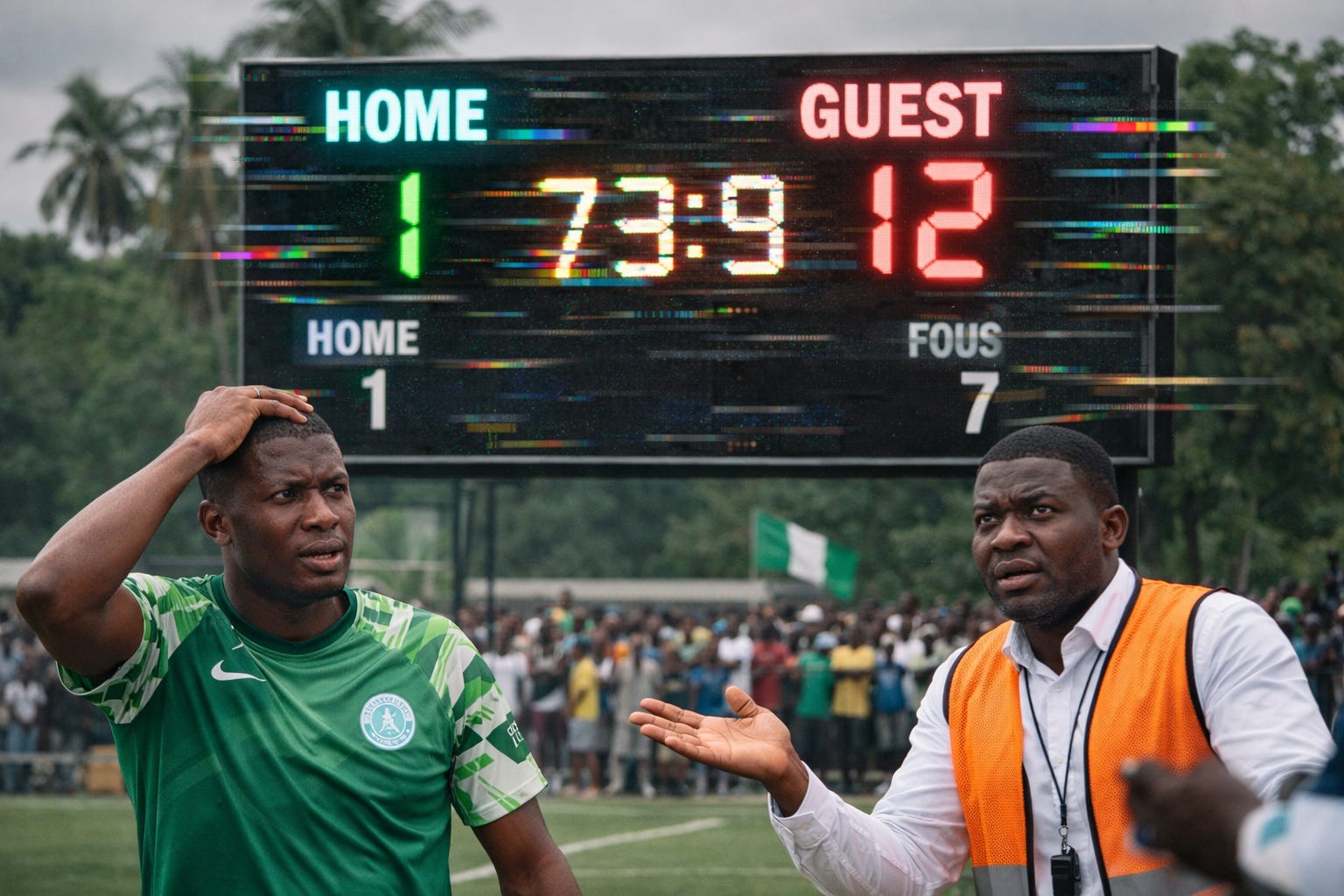
Within forty-eight hours I understood why I’d stayed away.
Everyone had their hand out. Not asking, expecting. Aunties I hadn’t spoken to in years suddenly appearing with school fees, medical bills, “small business ideas.” Cousins I barely recognized wanting “loans” that we both knew were gifts. The entitlement was breathtaking. You owe them something just for existing. Just for sharing blood. Just for being the one who left.
And the refrain God, the refrain: “But you’re earning in dollars. The exchange rate!”
As if money grows on trees in Dubai. As if rent doesn’t exist abroad. As if I’m not sitting in a studio in an emirate nobody’s heard of, watching my savings drain while I send CVs into the void.
But you can't explain that. You can't say I'm struggling too because the perception is, struggling abroad is still better than struggling at home, and they're not entirely wrong about that. Only the way they weaponize it sits in your chest like a stone.
In Nigeria, you don’t exist until you can be useful. Love is transactional in a way that sounds harsh until you’ve lived it and realize it’s not even malicious, it’s just how scarcity wires people. Everyone’s calculating. What can this person do for me? What’s in it for me right now? There’s no long game because the long game is a luxury and the lights might go out tomorrow and the government is stealing and your uncle needs money for surgery and your cousin needs school fees and you, the firstborn, the one who has “made it” according to the Nigerian standard of IJGB. I Just Got Back, you hold dollars now. You’re supposed to be the rescue. The one who helps them japa (run away, flee, escape (the term every Nigerian youth uses like a prayer now). Get out. Get to the abroad. Get to the place where money falls from the sky.
And when you can’t deliver? When you explain that actually, no, you’re struggling too, that Dubai or abroad isn’t what they think it is, that the exchange rate doesn’t mean shit when your rent is $2000 and you just got fired?
They call you EP. Enemy of Progress.
You’re blocking their blessings. You’re living the good life and hoarding it. You just don’t want to share. As if there’s some paradise out there that you’re gatekeeping. As if you wake up every morning swimming in cash and simply choose not to wire it home.
The delusion is breathtaking. But also, and this is the part that makes me want to scream, I kind of get where it comes from.
Because here’s the dirty secret about Nigeria that the japa crowd doesn’t want to hear: life back home is, in some ways, easier. There’s always someone. An uncle. A distant cousin. A church member. Someone will help. Someone will provide. The safety net isn’t the government, it’s the communal web of obligation and guilt and family ties that means you’re never truly alone. Which sounds beautiful until you realize what it produces: people who have never had to figure anything out for themselves. People who genuinely cannot fathom that you might be abroad, struggling, with no one to call. Because that’s not how it works back home.
So when they ask you for money and you say no, they don’t hear “I can’t.” They hear “I won’t.” Because in their world, there’s always someone who can. You’re just being selfish.
My friend here in Dubai, good guy, works hard, sends money home regularly, he called me last month, furious. His whole neighbourhood back in Lagos was dragging his name. Calling him useless. Saying he’d forgotten where he came from.
Why?
Because his childhood friend wanted to marry his third wife and asked my guy to fund the wedding.
Third. Wife.
My friend isn’t even married. He’s in Dubai, grinding, single, trying to build something. And this guy back home, already two wives deep, not working, just existing, felt entitled to ask for wedding money. And when he didn’t get it, the whole community turned on my friend.
“He’s changed.” “He doesn’t care about home anymore.” “Enemy of progress.”
I laughed so hard I almost cried. We call the fresh and fit girls “304s” in online chats, the ones chasing bags, trading on looks, living off men. We mock them. We call Akash Singh’s wife delusional for whatever she did. We think Western women have lost the plot with their entitlement.
Please. Come to Nigeria. I’ll show you entitlement that would make a Beverly Hills housewife blush.
At least the 304s are offering something in exchange. These guys back home want handouts just for existing. Just for being from the same village. Just for having your phone number.
But that’s a rabbit hole for another essay. The japa phenomenon: millions of Nigerians fleeing, only to discover the abroad isn’t what TikTok promised. The ones who come back quietly. The ones who stay and suffer in silence because admitting failure isn’t an option. The whole psychology of escape and disappointment and the myth of elsewhere.
Another day.
I’ve known this math my whole life. I absorbed it before I had words for it.
And I resent the fuck out of it.
Here’s the thing about Dubai that nobody tells you until you’ve lived there and gotten burned: the city runs on the same operating system as a Lagos big man’s parlor. Surface. Performance. What can you show me right now?
My last job, I was honest. Aggressively, stupidly honest. I thought the work would speak. I thought if I just closed deals and didn’t play the politics, merit would win.
Four months. That’s how long I spent building a relationship with a client. Calls, meetings, proposals, follow-ups. I wrote everything myself. Did the research. Built the rapport. We were days from signing.
Then my CEO stepped in. Wanted to renegotiate. Squeeze more money out of them. I told him it would kill the deal. He didn’t care. The deal stalled.
A week later, HR called me in. “You didn’t deliver.” They were letting me go.
I found out a month after that, from a friend who still worked there, they’d signed my deal. The same deal. My proposal, my relationship, my four months of work. They signed it the week after I left. And they put it under someone else’s name. A guy who’d done nothing. A guy whose father was rich and connected in Dubai.
That’s how it works. That’s the actual game.
I thought there was a real scoreboard underneath the performance. I thought if I worked hard enough, if I stayed honest, if I actually delivered, merit would eventually show up.
It didn’t. It doesn’t.
The scoreboard is the performance. There’s nothing underneath.
I think about those lambo insta bros a lot. The ones who rent the car for a day, shoot the content, pretend they own it. We laugh at them. We call them frauds.
But aren’t they just playing the game more honestly than the rest of us? At least they know it’s theater. At least they’re not confused about what they’re doing.
I was confused. I thought the work mattered. I thought being real would eventually pay off.
Maybe it does. Just not in Dubai. Not in that company. Maybe not in most places.
The last time I actually felt successful, not looked successful, not performed success, but that thing in your chest where you know you’re doing something right, I actually had zero money.
I was doing calisthenics every morning. I could do 20 muscle-ups in one go. I was reading constantly: geopolitics, history, economics, and I could hold a conversation about anything. My body worked. My mind was sharp. I woke up before my alarm.
Nobody was paying me for any of that. Nobody saw it. There was no LinkedIn post about my “journey.” I was just... good. Quietly, privately good at being alive.
And yet.
If you’d asked me then whether I was successful, I probably would’ve said no. Because I was broke. Because my family was waiting. Because by every metric I’d been handed since birth, the Nigerian metric, the Dubai metric, the firstborn metric, I was failing.
I was measuring myself on a scoreboard I didn’t even believe in.
So here’s where I’m at.
Forty-three rejections. A dwindling savings account. Folks back home still waiting for the rescue that isn’t coming. A city that chewed me up and a quiet emirate where I’m licking my wounds.
But also: I did pull-ups this morning. First time in months.
I couldn’t do many. Four, maybe five before my arms gave out. Nothing like before. But I felt it, that small thing in my chest. That private knowing. The scoreboard nobody else can see.
I’m starting to think that’s where it has to begin. Not with the job title or the bank balance or the thing I can show my mother. With the muscle-up I can’t do yet. With the body that doesn’t work the way it used to but is starting to remember.
The world is still running on the wrong scoreboard. Nigeria, Dubai, the whole transactional machine, it’s not going to suddenly start rewarding honesty or effort or being real. I know that now.
But maybe I can build something that doesn’t need its validation. Something that starts with five pull-ups and a laptop and a willingness to fail in public.
The next rejection email will come tomorrow. I’ll delete it faster than this one. I’ll check the charts. I’ll do my pull-ups, six this time, maybe seven.
And I’ll keep asking the question, but differently now: what if I’m the only scoreboard that matters?
I don’t fully believe it yet. But I’m training myself to.
One rep at a time.