
Weimar Conditions? Ask Ghana
Porto, 2026: The Colonial Project Comes Home

The Remigration Summit 2026 was held May 30 at the Salmanha Residence hotel south of Porto, Portugal. It was advertised on Facebook with paid Meta ads. The attendee list was published. The ideology was stated plainly. And the entire English-speaking mainstream press looked at it and filed nothing.
That is not a media failure. That is a function.
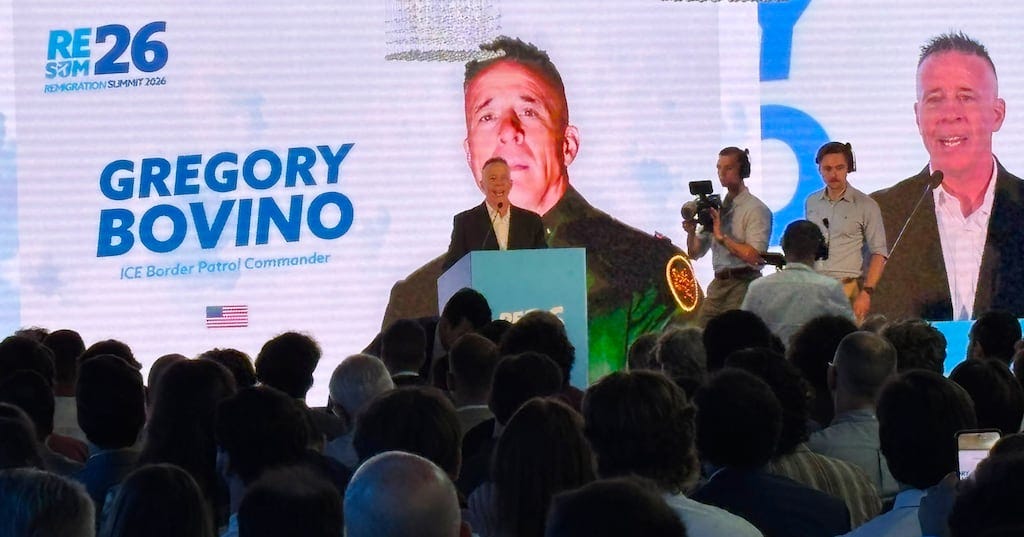
Gregory Bovino flew to Porto from the United States. He is the former commander of U.S. Customs and Border Protection, the face of Trump-era mass deportations, the man who ran the architecture. Before he left, he posted a photo on X giving what observers described as a Hitlerian salute. On the other side of the frame when he landed: Martin Sellner, the Austrian theorist of the “great replacement”, the claim that elites are engineering the demographic extinction of the white race through mass migration. Sellner is not a peripheral figure; the Australian terrorist who murdered 51 Muslims in Christchurch corresponded with him and donated to his organisation, and he promoted the same ‘great replacement’ narrative that has animated multiple far‑right attackers.

Standing with both of them: Afonso Gonçalves, chief organizer, founder of the group he named Reconquista, after the medieval mass expulsion of Muslims from the Iberian Peninsula. Gonçalves’s argument: “Weimar conditions require Weimar solutions.”
Also present: a Belgian fascist. The founder of Swiss neo-Nazi group Junge Tat, openly pro-National Socialism. AfD (Alternative für Deutschland) lawmaker Lena Kotré, and Stefano Forte, president of the New York Young Republican Club.
Now let’s talk about “remigration.” Because the word is doing a lot of work and nobody in the Porto coverage, such as it was, stopped to examine it, probably because they champion it.
“Remigration” is a euphemism for the ethnic cleansing of non-white people from Europe and the United States. That is what it means. The “re” prefix suggests people are being returned to an origin, as if belonging to a place is a function of skin tone, as if citizenship is provisional on race.
But here’s what I want to know: where was this concept before Sellner gave it a German-language academic veneer?
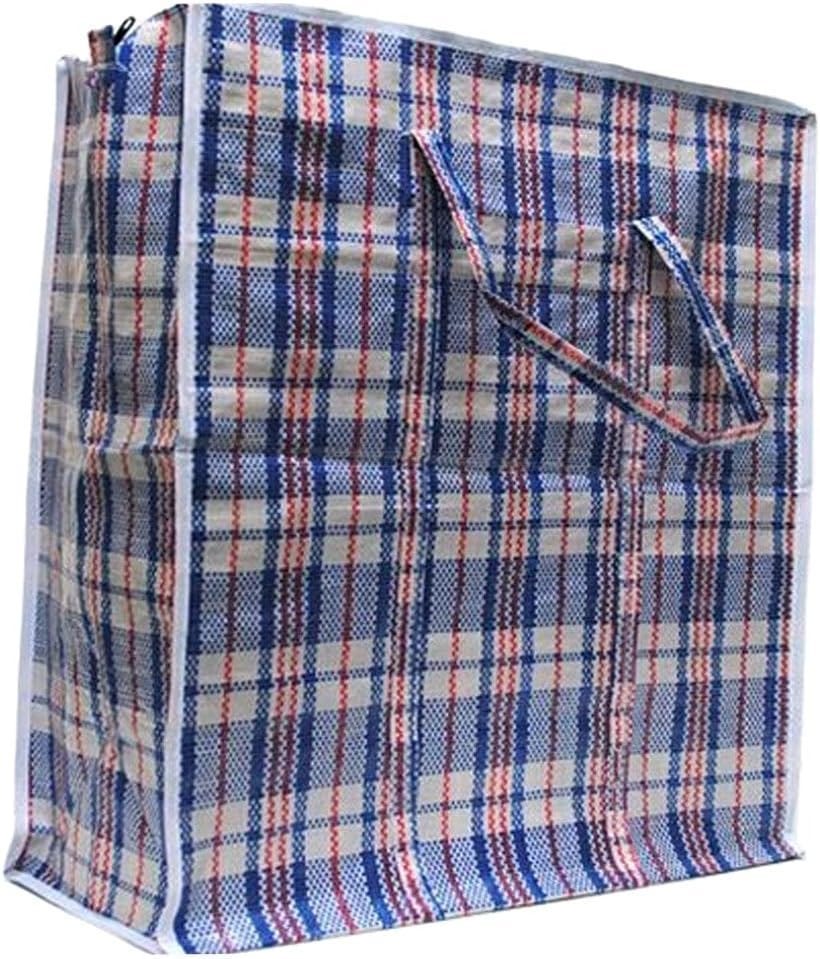
The 1969 Aliens Compliance Order in Ghana, Prime Minister Kofi Busia gave non-Ghanaian West Africans between 14 days to 3 months to produce documentation or leave. Nigerians formed the largest single group expelled. Hundreds of thousands of people. In 1983, Nigeria returned the favor: approximately one million Ghanaians, Togolese, Chadians, and other West Africans were given two weeks’ notice to leave Nigerian territory under the Shagari government. Ghanaians who were sent packing, used those famous red, blue, and white bags to carry their belongings. These bags became so associated with the deportation that Nigerians nicknamed them “Ghana Must Go” bags.
And today, the EU-Libya Memorandum of Understanding, funded by European taxpayers, executed by the Libyan Coast Guard, runs active maritime interception operations against sub-Saharan Africans attempting to cross the Mediterranean. The Frontex agency, with a 2023 budget of €845 million, is formally tasked with turning them back.
These programs were not called remigration. They were called Compliance. Security. Border management. Order restoration.
Same concept. Older costume. African bodies were the testing ground before Martin Sellner needed a word for it.
Gonçalves wants Weimar solutions for Weimar conditions. Alright. Let’s locate the actual Weimar conditions.
In 2023, Ghana entered a 36‑month, $3 billion IMF Extended Credit Facility. The conditions: pension fund haircuts, removal of fuel and utility subsidies, civil service wage freezes, a primary fiscal surplus target that required cutting government spending into an active economic contraction. Zambia’s debt restructuring under the G20 Common Framework, a process that began in 2020 and dragged into 2023 left the country in effective economic paralysis while creditors negotiated. Argentina. Sri Lanka. Pakistan. Ethiopia. The IMF structural adjustment architecture, running since the 1980s, has produced genuine Weimar-scale economic precarity across the Global South for forty years.
No summit was called for it. No Gonçalves stood up to say “Weimar conditions require Weimar solutions” for Accra in 2023. Because the architecture producing those conditions: the central bank monetary system, the BIS-governed debt framework, the IMF conditionality regime (Monetary Architecture) is the same architecture that the Porto attendees benefit from and whose consequences they are now redirecting toward migrant scapegoating (Narrative & Information Infrastructure).
Cui bono?
The economic precarity that Gonçalves is calling “Weimar conditions” in Europe is real. People are genuinely squeezed. But the mechanism producing that squeeze is not Senegalese migrants in Marseille. It is the same monetary architecture that imposed structural adjustment on Lagos in 1986, on Accra in 2023, on Zambia across half a decade. The IMF builds the conditions. The Sellner network builds the attribution.
Two different institutions, same operational output: working-class rage, redirected.
Now the press silence. Because this is where the narrative tightens.
The Redoubt, an independent publication was the first English-language outlet to report on the Porto summit. Spanish newspaper El País covered it as it related to Vox politician Rocio de Meer Méndez. Politico Europe filed something. The Irish Times also. Otherwise: nothing. There was no straight‑news coverage from major U.S. broadcasters or national dailies in the days that followed.
Jeff Bezos repositioned the Washington Post through a “strategic reset”: mass layoffs, a narrower focus on a few profitable coverage areas, and an explicit editorial emphasis on “personal liberties and free markets”, that amounts to a repositioning of the paper within the U.S. media landscape. Bari Weiss, with no journalism record, was handed CBS News. These are not coincidences of editorial taste. These are ownership-level governance decisions. The people who own the platforms where Porto would be covered have made their calculation and position.
But here’s the thing: this pattern is not new to those of us watching from the Global South.
Nigeria’s Decree No. 4 of 1984, under Buhari-Idiagbon junta, made it a criminal offence to publish reports deemed “false” that could bring the federal government or its officials into disrepute, in practice giving the regime power to jail journalists for stories it found embarrassing. When the Nigerian press was silenced, the West documented it as press freedom violation. Now Bezos closes the Washington Post to inconvenient coverage and it’s described as an editorial pivot. The mechanism is identical. The only difference is which journalists are being silenced and whether the silencers are implemented when writing.
The press silence about Porto is part of the same infrastructure as Porto. Deportation at scale has always required managed narrative. You cannot move a million people without first making them scapegoats. Africa knows what that looks like. We’ve been scapegoats for centuries.
Stefano Forte of the New York Young Republican Club stood at that hotel in Porto. He was told, after the fact, that his “brothers and sisters” included a Swiss neo-Nazi and extreme fascists. His club’s response: no apologies.
In Nigeria, we have a word for the moment when a cult member crosses the line that cannot be uncrossed. When the initiation is complete and the loyalty is sealed regardless of what comes after. Na so we see am, you see it when it happens. The Young Republican Club’s statement is that moment. Forte didn’t attend Porto as an observer. He attended as a member. And they’ve said so publicly.
The transmission belt from fringe ideology to governing policy is documented in Europe: Sellner’s writings, mainstreamed through the AfD, giving Lena Kotré a Bundestag seat, giving Gonçalves a platform, giving Bovino a plane ticket and a salute. The Young Republican Club is the American intake valve on that belt.
Watch what that club’s members are doing in ten years. Watch where they are in the U.S. federal government.
There’s something else worth saying plainly.
The remigration movement has correctly identified a crisis. It has catastrophically misidentified the cause.
Europe’s economic precarity is real. The hollowing out of the German Mittelstand, the French working class priced out of Paris, the British graduate who cannot afford rent in the city where he works, these are documented material conditions. Gonçalves is not hallucinating when he says Weimar conditions exist. He is lying, whether he knows it or not, about what created them.
The mechanism is not Senegalese migrants in Marseille. The mechanism is thirty years of ECB monetary policy that inflated asset prices while suppressing wage growth. It is the same BIS-governed debt framework that imposed structural adjustment on Lagos in 1986 and on Accra in 2023. The financial architecture that engineered precarity across the Global South did not stop at the Mediterranean. It kept going. It arrived in Stuttgart and Lyon and Birmingham and it produced the same result it always produces: a squeezed working class looking for something to blame that isn’t a central bank.
The Porto summit exists to provide that something.
Now, and I say this as a Nigerian who has watched this from both sides, the migration question is not simple, and pretending otherwise is its own form of dishonesty.
Angela Merkel’s open-door policy in 2015 was not a humanitarian decision dressed up in political clothing. It was a demographic and economic calculation dressed up in humanitarian clothing. Germany had a birth rate problem. It had a pension system that needed bodies. It had industries that needed workers. The 1.1 million asylum seekers who arrived in Germany in 2015 were, among other things, a labour supply solution that the German political class could not announce as such without an uncomfortable conversation about population decline and the failure of family formation policy.
That uncomfortable conversation never happened. Instead, Europe imported the band-aid and suppressed the diagnosis.
So yes, the scale and structure of the migration flows created real social friction. That is true. It does not follow that the migrants caused the economic conditions that Gonçalves is calling Weimar. Those conditions were engineered by institutions whose representatives were not at Porto because they do not need to be at Porto. They are at Davos.
Here is the part that nobody in this conversation wants to say.
The migration flow from Africa to Europe is self-selecting in a direction that serves nobody well. The people crossing the Mediterranean in rubber dinghies, passing through Libya’s detention infrastructure, paying smugglers in Agadez, these are not, as a general pattern, Africa’s engineers, doctors, teachers, accountants. An upstanding Nigerian professional: educated, economically productive, the kind of person who would contribute net positive to any society, finds it difficult get a Schengen visa. The process is designed to exclude him. Meanwhile the asylum architecture, for all its stated humanitarian purpose, is structurally accessible to the people with the least documentation, the least formal employment history, the fewest ties to the formal economy.
I am not saying this to condemn anyone for poverty. I am saying the incentive structure is broken in a way that produces predictable outcomes, and then everyone acts surprised at the outcomes.
The crime statistics in certain European cities are not a conspiracy theory. They are the downstream consequence of a selection mechanism that filters out the Africans who would integrate economically, blend in socially and then filters in the Africans who have nothing to integrate into. Europe built that filter. It then built Porto to complain about the results.
The machinery that created these conditions is not a migrant from Dakar.
It is the ECB’s asset purchase programs. It is the IMF’s conditionality architecture that keeps African economies structurally dependent and their skilled populations economically insecure at home. It is the EU-Libya Memorandum of Understanding that ensures the interception infrastructure stays funded while the root causes stay unaddressed. It is the demographic policy failure that Merkel papered over with a humanitarian announcement and nobody has been honest about since.
Sellner and Gonçalves are handing a squeezed European working class the wrong address for their rage. The address they are handing out is a distraction from the correct address, which is: the institutions that designed the system producing the precarity, the same institutions that have been running this design on African populations for forty years before it arrived in Europe.
The Weimar conditions are real. The Weimar solution being proposed is misdirection.
Watch who benefits from the misdirection. Watch who never gets named at the summits. Watch whose logo doesn’t appear on the attendee list.
Cui bono.
Forward this to one person who thinks the remigration solution is the answer to economic woes. Na so we see am.