
Both Leaders Read From the Same Script. Ask Who Wrote It.
The Soft Briefing Before the Hard Policy: Albanese, Starmer, and the Manufacture of Consent

On April 1, 2026 (today) and no, the date is not lost on me, two prime ministers on opposite ends of the earth delivered what were, in effect, the same speech.
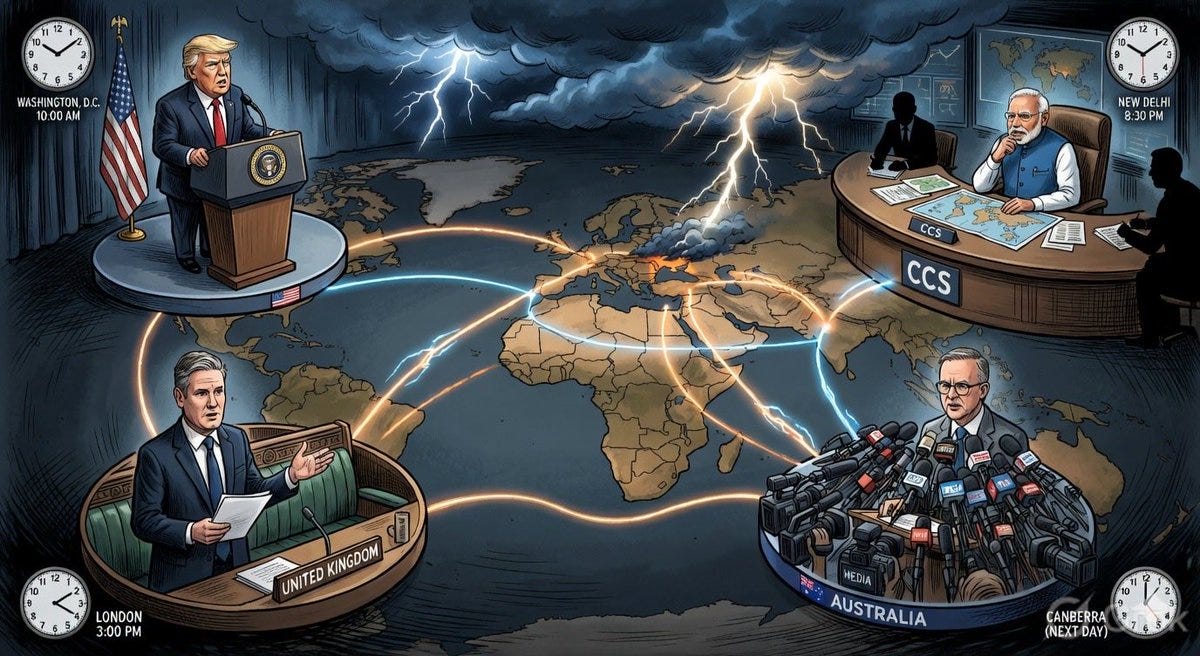
Keir Starmer stood at a podium in Downing Street and told the British people that “the impact of this war will affect the future of our country.” Anthony Albanese appeared on every Australian television channel simultaneously and said the “months ahead may not be easy.” Both men confirmed their countries were not participants in the conflict. Both men warned of energy disruption. Both men said, in their distinct accents and with their culturally calibrated tones of managed gravity, that measures had been taken and their citizens should not panic.
What Albanese actually told Australians to do: take the bus.
Let me get the facts on the table before we go further.
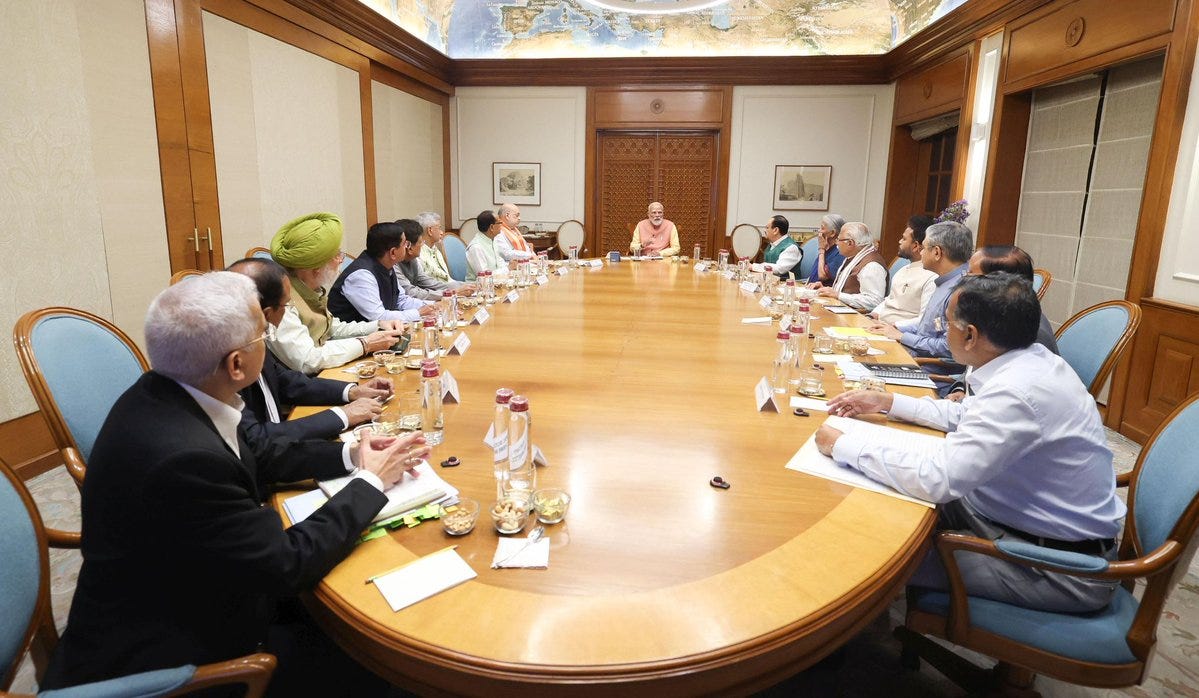
The US-Israeli attack on Iran began February 28, 2026. Iran responded by blocking tankers and similarly charging tankers to pass through the Strait of Hormuz, the chokepoint through which roughly 20% of global oil supply moves. Prices went vertical. UK families with a standard 55-litre diesel car are now paying over £100 at the pump for the first time since December 2022. Australia’s federal government cut the fuel excise by 26 cents per litre and is preparing a $1 billion ($700 million USD) in interest-free business loans. India’s LPG import benchmark, the Saudi CP jumped from $522 to $780, per the Ministry of Petroleum and Natural Gas briefing on April 1. Western Australia enacted emergency fuel powers the same day. Per India’s Cabinet Committee on Security briefings from today, India convened its third Cabinet Committee on Security meeting in under two weeks, with Prime Minister Modi, Home Minister Amit Shah, Finance Minister Nirmala Sitharaman, and External Affairs Minister S. Jaishankar in the room.

Albanese called it “the biggest spike in petrol and diesel prices in history.” Then he asked Australians to enjoy their Easter.
There are two categories of political speech. The first is a national address: it announces decisions, real and specific and irreversible, already made. The second is a consent manufacturing exercise, which prepares populations to accept decisions not yet announced. The first tells you what happened. The second tells you what’s coming, packaged in a tone designed to make it feel inevitable and fair.
What Starmer and Albanese delivered on today was the latter.
Starmer said he was “not prepared to ask the British people once again to go through a crisis, come out of it and say business as usual.” Albanese said the “economic shocks caused by this war will be with us for months.” Neither man announced a single structural, irreversible policy. The loans. The fuel tax cut. The EU summit. The suggestion to use public transport. These are not structural interventions. These are the furniture rearrangement before the renovation. Nine’s chief political editor, Charles Croucher, said the Albanese speech was less about “plans and policies” and more about “stopping any kind of whispering campaign... before the Easter long weekend.” That is a polite way of saying: this was narrative management with a national broadcast budget behind it.
The last time an Australian prime minister made a national address of this scale was March 12, 2020. Scott Morrison told the nation “we are well prepared and are well equipped to deal with it.” Within days, the country was in lockdown. Before that, Kevin Rudd addressed the nation on the GFC in 2008. “I have absolute confidence that as a nation, we will get through these tough times together.” The pattern is consistent: the address comes when the major decisions have already been made in rooms the public doesn’t access. The speech is the notification. Not the consultation.
Now let’s talk about who actually started this.
Donald Trump, the man conducting the war against Iran, alongside Israel told the United Kingdom to “get your own oil.” He claimed the UK “doesn’t have a navy.” He told The Daily Telegraph he is considering pulling the US out of NATO, that he “was never swayed by NATO,” and that it was “a paper tiger” that “Putin knows” is one too. The man who initiated the military operation that closed the Strait of Hormuz is now mocking his own treaty allies about the cost they are absorbing as a result.
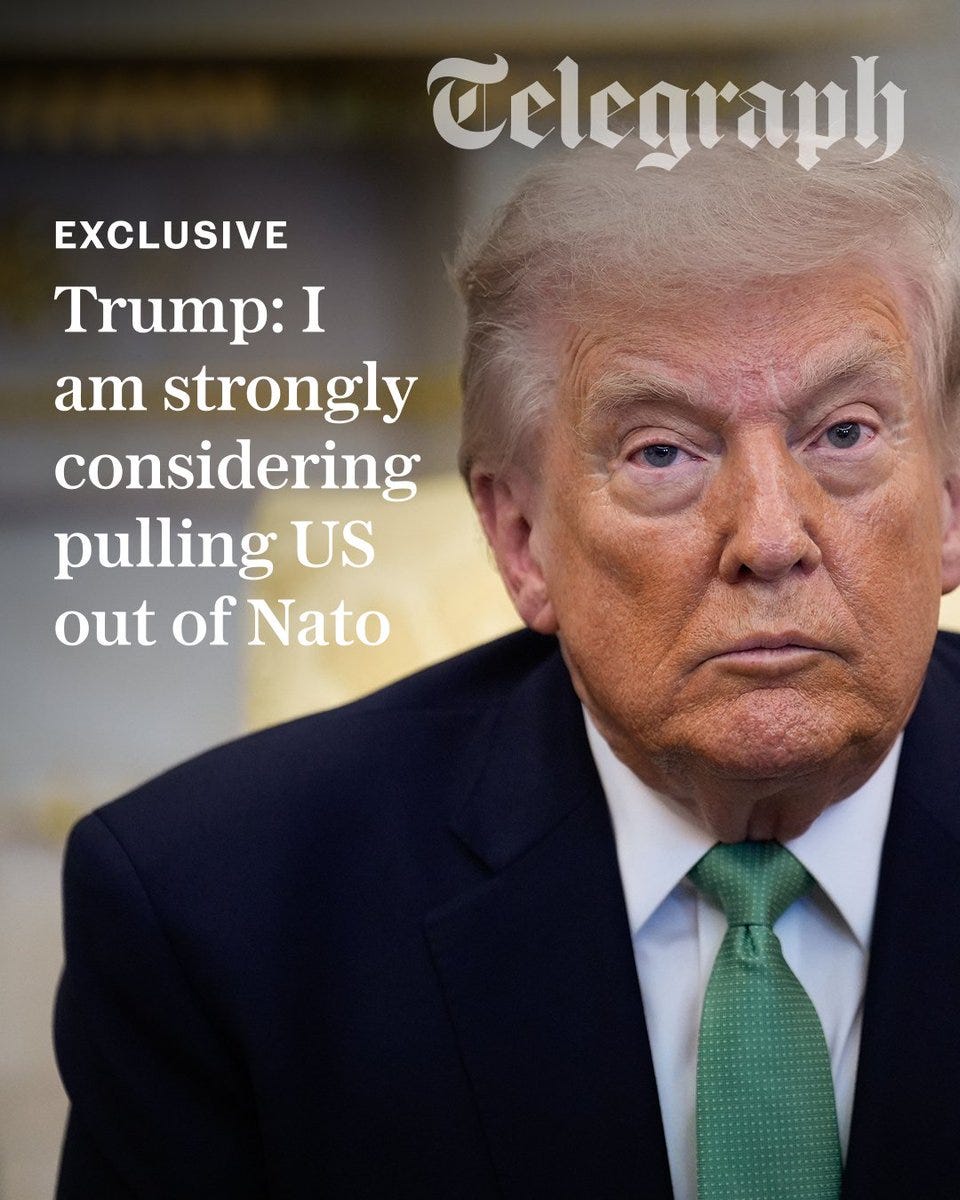
Starmer’s response was that he would “act in the British national interest whatever the pressure on me and others, whatever the noise.”
Sorry chiefs.
Meanwhile, Starmer used the oil shock to announce an EU summit, closer economic cooperation, closer security cooperation with Brussels, and cited Brexit as having done “deep damage” to the British economy. He pivoted from energy crisis to European realignment in the same press conference where he was telling people he would not be “dragged in” to the war. I respect the ambition of running three political operations simultaneously. The sleight of hand, though, should be named.
Here is what demand suppression looks like before it gets the official name.
You tell people to take the bus. You cut the fuel excise which reduces visible price today and creates a fiscal hole that must be closed tomorrow, usually through consumption-side adjustments. You activate emergency fuel powers in one state, framed as precautionary. You hold inter-ministerial briefings emphasizing that stockpiles are “adequate”, India’s government announced 60 days of crude oil cover and 74-day total stocking capacity on the same afternoon Modi chaired his third security meeting of the crisis. You do not hold three Cabinet Committee on Security sessions in ten days because the situation is fine.
Albanese said it plainly: “voluntary restraint builds our reserves.” He was describing demand suppression. The word “voluntary” is doing significant structural work in that sentence. The EU reportedly issued guidance last week instructing citizens to work from home and reduce energy use. The pattern across all jurisdictions is identical: voluntary restraint today, structured compliance later. The soft ask precedes the hard requirement. This is not panic. This is the architecture of consent, assembled brick by brick before the people realize a wall is being built.
Australia deployed an electronic surveillance aircraft to the UAE in support of defensive operations, per the Bloomberg report today. Canberra has been “working with fuel-exporting nations in Asia to ensure supply.” Home Affairs Minister Tony Burke told the ABC that “Australian households are being hit” by Trump’s war, “and they’re being hit hard.” The government is not a disinterested party. It is a node in an alliance structure that both depends on and is damaged by the same event.
I want to talk about the Global South for a moment, because this pattern is intimately familiar to anyone who grew up reading structural adjustment letters.
When the IMF arrives in Lagos, or Harare, or Lusaka, the language is measured in exactly the same register. The decisions have already been made. The technocrats have already modeled the adjustment path. The press conference is the public phase of a process concluded in private. “The months ahead may not be easy, but with the right measures, the economy will emerge stronger.” Every African finance minister in the 1990s gave this speech. The austerity was then enforced not through persuasion but through conditionality: through the removal of fuel subsidies, the devaluation of currencies, the restructuring of public payrolls, the privatization of utilities. The people were warned first. Then they were managed. The warning was framed as solidarity.
The difference between that and what Starmer and Albanese said on today is one of degree, not kind.
The coordinated language across allied governments: the near-simultaneous addresses, the shared framing of “months of disruption,” the identical posture of “not a participant but deeply affected”, suggests a briefing architecture above the level of any individual government. Someone coordinated the timing. Someone approved the messaging. Keir Starmer and Anthony Albanese do not produce identical rhetorical structures by accident and deciding to speak to their nations in the same tone.
Cui bono? Who benefits from a public already primed for “economic shocks,” already told that months of difficulty are coming, already nudged toward consumption reduction before any formal policy demands it? The energy companies did not post losses. The financial institutions administering a $1 billion in emergency business loans charge fees. The defense contractors supplying electronic surveillance aircraft operate on cost-plus contracts. The disruption is selective. The pain is not.

Here is what I am watching.
Russia’s First Deputy Prime Minister Denis Manturov is scheduled to arrive in India on Thursday, April 2 (tomorrow), for a two-day visit. Separate meetings with National Security Advisor Ajit Doval, External Affairs Minister Jaishankar, and Finance Minister Sitharaman. Russia has been selling discounted crude to India since 2022. Russia is not a disinterested party in a war that has spiked global oil prices and left Western allies scrambling for alternative supply chains. The timing of a senior Russian official visiting New Delhi the day after India’s third emergency security meeting, the same week as the Starmer-Albanese addresses, is not ornamental.
Trump said US forces could be out of Iran in “two or three weeks.” The White House confirmed a major announcement on Iran for the evening of April 1. Specific timelines in active conflicts mean specific deals are being finalized.
The decisions have already been made.
Watch what gets announced quietly in the weeks after Easter, after the public has been softened, after voluntary restraint has established a behavioral baseline, after the warning has been absorbed and forgotten. Watch especially what the US, Australian and British governments announce simultaneously.
Watch what India and Russia agree to that no G7 press conference will mention.
The bus was not the point.
If this read like something you needed to hear before someone else spun it into copium, forward it.
A friend, who is a savvy conspiracy theorist in other areas, sent his list a bunch of New Yorker cartoons. Every one of them exactly what you're saying--couples not going anywhere for spring break, someone bringing a bottle of gasoline as a dinner gift instead of wine.
No anger, just a tired resignation. That's what's being signaled as the correct response.